
An IOC for a malicious domain matches clinic endpoints that contacted it. The domain was served from a public storage account that is still open. What is true of this IOC?
Select an answer to reveal the explanation.
Short Explanation
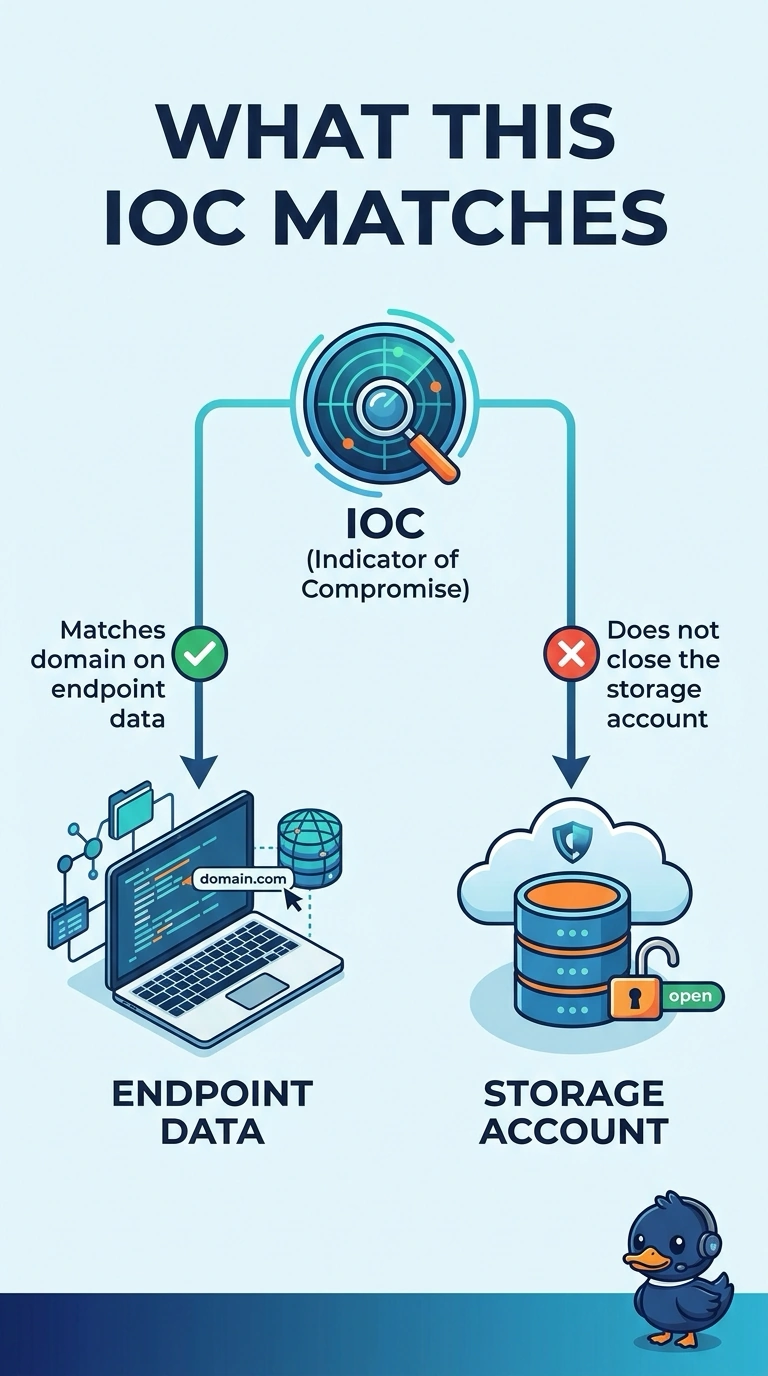
Think of the IOC as a wanted poster: it helps you spot the domain on clinic endpoint data, but it does not padlock the storage account that served it. The key distinction is that a match detects the domain; a separate change must close the account.
Full Explanation
An IOC matches the malicious domain in endpoint data when clinic endpoints contact it; that detection does not close the public storage account or change its exposure. Closing the account requires a separate response, such as a playbook or cloud change, rather than the indicator match itself. The BIOC description confuses two detection types: a BIOC detects behavior in real time and must filter event_type, while this IOC matches a domain observed on an endpoint and does not need that filter. Rewriting the storage rule would be remediation, but the IOC does not perform that rewrite when an endpoint sees the domain. A vulnerability prevention action can fail a build or, with an agent and admission control, block a new deployment; it is not what an IOC does to this storage account. Exam caveat: a playbook may isolate a host or open a ticket after the IOC matches, but that response is separate from the IOC. Practical check: confirm endpoint observations of the domain hit the IOC, then verify that the storage account remains public until a separate change closes it.