
An incident is open on a clinic host. The analyst closes the case and notifies the owner. A teammate says that closure also created the analytic detector that will catch the next one. What is the right split of this work?
Select an answer to reveal the explanation.
Short Explanation
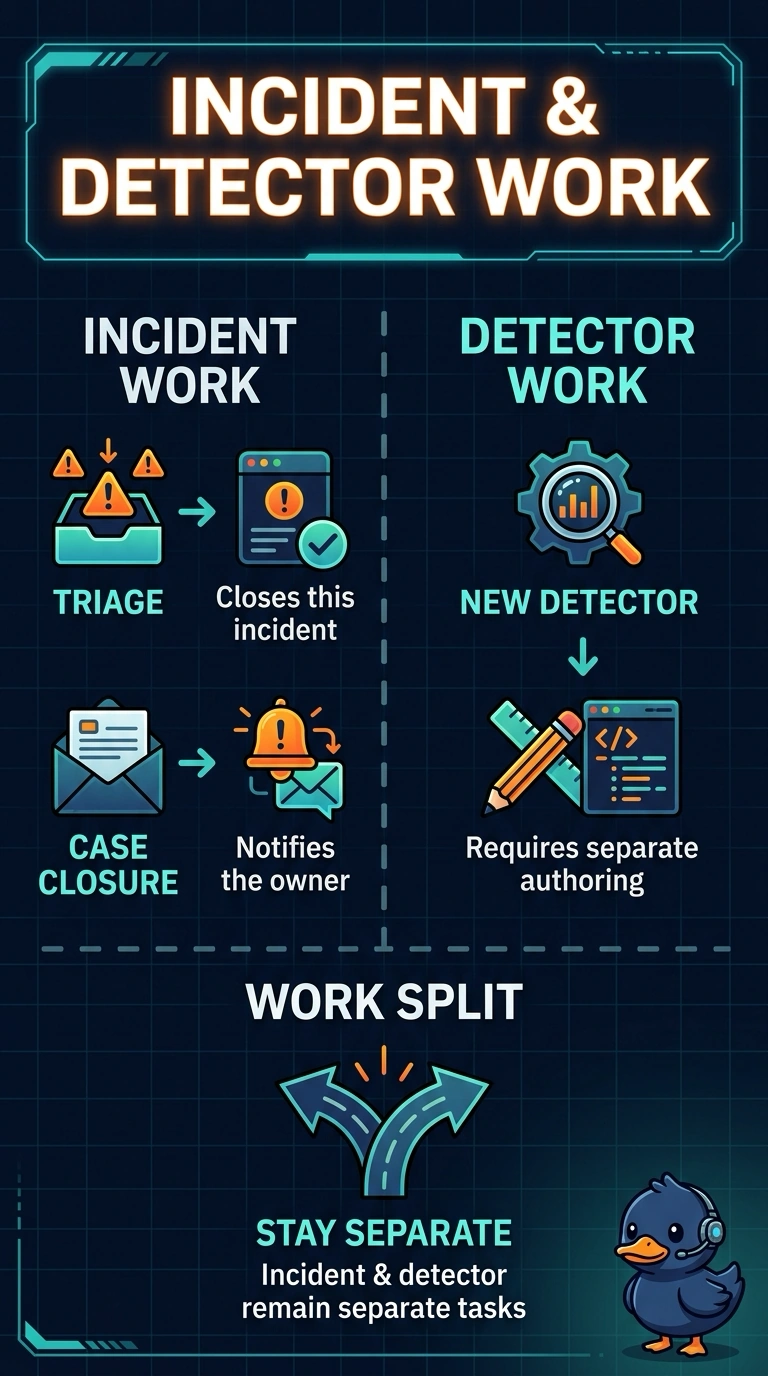
You handle the open incident through triage: close the case and notify its owner. Authoring and testing a new analytic detector is separate, so case closure does not write the next IOC or BIOC.
Full Explanation
Threat management of an open incident is triage: you work the case, close it, and notify the owner. That closure does not author the next detector; a new custom BIOC or correlation rule must be authored and tested separately, and built-in analytics are not automatically written when a case closes. Analytics use asset roles as context and are not hand-written IOCs. Closing the case does not write an IOC or BIOC: an IOC matches a known indicator on endpoint data, while a BIOC describes real-time behavior and must filter event_type. Both detections are created deliberately, not automatically by case closure. A compliance assessment report shows control status for a standard; it is not a runtime detector and will not catch the next process chain. A Kubernetes Connector match rule evaluates kind, metadata, and spec; it does not close a clinic host case or become an analytic. Exam caveat: even when a playbook responds during an incident, that response does not author the next analytic. Practical check: confirm the case is closed and the owner was notified, then verify that no new analytic, IOC, or BIOC appeared solely because the case status changed.