
A supported cloud-audit behavior should be caught as the events arrive. An engineer exports the audit log to a file each night and reviews it the next morning. Why is that the wrong tool for this behavior?
Select an answer to reveal the explanation.
Short Explanation
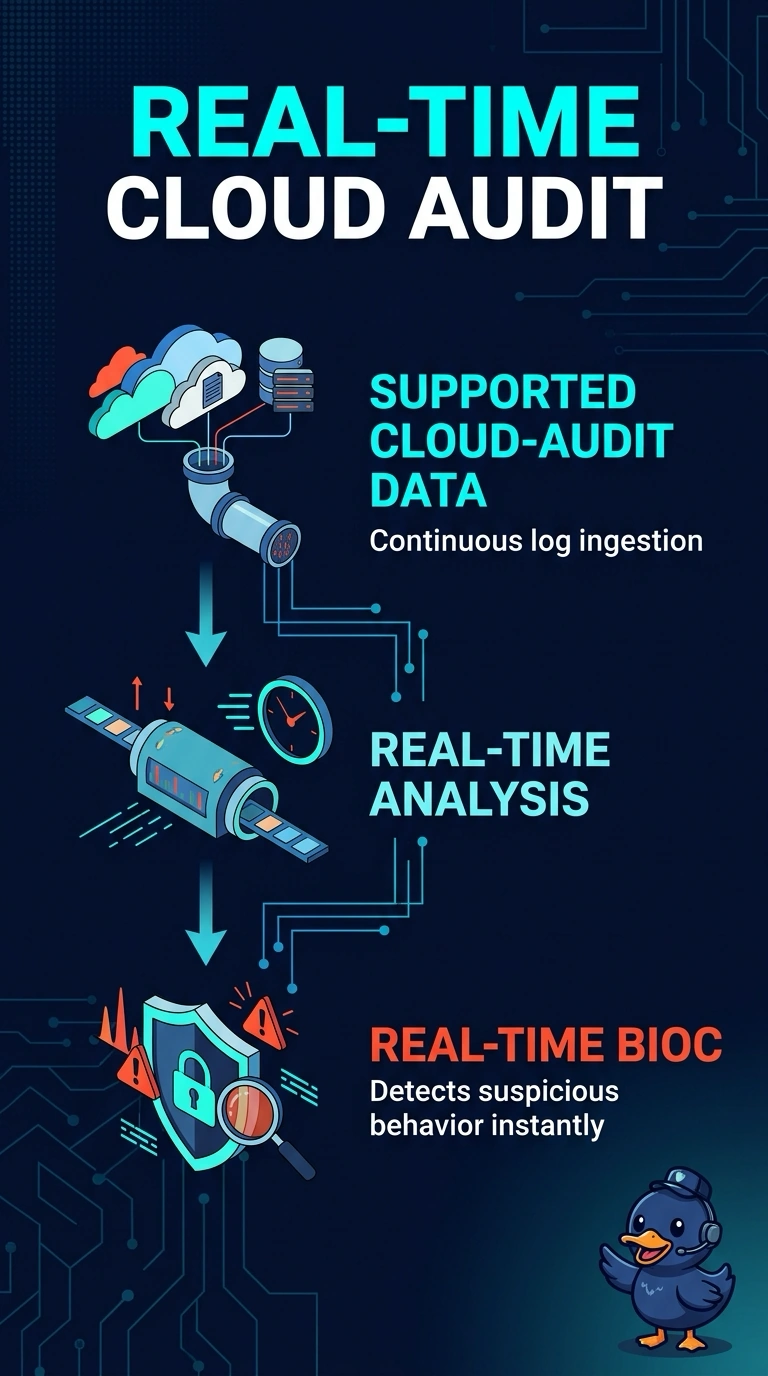
Waiting for the morning newspaper is a poor way to catch a door that is open right now. You can detect supported cloud-audit behavior as it happens with a real-time BIOC, while a nightly file review arrives too late.
Full Explanation
A BIOC detects behavior in real time on endpoint data or supported cloud-audit data, and it must filter on event_type. When the audit type is supported, you should detect the behavior as events arrive rather than wait for a nightly file export and review it the next morning. An IOC can match a known hash, address, domain, or path on endpoint data; it is not limited to file hashes, and exporting a cloud-audit log does not make its behavior an IOC. Treating the nightly export as the real-time path reverses the detection model: the BIOC provides real-time detection, whereas a nightly file review is delayed. A BIOC is not limited to a slow dataset write. A Kubernetes Connector rule uses Rego, the package panw.compliance, and match, and evaluates kind, metadata, and spec; it does not replace a BIOC for supported cloud-audit behavior. Exam caveat: BIOC detection applies only when the audit type is supported. Practical check: confirm that the BIOC filters event_type, replay the previous day’s audit, and compare its matches with what the morning file review would have shown hours later.