
A playbook isolates a host for every IOC match, including low-severity hits, and the on-call queue is flooded. The detection already sets a severity. How should that automation be gated?
Select an answer to reveal the explanation.
Short Explanation
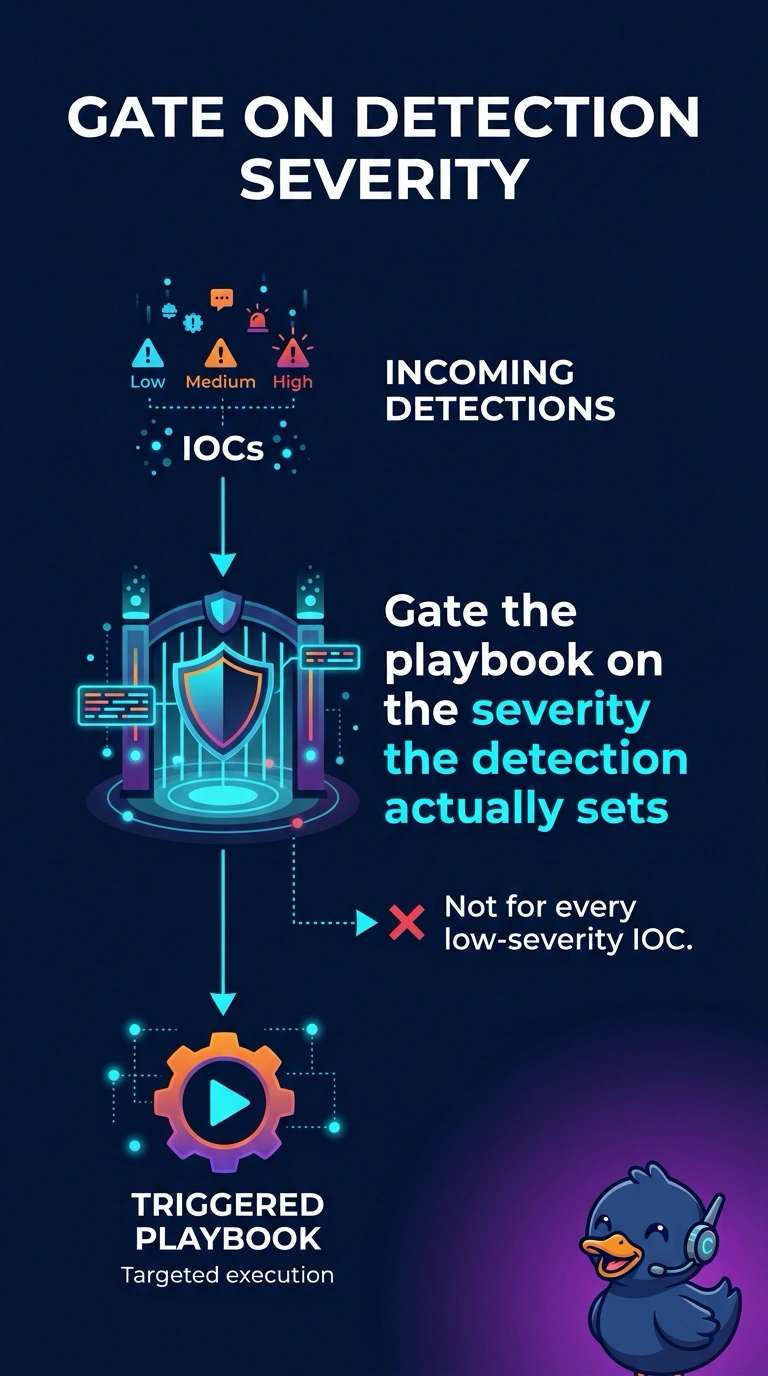
You do not call the fire department for a candle and a burning roof with the same phone tree. The playbook is the response, and you gate it on the severity the detection already sets so low-severity IOC hits stop isolating hosts. The trap is widening the IOC or disabling the detection to escape the noise.
Full Explanation
A playbook responds after a detection. It does not have to run for every IOC. The detection already sets a severity, so the automation should require that severity before it isolates a host. Running the playbook for every match and then disabling the detection removes the signal instead of filtering the response. A broader domain IOC matches more endpoint observations of a domain. It adds hits. It does not gate the playbook, and an IOC still does not remediate by itself. Moving the match into a compliance assessment drops the runtime response entirely. Compliance standards and reports are a different control from an isolate playbook, and a report will not contain a live host. Exam caveat: disabling the detection, widening the domain IOC, or moving the match into a compliance assessment each changes a different control, and none of them is a severity gate on the isolate playbook. Operational check: replay a low-severity IOC and a high-severity IOC, confirm only the intended severity starts the playbook, and confirm the low-severity hit still records the detection.