
A new correlation rule joins three sources and, on the first draft, is set to raise an issue for every match. Nobody has reviewed the volume yet. What should the action be until that count looks right?
Select an answer to reveal the explanation.
Short Explanation
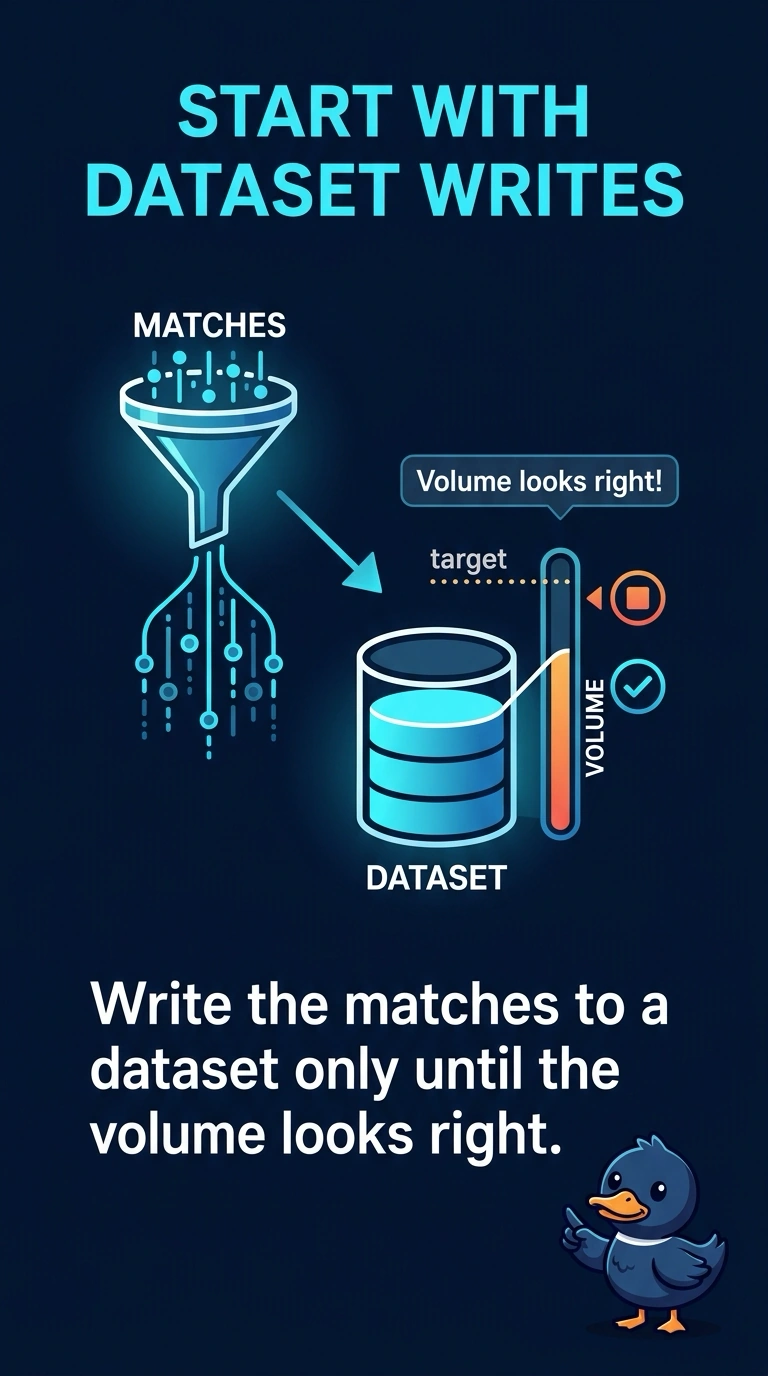
You don’t ring the town bell until you know how many people are at the door. Keep the first draft writing matches to a dataset until the volume looks right, rather than raising issues and isolating hosts before you’ve reviewed the count.
Full Explanation
Use scheduled correlation for this three-source join; real-time correlation supports its documented restricted stages rather than arbitrary joins/aggregations. A scheduled run can be as frequent as every 10 minutes. Its action can raise an issue or write matches to a dataset. For this unreviewed three-source draft, writing to a dataset lets you measure the volume without paging anyone. Assess detection accuracy and approved response conditions as well as volume before enabling automatic isolation. A playbook can perform isolation, but detection does not need to remediate while you are still measuring noise. Paging the on-call queue and isolating every match before reading the dataset reverses that order: the noise lands first. Converting the correlation into an IOC also fails because it discards the join. An IOC matches a known hash, address, domain, or path on endpoint data; one file hash is not a three-source correlation. Exam caveat: an IOC is useful for a known indicator, but it does not preserve a multi-source correlation. Practical check: direct the draft to a dataset, count matches over both a quiet day and a busy day, and switch to raising issues only when the SOC can work that volume.