
A retailer standardizes API telemetry on Apigee. An engineer wants to forward gateway syslog into Cortex and skip the Apigee integration. How should this tenant ingest Apigee?
Select an answer to reveal the explanation.
Short Explanation
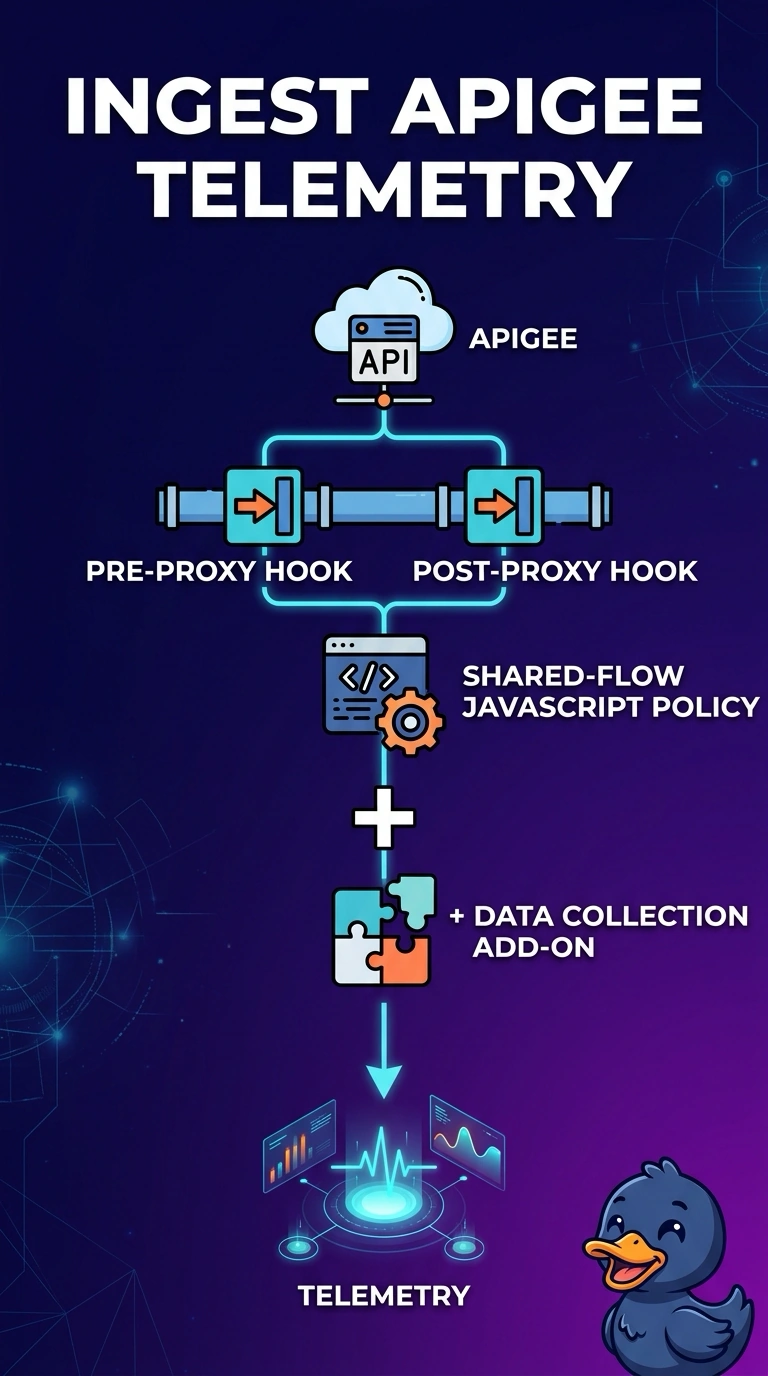
Syslog is a postcard from the gateway, not the Apigee door Cortex is built to walk through. You ingest Apigee with its JavaScript policy in a shared flow on the pre-proxy and post-proxy hooks, and you need the Data Collection add-on. The trap is renaming a syslog feed, or importing a specification alone, and calling that the Apigee integration.
Full Explanation
Apigee ingestion uses a JavaScript policy in a shared flow on the pre-proxy and post-proxy hooks, and it needs the Data Collection add-on. That path is how Cortex learns the gateway's endpoints from configuration and traffic. A syslog forward stored under the Apigee name is not that integration. Cortex compares gateway endpoints with imported specifications and can flag exposure, authentication, encryption, and sensitive data from the gateway integration, not from a renamed log stream. An XDR agent on a node is runtime telemetry for that host. It does not replace an API gateway integration. An OpenAPI import supports the specification comparison, and it does not by itself collect Apigee traffic. Leaving traffic collection off, and skipping the Data Collection add-on, drops the traffic side of the integration the hooks are there to provide. Exam caveat: an inactive endpoint is one the specification lists when the gateway has seen no traffic, which you cannot judge if traffic was never collected. Operational check: confirm the Data Collection add-on is on, place the JavaScript policy on both hooks in the shared flow, and verify new calls show up as gateway endpoints rather than as syslog lines.