
Cortex records SQL injection attempts against a public checkout API. A developer imports a tighter OpenAPI file and expects those attempts to disappear from detection. What still has to deal with the attacks?
Select an answer to reveal the explanation.
Short Explanation
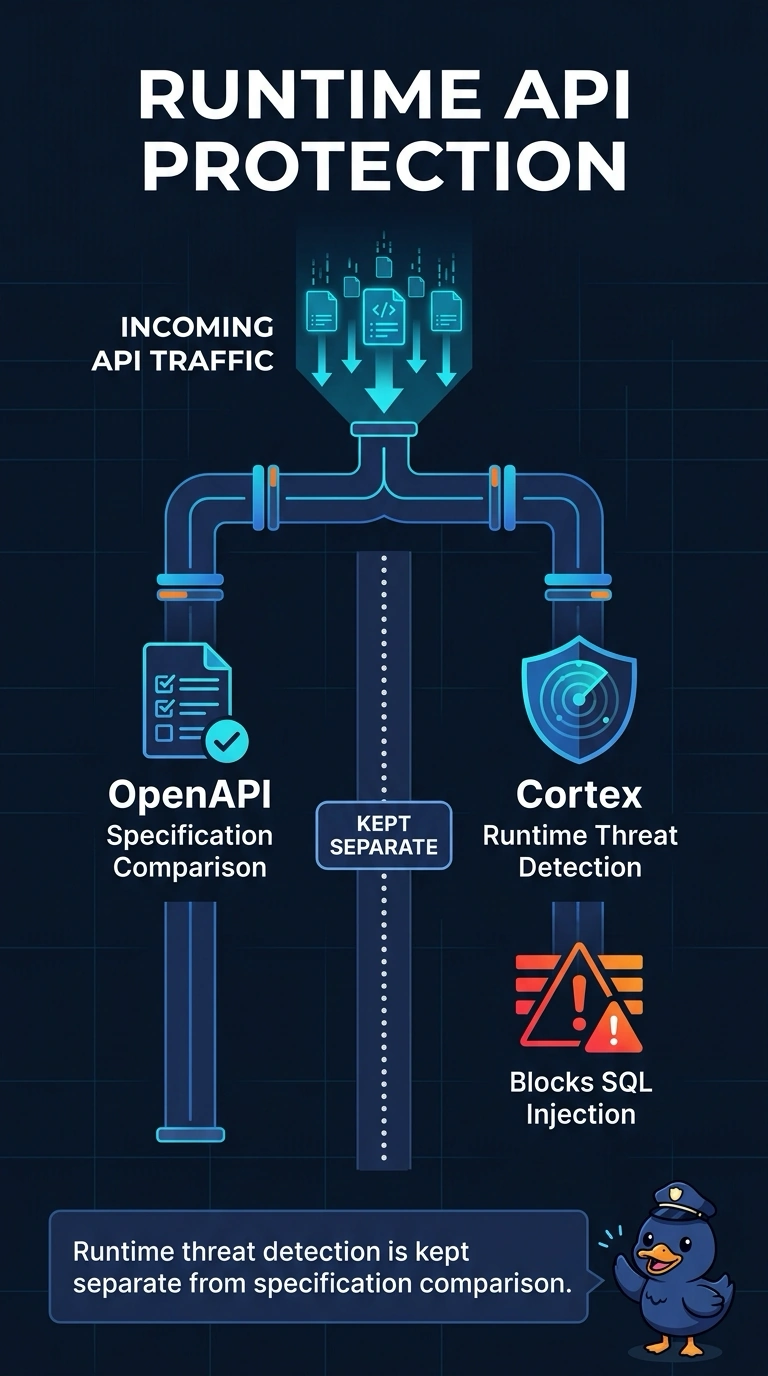
Tightening the blueprint of a door does not erase the crowbar marks on the frame. You imported a cleaner specification, and the injection attempts are still threat detections on the traffic. The trap is treating a match, an inactive label, or an undefined operation as if it cleared attacks that already happened.
Full Explanation
Injection attempts are threat detection on API traffic. They are not the same control as a posture finding on the specification, so a tighter OpenAPI file can improve the contract comparison and still leave the attacks in detection. A specification match means the gateway operation lines up with the imported file. It does not erase injection history or stop the next payload. An inactive endpoint is an operation the specification lists when the gateway has seen no traffic for it. These calls were seen, and an inactive label would misstate that fact rather than handle the attack. Removing authentication declarations can weaken the documented contract, but does not by itself make an existing matched endpoint Undefined; Undefined means the gateway endpoint is absent from all known specifications. It does not reclassify injection as a specification state. Exam caveat: exposure, missing authentication, weak encryption, and sensitive data are posture observations on the API. They are a different list from a detection of an injection payload. Operational check: open the detection for one injection attempt, confirm it is tied to traffic rather than to the specification diff, and keep the tightened file as a separate review of match, mismatch, conflict, or undefined.