
A prevention profile correctly blocks a risky binary, and one line-of-business app on a single host is a confirmed false positive. The team wants that app to run without lifting the block for every other machine. What should they add?
Select an answer to reveal the explanation.
Short Explanation
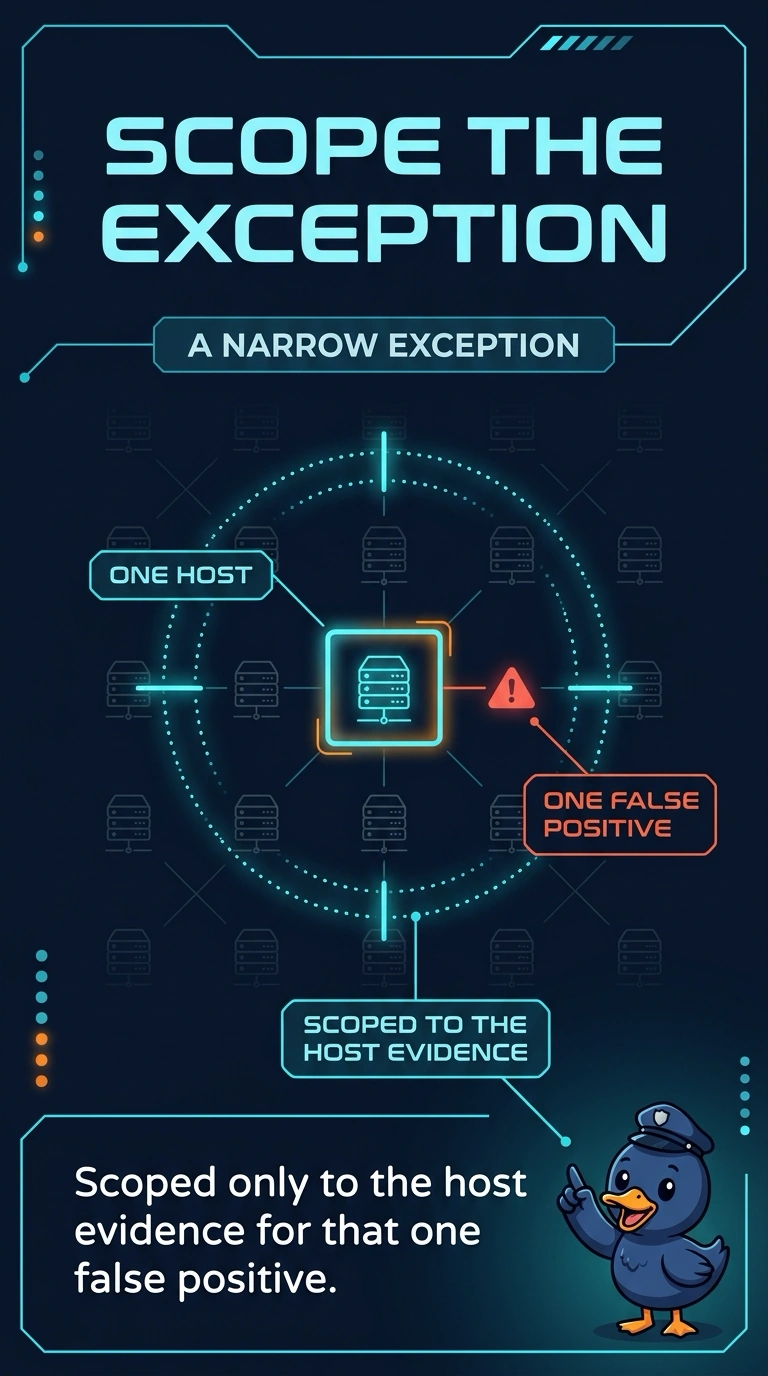
Think of an exception as a spare key cut for one lock, not a master key for the building. You have a real false positive on one host, and the prevention profile is still right everywhere else. Scope the exception to that evidence instead of taking the profile off the group.
Full Explanation
Exceptions and prevention can disagree on purpose. The exception is how you carve out a false positive, and it should be as narrow as the evidence. A scoped exception lets the confirmed line-of-business app run on the host you investigated while the prevention profile keeps blocking the risky binary everywhere else. A global exception for the hash on every endpoint that receives the profile is broader than the evidence. Global scope is the wide end of exception scope, and it would open the binary on machines that are not the false positive. A cloud identity exception ignores a role in posture. It does not change endpoint prevention, and it does not let a blocked process start. Removing the intended custom profile changes protection for the wider group and may fall back to defaults; it does not necessarily eliminate every protection module. A narrow supported exception avoids that broad policy change. The profile was correct. The miss was one false positive, and unassigning the profile is not how exceptions are meant to work. Exam caveat: if that false positive later shows up on a second host, widen the exception only as far as the new evidence. Operational check: record the host and the hash on the exception, confirm other hosts in the same profile still block the binary, and set a review date so the carve-out does not outlive the evidence.