
The firm configured only an Extension policy and the effective malware prevention profile has its relevant malware module disabled. Which configuration controls malware blocking?
Select an answer to reveal the explanation.
Short Explanation
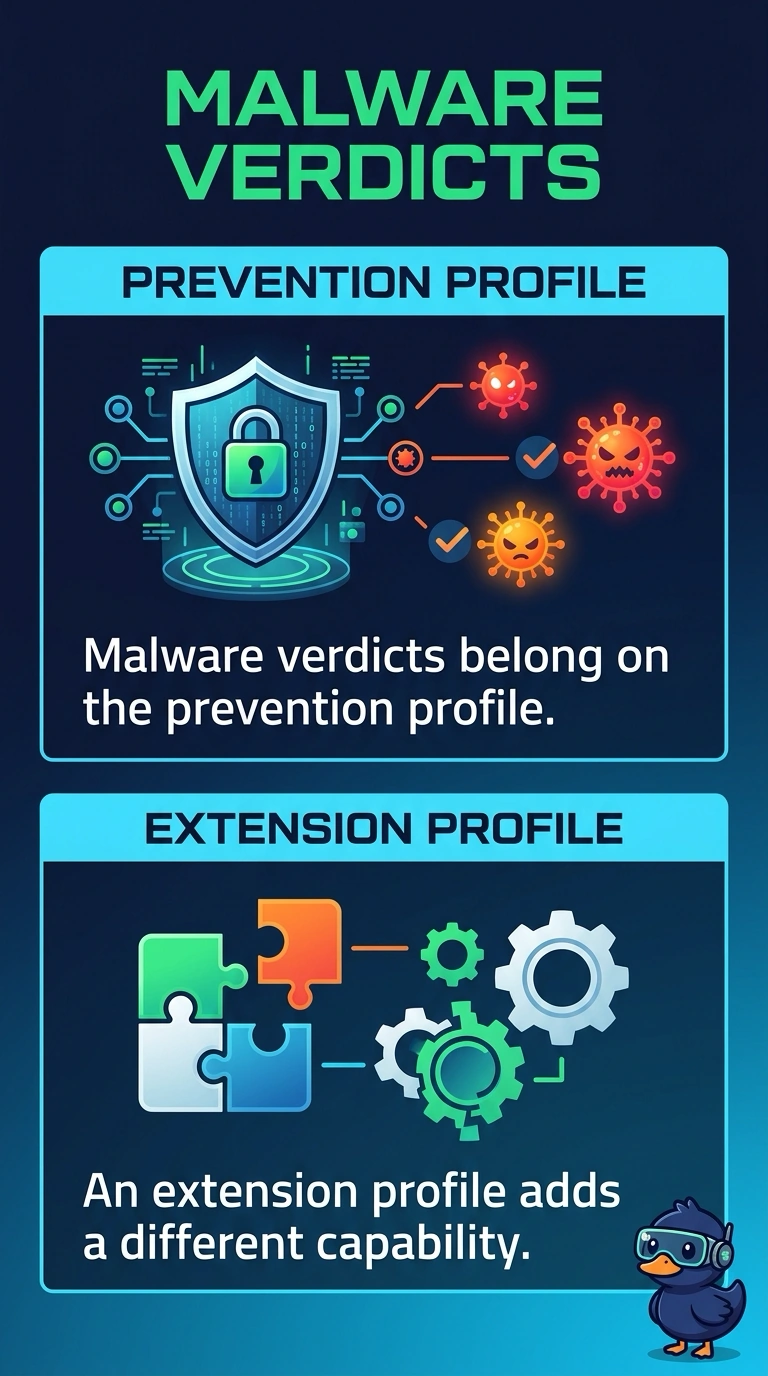
You get malware blocking from your effective Prevention profile, so check that profile and enable its malware module. Even if defaults can apply, an Extension policy alone does not configure this malware module for you.
Full Explanation
Malware blocking is controlled by the effective Prevention profile for the endpoint. Configure the effective malware Prevention profile; default profiles can apply, and an Extension policy does not configure this malware module. In this scenario only an Extension policy was configured and the relevant malware module in the effective prevention profile is disabled, so there is no enabled prevention control to enforce verdicts even though the agent may otherwise communicate normally. Remediation is to identify the effective profile for the law-firm endpoint group, enable the relevant malware module, and retain the Extension policy only for the separate capability it adds. The closed Broker VM explanation fails by appliance role because that VM bridges traffic and does not carry endpoint prevention policy. The data-classification profile explanation fails by control purpose because PHI or PCI profiles classify sensitive data in stores and do not request endpoint malware verdicts. The repository software-composition analysis explanation fails by enforcement point because that rule finds vulnerable libraries in git code and does not perform runtime endpoint blocking.