
API response views show endpoints and traffic, but the sensitive-data columns stay empty for card numbers the gateway is returning. No data profile is enabled. What must be enabled before classification findings populate the sensitive-data fields?
Select an answer to reveal the explanation.
Short Explanation
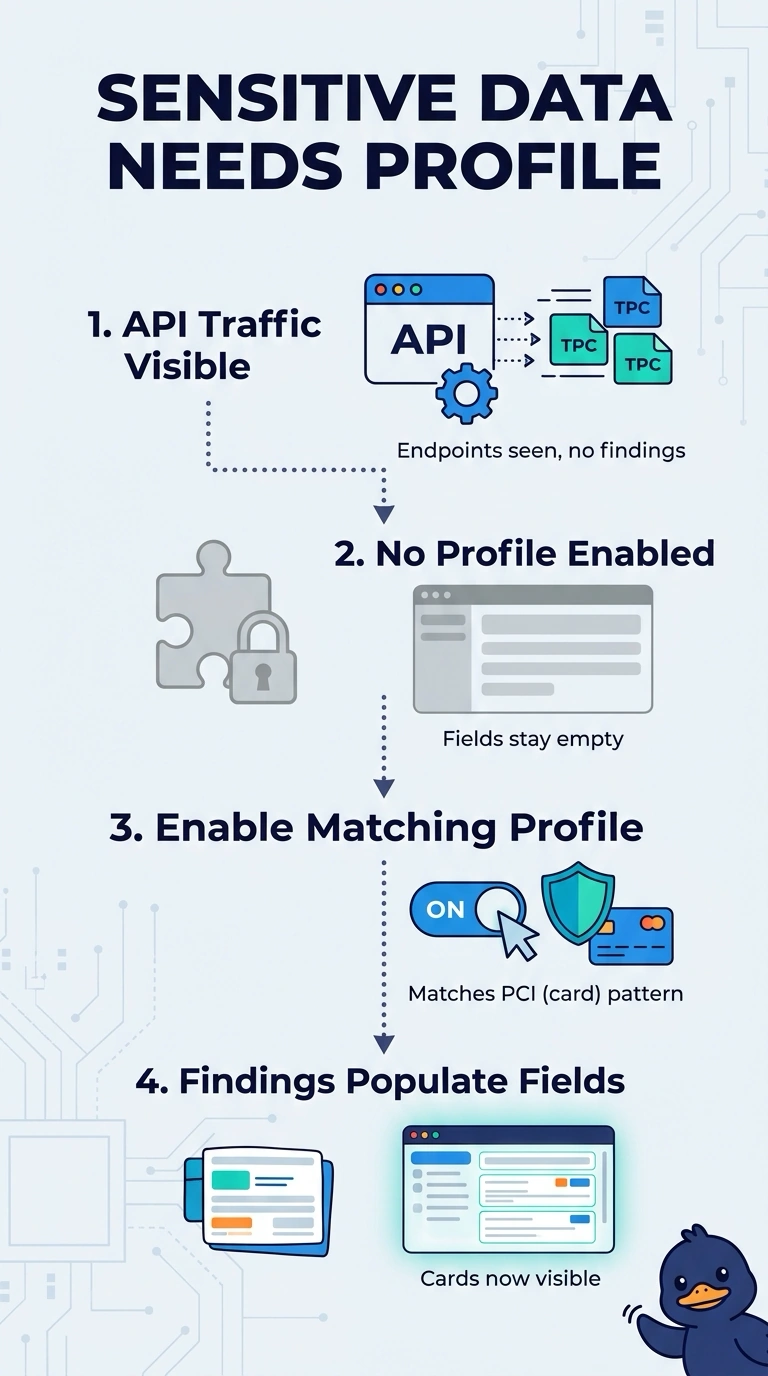
Think of it as you turning on the ruler you measure with. Remember that classification findings populate the sensitive-data fields only for enabled matching profiles/patterns, so you will not see card numbers until you enable the matching profile. Do not get trapped installing a connector or writing a BIOC when you just need that classification switch.
Full Explanation
Remember that classification findings populate the sensitive-data fields only for enabled matching profiles/patterns. The gateway is already returning card numbers, and the views already show endpoints and traffic, so collection of the API is not the hole. No profile is enabled, so the fields stay empty until the matching profile, such as PCI for card numbers, is turned on and its card pattern is enabled. A Kubernetes Connector supplies a cluster resource feed and evaluates kind, metadata, and spec. It does not create classification findings for API responses. A BIOC is a real-time behavior and must filter event_type. It detects activity. It does not enable a data profile or populate classification fields. OCR is global. It cannot be limited to the Broker VM while other modules stay unchanged, and turning it off skips text inside images rather than populating API findings. Exam caveat: patterns inside the profile still have to be enabled, so a profile with the card pattern disabled can leave card fields quiet. Operational check: enable the profile that includes card numbers, refresh the API view, and confirm the sensitive-data field now shows that pattern for a response you already know contains it.