
An assessor wants the PCI compliance assessment limited to cardholder systems. The tenant also holds development accounts that store no card data. How should the engineer scope that assessment?
Select an answer to reveal the explanation.
Short Explanation
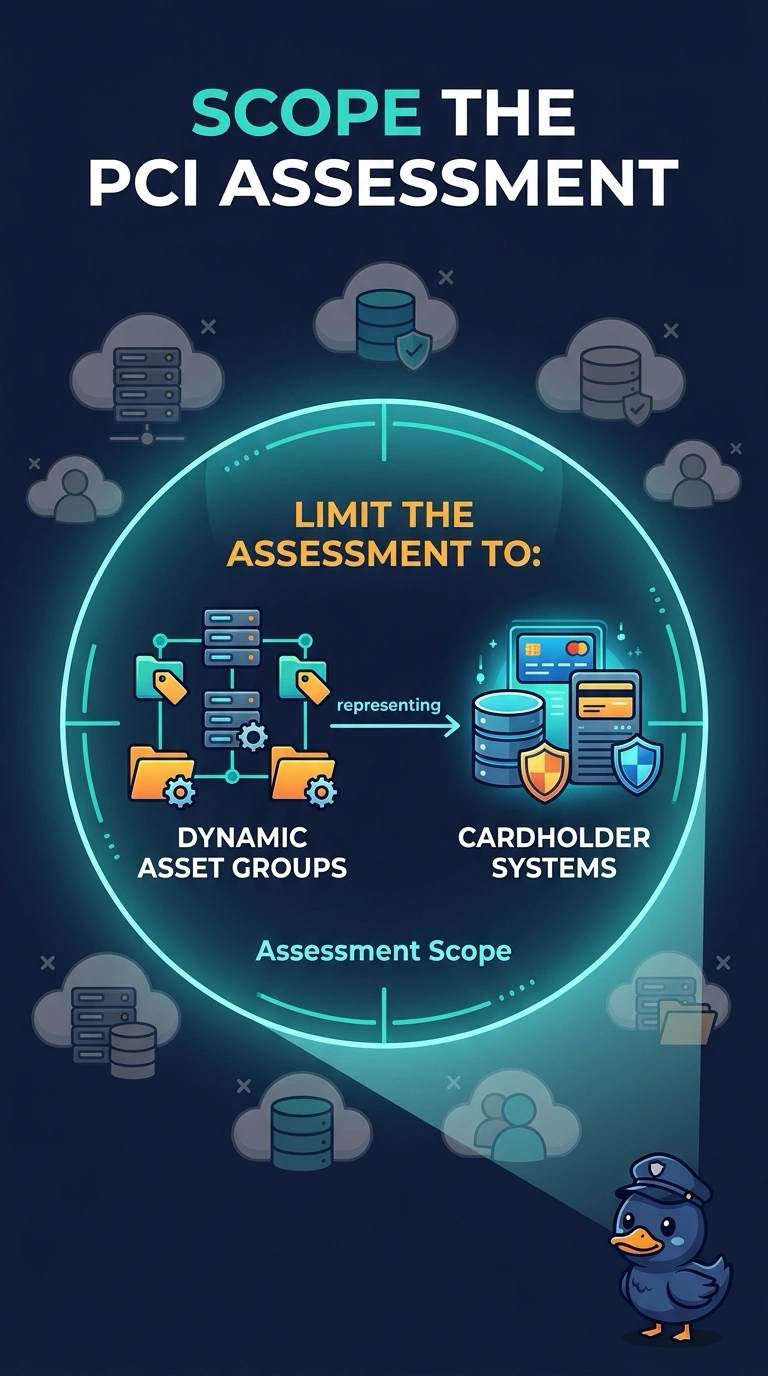
PCI scope is the cardholder wing of the building, not every room on the campus. You limit the assessment to the asset groups that represent those systems. The trap is scanning the whole tenant, or swapping in a data-classification profile, and calling that the assessment scope.
Full Explanation
The best offered scoped assessment limits this PCI assessment to the dynamic asset groups that represent the cardholder systems, implemented through assessment filters/report settings. Use assessment filters/report settings for the in-scope cardholder systems and verify the assessor's SBAC independently. Excluding unrelated development accounts here is a stated assessment-scope choice; absence of stored card data alone does not universally exclude a system that can affect cardholder-data security. Running the assessment against every asset in the tenant scores excluded systems and inflates the result. The PCI data profile is a classification profile for patterns such as card numbers, alongside Financial, PHI, PII, Sensitive, and Developer Secrets. Turning it off, or substituting the Sensitive profile, changes data discovery. It does not define assessment asset scope, so swapping confuses classification with scope. Building from a static hostname list of every virtual machine cannot express that assessment scope, because it re-adds build agents and payment systems into one hand-picked inventory instead of filtering to cardholder systems. Exam caveat: an empty PCI tile can reflect limited visibility, so confirm filters and visibility before judging the report. Operational check: list the dynamic groups and filters on the assessment, match them to the cardholder accounts, and confirm a development account is absent.