
A policy says to fail the build when EPSS is above the bar it states. Findings appear, the CI job stays green, and the runner has no XDR agent. The team is using the documented workload Vulnerability Policy build-prevention workflow, not the CLI Unified Application Security CI gate. What is still required?
Select an answer to reveal the explanation.
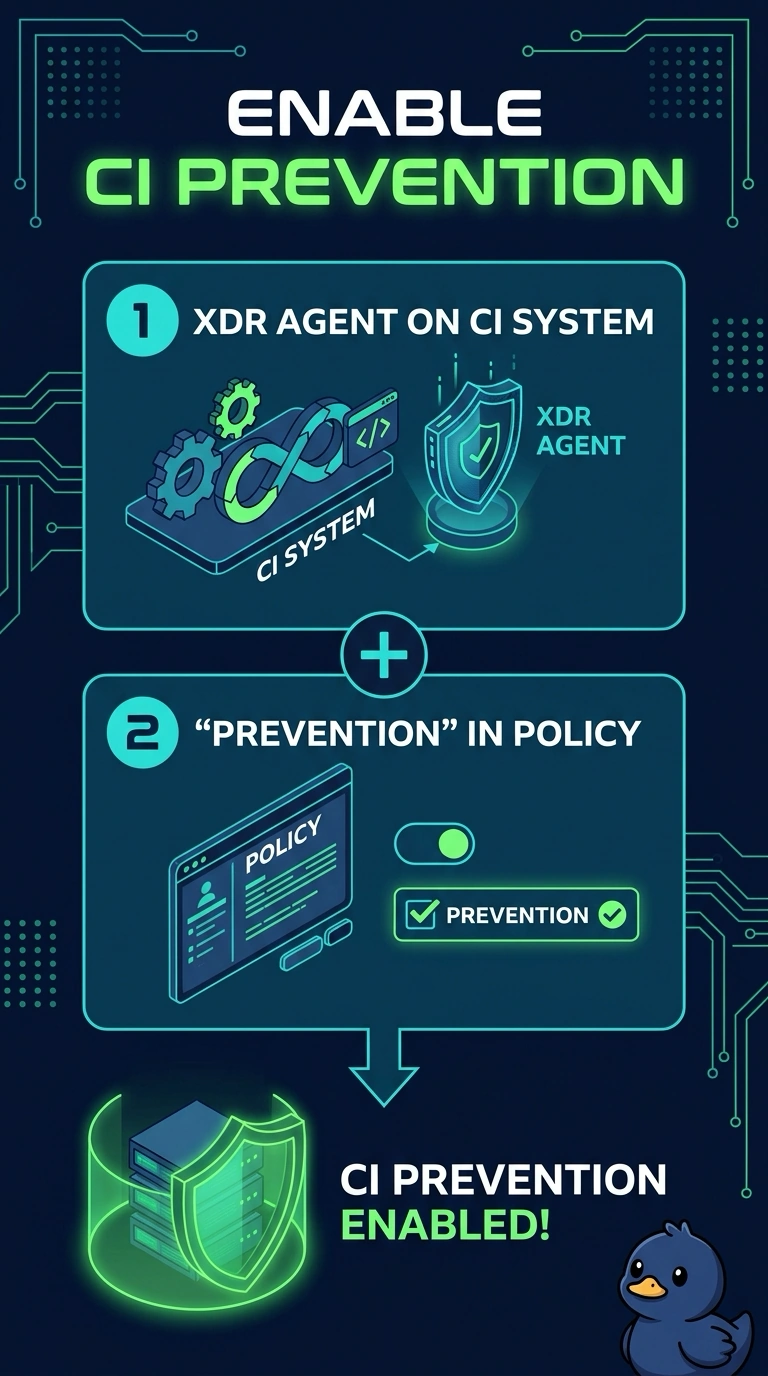
Short Explanation
You’ve set the EPSS bar and found issues, so you’re close; for this documented workflow, the runner needs the XDR agent and prevention selected for the matching policy before the build can be blocked. After installing and configuring it, rerun a case that crosses the bar to check that the job fails.
Full Explanation
For the documented workload Vulnerability Policy build-prevention workflow, findings alone do not fail the CI job. The CI system needs the XDR agent, and the matching policy that states the EPSS bar must have prevention selected. Once configured, rerun a case that crosses the bar to verify that the job fails. An admission controller is for blocking a new Kubernetes deployment; installing one on the CI runner does not create this pipeline build gate, so it is the wrong enforcement point. An ignore placed above the policy matches first and prevents that policy from acting. The underlying findings may remain, but the ignore does not fail the build. The developer-secrets data profile classifies tokens and keys in data stores; it is not the repository secret scanner, so enabling it on the runner does not create a build gate. Exam caveat: first match still applies, so a higher policy that only creates an issue can keep the build green even after the agent is installed. Practical check: confirm the agent is active, prevention is selected on the matching policy, and a rerun with a finding above the EPSS bar fails.