
A research lab wants a vulnerable image blocked when a new Kubernetes deployment is created. The admission controller is installed, and the cluster has no XDR agent. What else does that block require?
Select an answer to reveal the explanation.
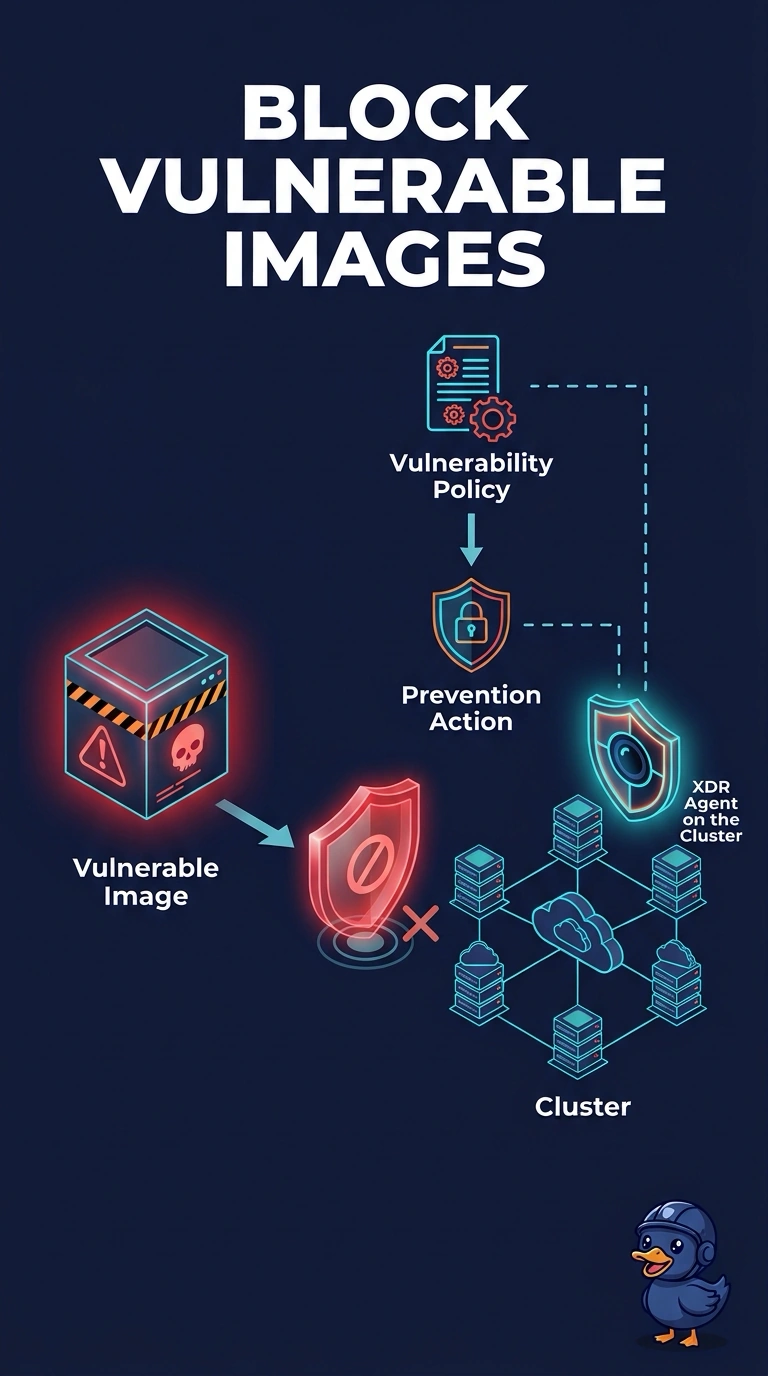
Short Explanation
Think of the admission controller as a gate that still needs a guard on duty. You have the controller installed, but a new deployment is blocked only when the XDR agent is on the cluster and the vulnerability policy uses a prevention action. A connector match rule evaluates cluster resources rather than blocking the pod, while an ignore hides the finding and a renamed compliance export is only an assessment report.
Full Explanation
A prevention action on a vulnerability policy can fail a CI build or, when the XDR agent and admission controller are in place, block a new Kubernetes deployment. The admission controller is already installed, but the cluster has no XDR agent, so the required setup is to install the agent and set the matching vulnerability policy to prevention. A connector match rule in package panw.compliance evaluates cluster resources and can feed workload issues when a Cloud Workload policy runs it; it is not the admission controller and does not block a pod by itself. An ignore action prevents the applicable vulnerability issue/action under the policy; the underlying vulnerability finding can remain in inventory. It does not stop the deployment, so placing it first cannot provide the requested block. A renamed compliance export remains an assessment report: renaming it does not enable prevention or communicate an admission decision. Exam caveat: even with the agent and prevention configured, a higher-matching policy that ignores the finding can prevent the expected block. Practical check: confirm the agent is reporting on the cluster, verify that the matching vulnerability policy uses prevention, and try deploying the vulnerable image to confirm that admission blocks it.