
A freight company wants a custom check that a Windows golden image does not contain a rewritten hosts file. The image is scanned with no agent installed. Which scanner should run that check?
Select an answer to reveal the explanation.
Short Explanation
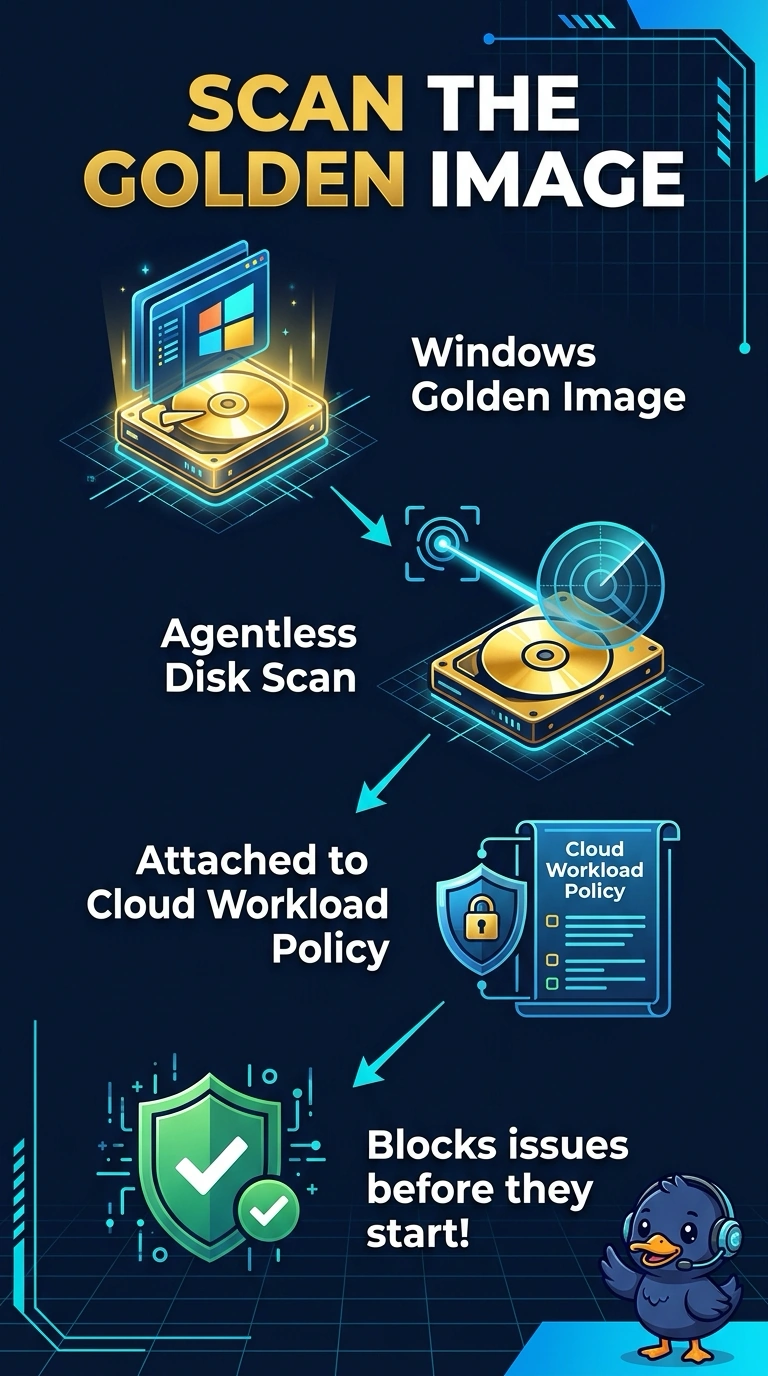
Think of the golden image as a box you can open on the bench before it is a running truck. You want a hosts-file check with no agent, so agentless disk scan is the scanner that reads the image, and the rule still has to ride a Cloud Workload policy. A Kubernetes Rego rule is looking at cluster specs, not a Windows image layer.
Full Explanation
Agentless disk scan is the scanner that evaluates a custom rule against image contents without an agent on a live host. A rewritten hosts file is a file inside the Windows image, so that scanner is the one that can see it, and the rule does nothing until a Cloud Workload policy runs it. A Kubernetes Connector rule, even one in package panw.compliance with a match block, evaluates kind, metadata, and spec on cluster resources. It does not open a Windows golden image. An XDR agent Python rule runs on a live host where the agent is installed. This request is explicit that the image is scanned with no agent, and the check is of the image rather than of a booted machine. A vulnerability policy that ignores Windows findings suppresses issues. It does not inspect a hosts file, and an ignore action is the opposite of a new check. Exam caveat: saving the agentless rule in the rule library still creates no issues until a Cloud Workload policy includes it. Operational check: confirm the rule's scanner is agentless disk scan, run it against a copy of the golden image that contains a bad hosts entry, and confirm a workload issue appears only after the policy is attached.