
A workload scan finds a cloud access key baked into a container image layer. The team rotates the live identity key and leaves the image as it is. What still has to happen for this result to clear?
Select an answer to reveal the explanation.
Short Explanation
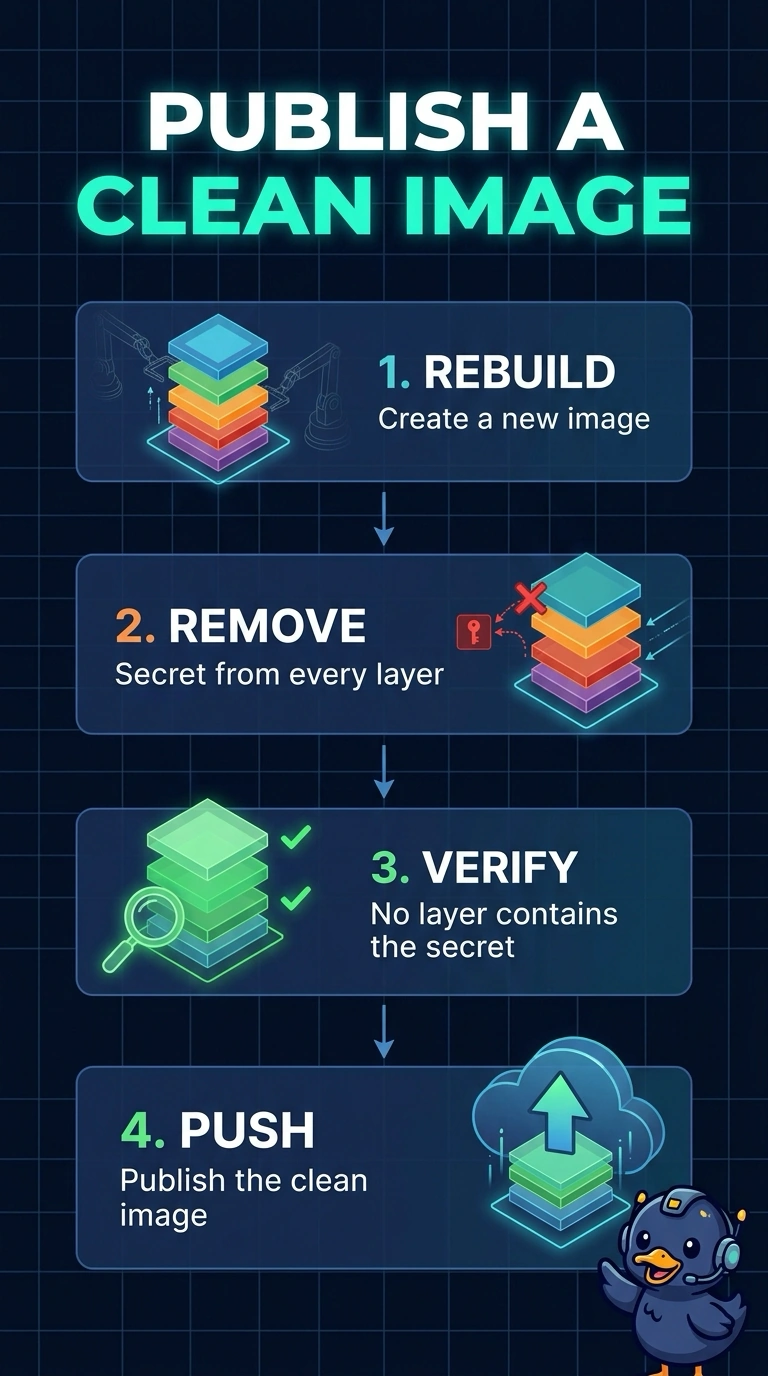
Think of the image layer as a photograph of the key, and rotation as changing the lock. You changed the live key but left the photograph in the registry, so the secrets result remains until you rebuild an image whose layers no longer contain it.
Full Explanation
A secret baked into an image layer remains a secrets workload result even after you rotate the live identity key. Rotation limits what an attacker can do with the exposed secret, but it does not remove the layer that still contains it. To clear the result, rebuild and push an image whose layers no longer contain the secret. Attaching a new identity policy to the rotated key may tighten the cloud role, but it cannot rewrite an existing image layer in the registry. Filing an attack-path exception does not address this finding: the secret is in an artifact, not an attack-path chain, and relabeling it as an ordinary configuration finding leaves the layer in need of a rebuild. Marking the whole registry as a trusted image will not suppress secret results inside images that have already been scanned; that trusted-image outcome is meant to allow a golden registry and flag everything else. Exam caveat: collect-masked-pattern behavior for data classification is unrelated. This workload result is key material in an image layer, not three masked samples of a data pattern. Practical check: rotate the live key, rebuild from a clean layer, rescan the new digest, and confirm the secrets result is gone on that digest only.