
A custom workload check must run a Python script on a live virtual machine and inspect that running host. Which scanner should the rule name?
Select an answer to reveal the explanation.
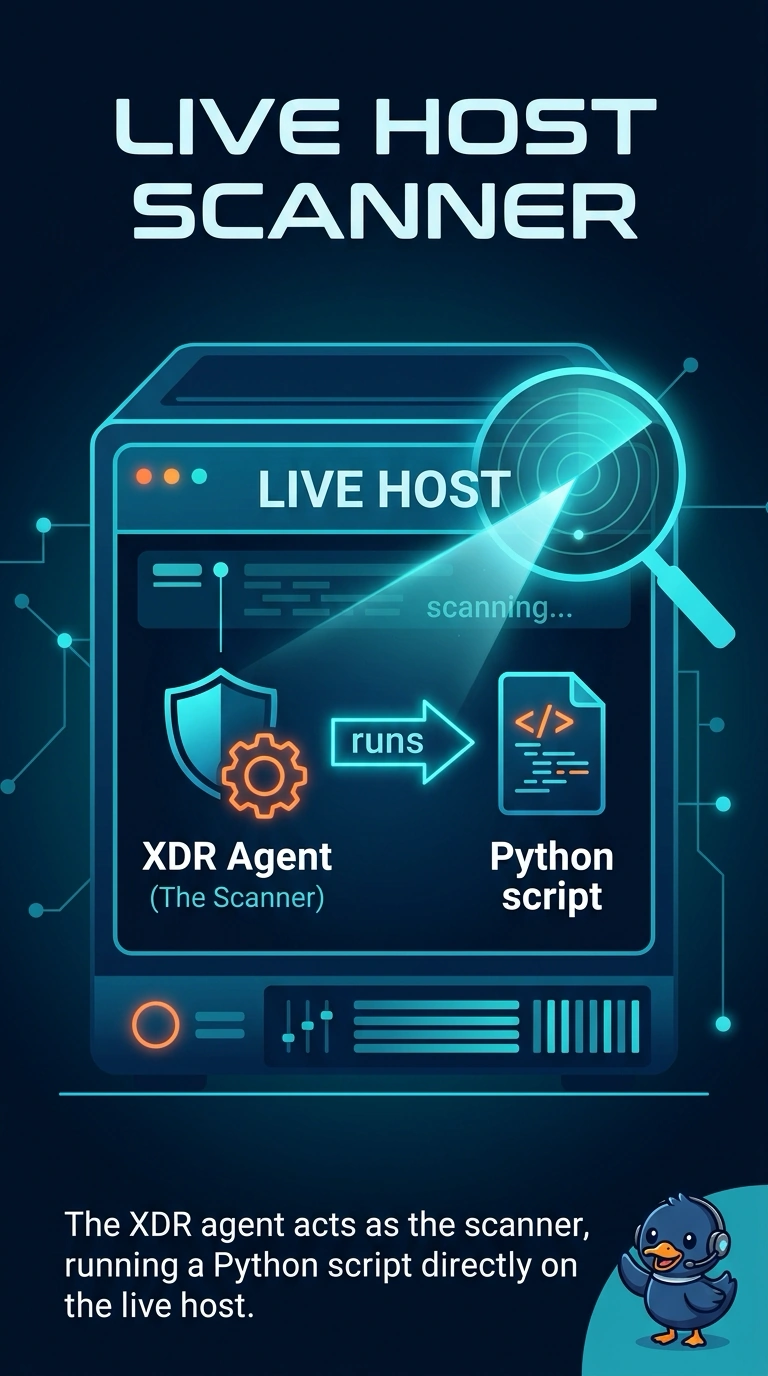
Short Explanation
Think of the live host as a patient and the script as a stethoscope someone has to hold on the chest. You need a scanner that is actually on that machine, and the XDR agent is the one that runs that Python script. A connector rule and an image scan are looking at other artifacts.
Full Explanation
Custom workload rules name a scanner. The XDR agent is the scanner that runs Python on a live host. A rule that must inspect the running virtual machine names that agent. The rule still does nothing until a Cloud Workload policy runs it, but the scanner choice is the agent. The Kubernetes Connector evaluates Rego in package panw.compliance with a match rule against cluster objects such as kind, metadata, and spec. It does not run a Python script on a virtual machine. Agentless disk scan evaluates Rego against an image without an agent inside the image. It does not start a process on the live host. The Broker VM is a closed appliance for endpoint routing, log collection, and file forwarding. Third-party agents are not installed on it, and it is not a workload scanner that accepts custom scripts. Exam caveat: serverless coverage follows the function integration rather than a package you install by hand inside every invocation, so do not copy this virtual-machine answer onto a function that has no agent model. Operational check: confirm the custom rule scanner is the XDR agent, confirm the host has an agent heartbeat, and confirm a Cloud Workload policy includes the rule.