
A health system enabled a data security rule and still sees no sensitive-file findings on a research bucket of patient spreadsheets. No data-classification profiles are enabled. What must change before those files can surface?
Select an answer to reveal the explanation.
Short Explanation
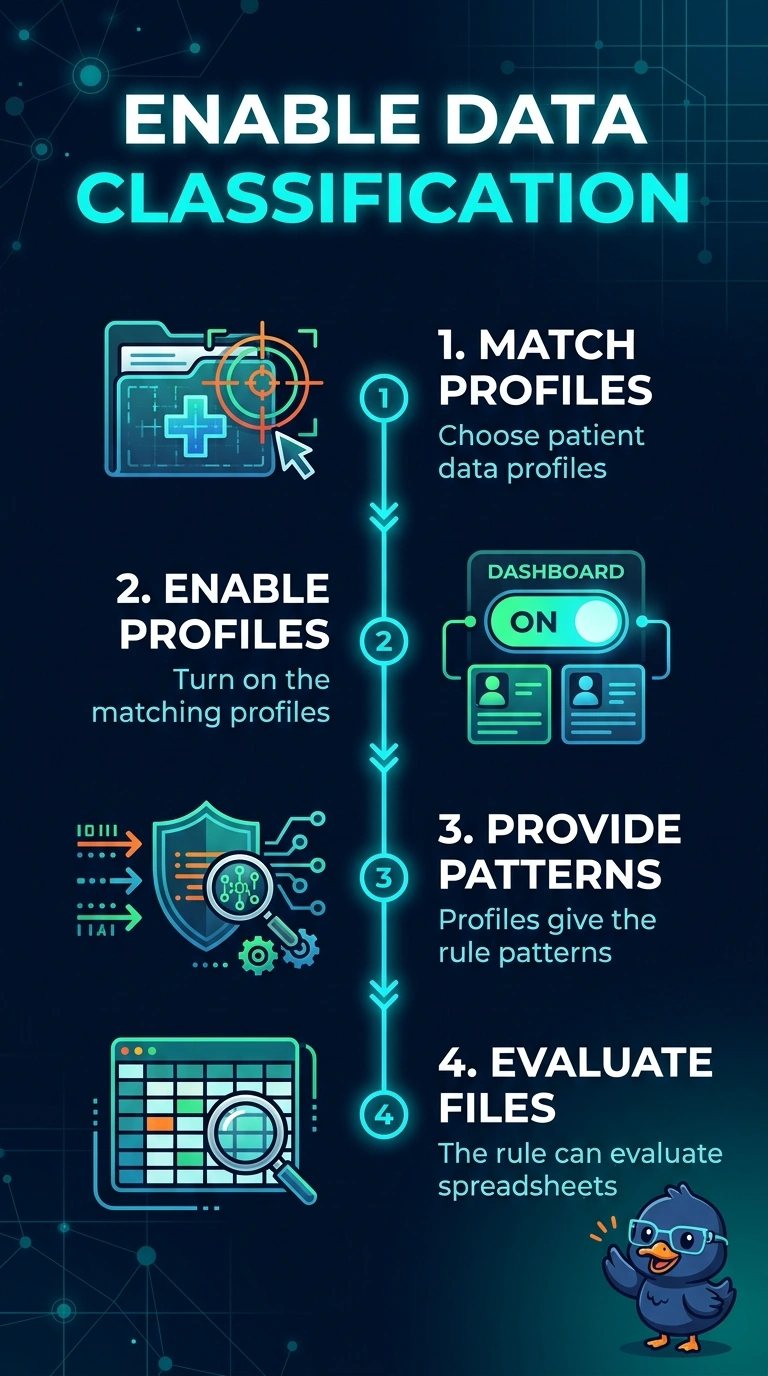
Think of a data rule as a metal detector with the filters still in the box. You turned the rule on and never enabled a classification profile, so patient patterns are not in the evaluation. The trap is expecting sensitive-file findings from a rule that has no profiles to run.
Full Explanation
Data findings depend on classification. Profiles shipped with the product include Developer Secrets, Financial, PCI, PHI, PII, and Sensitive, and each can be enabled or disabled. Sensitive-data results show up for enabled profiles. With none enabled, a data security rule has no patient patterns to evaluate, even when the research bucket holds spreadsheets. Enabling the profiles that match that data, such as PHI or PII, is what lets the rule surface the files. Recasting the bucket as an attack path asks for a chain. A dataset that contains sensitive data is a data finding, and the chain is a different rule family that this empty result does not describe. Treating the spreadsheets as an identity finding confuses content with the privileges of a role. An over-privileged identity is an identity outcome, not a substitute for classification. Turning OCR off globally skips text inside images. It does not enable profiles, and OCR is already on by default, so disabling it removes coverage instead of creating it. Exam caveat: patterns such as card numbers can also be enabled or disabled individually, but a profile that is off still withholds the sensitive-data view the team is waiting on. Operational check: enable the PHI or PII profile, rerun the data evaluation on the research bucket, and confirm sensitive-file results appear only after that profile is on.