
A transit agency engineer needs to see which asset groups currently contain a production storage account. Pending verification against the current official membership schema/query example for the actual asset-to-group mapping, where should that membership be read?
Select an answer to reveal the explanation.
Short Explanation
Think of last quarter's spreadsheet as a photograph of a moving line. You are pointed to the asset_groups dataset for the groups around this storage account, but verify the actual asset-to-group mapping with the current official schema before you treat that filter as complete. The trap is trusting an export, a policy action, or a file on the broker.
Full Explanation
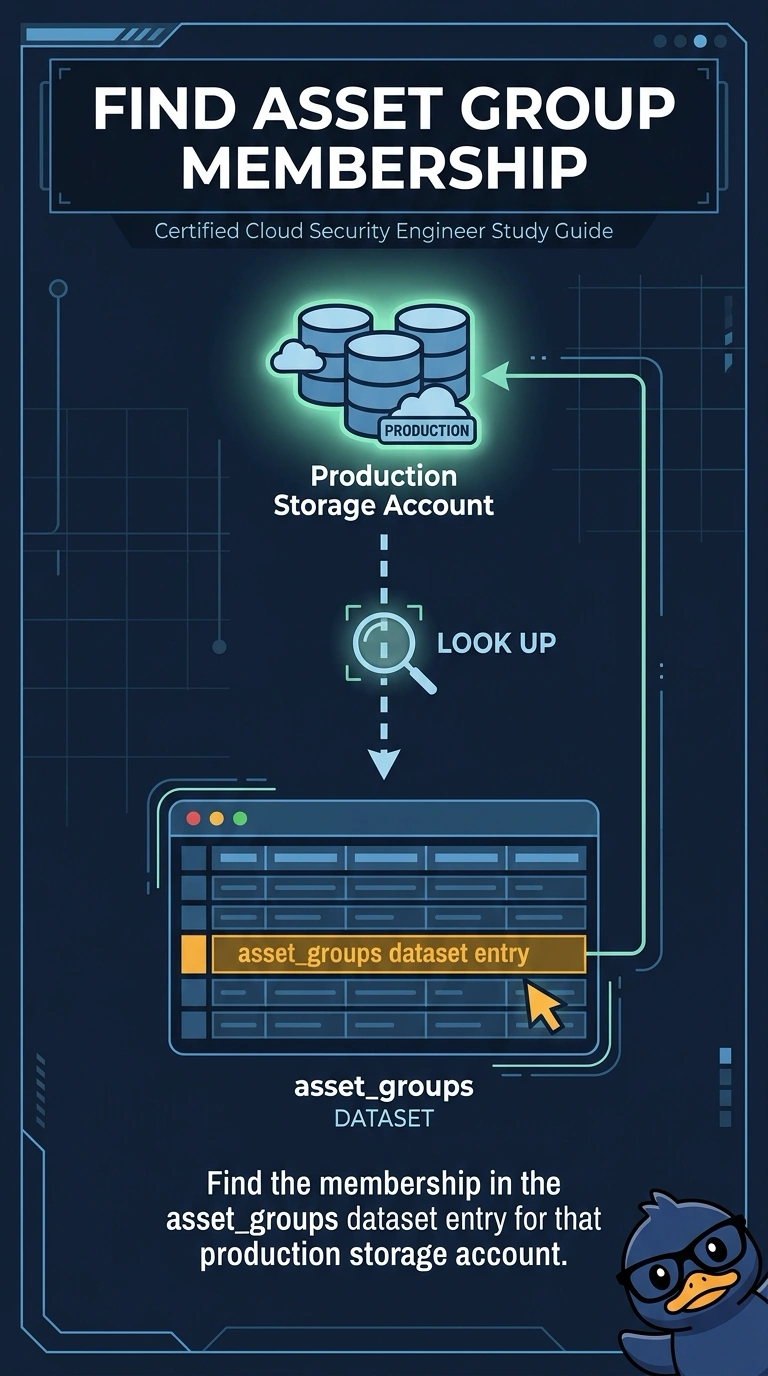
Asset-group membership for an asset is pointed to in the asset_groups dataset, which is documented for group metadata and human-readable group names, as distinct from scope-based access, automation exclusions, enrichment, and policy scope. An engineer who needs the groups around one production storage account is directed to query that dataset entry, with HOLD pending a current official membership schema/query example. A CSV from last quarter is a snapshot. Dynamic groups pick up later matches, and untouched assets can lag for hours after a filter edit, so an old export will not answer what is true now. A vulnerability-policy action records whether a finding creates an issue or is ignored, and whether prevention is set. It does not list group membership. The Broker VM host file is local name resolution on a bridge appliance. It has no record of Cortex asset groups. Exam caveat: a refresh of an XQL widget reads the current result, but group edits on assets that have not otherwise changed can still take hours to show on the asset itself. Operational check: verify the actual asset-to-group mapping and do not assume filtering asset_groups by the storage-account ID alone returns all current memberships; compare the verified result with the dynamic filters you expect, rather than with a downloaded file.