
A county government's dynamic asset group uses a long chain of tag exceptions. It is slow to maintain and membership keeps surprising the operators. What change matches how these groups should be written?
Select an answer to reveal the explanation.
Short Explanation
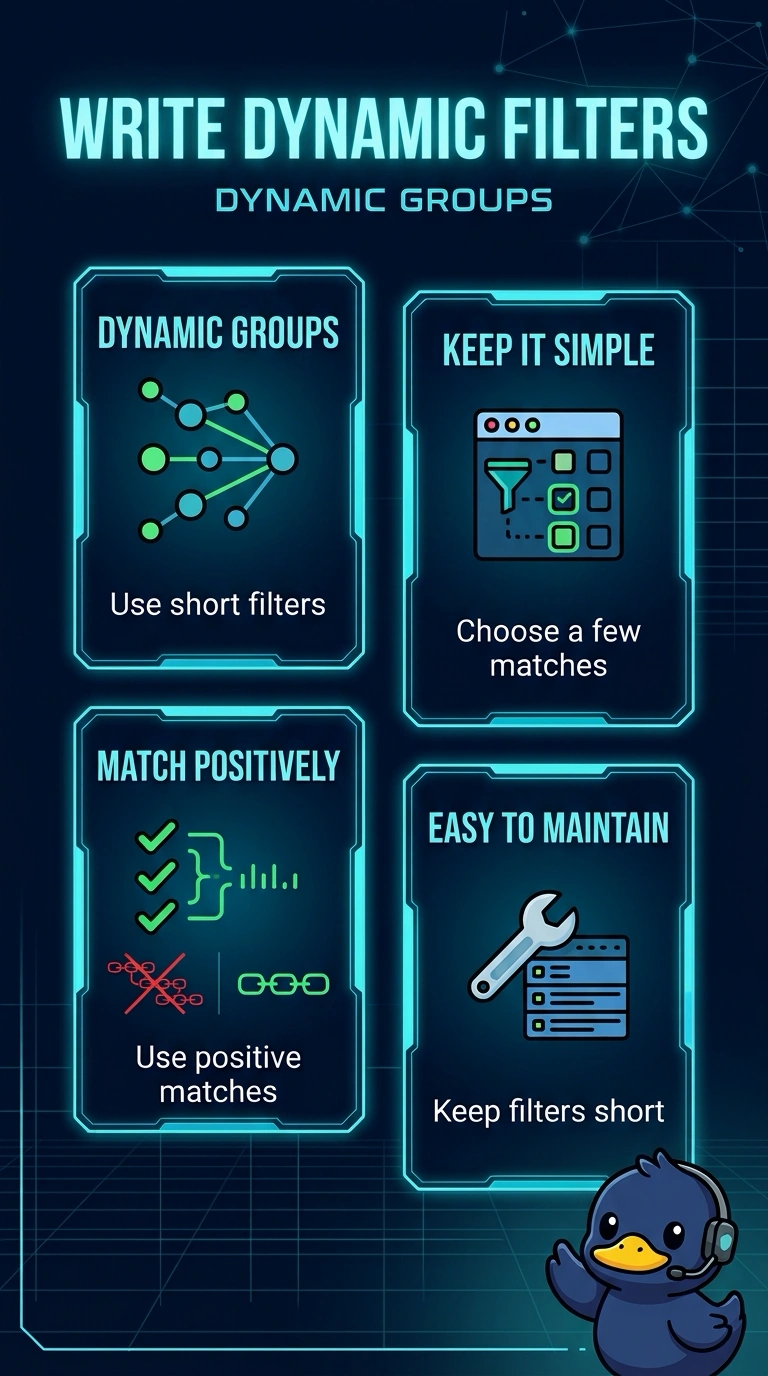
Think of a long exception chain as a door rule that lists everyone who is not invited. You will maintain it forever, and a short filter that names who belongs is the group these dynamic filters are built to be. The trap is freezing the mess into a static list or a PDF.
Full Explanation
Dynamic asset groups are filters, and the guidance is to keep those filters short. A long chain of tag exceptions is brittle: one new tag the chain forgot will surprise membership, and the filter is hard to reason about. Shorten it to a few positive matches so future assets join when they fit the real definition. Converting the group to a static list freezes today's members. New county assets will not join until someone edits the list, which abandons the dynamic behavior the group was created for. Binding the long chain as an access scope does not make the filter healthier. Scope-based access needs a dynamic group on supported attributes, and a bad filter used as a scope just hides or shows the wrong assets faster. A compliance report is an assessment output. Replacing the group with a download removes the filter that policies, exclusions, and enrichment were pointing at. Exam caveat: assets that have not otherwise changed can take hours to show a new filter, so a shorten-the-filter change is not disproved by an immediate look at an untouched asset. Operational check: rewrite the group as a short positive filter, compare membership on a newly tagged test asset, and only then retire the exception chain.