
A water utility wants soft remediation of risky IAM users to skip break-glass accounts, and those account names change every time the on-call roster rotates. How should the exclusion be built so new break-glass users are skipped without a monthly edit?
Select an answer to reveal the explanation.
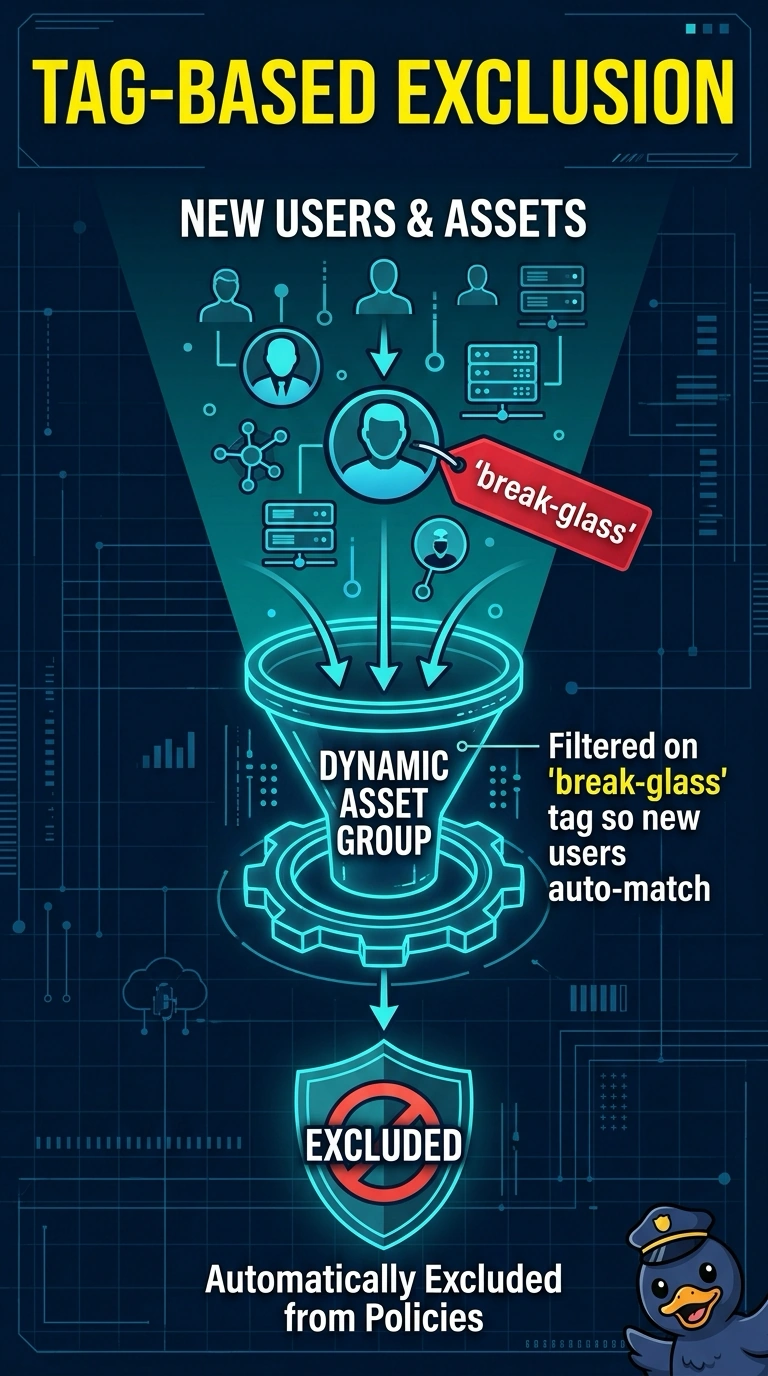
Short Explanation
Think of a static list as a guest book you rewrote last month, while the party kept inviting new people. You want soft remediation to skip break-glass accounts that change with the roster, and a dynamic group picks up new matches on its own. The trap is hiding the findings with access scope, which does not change what the automation is allowed to touch.
Full Explanation
IAM user soft remediation can take an asset-group exclusion, and that use is separate from scope-based access and from vulnerability policy. A dynamic group is a filter, so a break-glass tag keeps matching new on-call accounts as the roster changes, without a monthly hand edit. A static group is a hand-picked list of the names you typed today. Next month's break-glass user is absent until someone edits it, which is the maintenance the utility is trying to escape. A vulnerability policy that ignores every identity finding would drop real identity risk for the whole tenant, and identity remediation is not a vulnerability-policy action. An SBAC scope limits which assets a person can see. It does not tell the remediation automation to skip a user, so hiding rows from the operator leaves the soft-remediation job unchanged. Exam caveat: membership for assets that have not otherwise changed can take hours to refresh, while new or newly changed accounts pick up the filter immediately. Operational check: tag a test break-glass user, confirm it appears in the dynamic group, and confirm the soft-remediation exclusion points at that group rather than at a copied name list.