
A ferry operator adds production accounts often and wants them in scope without a monthly hand edit. Provider and tags are reliable. Which asset group fits?
Select an answer to reveal the explanation.
Short Explanation
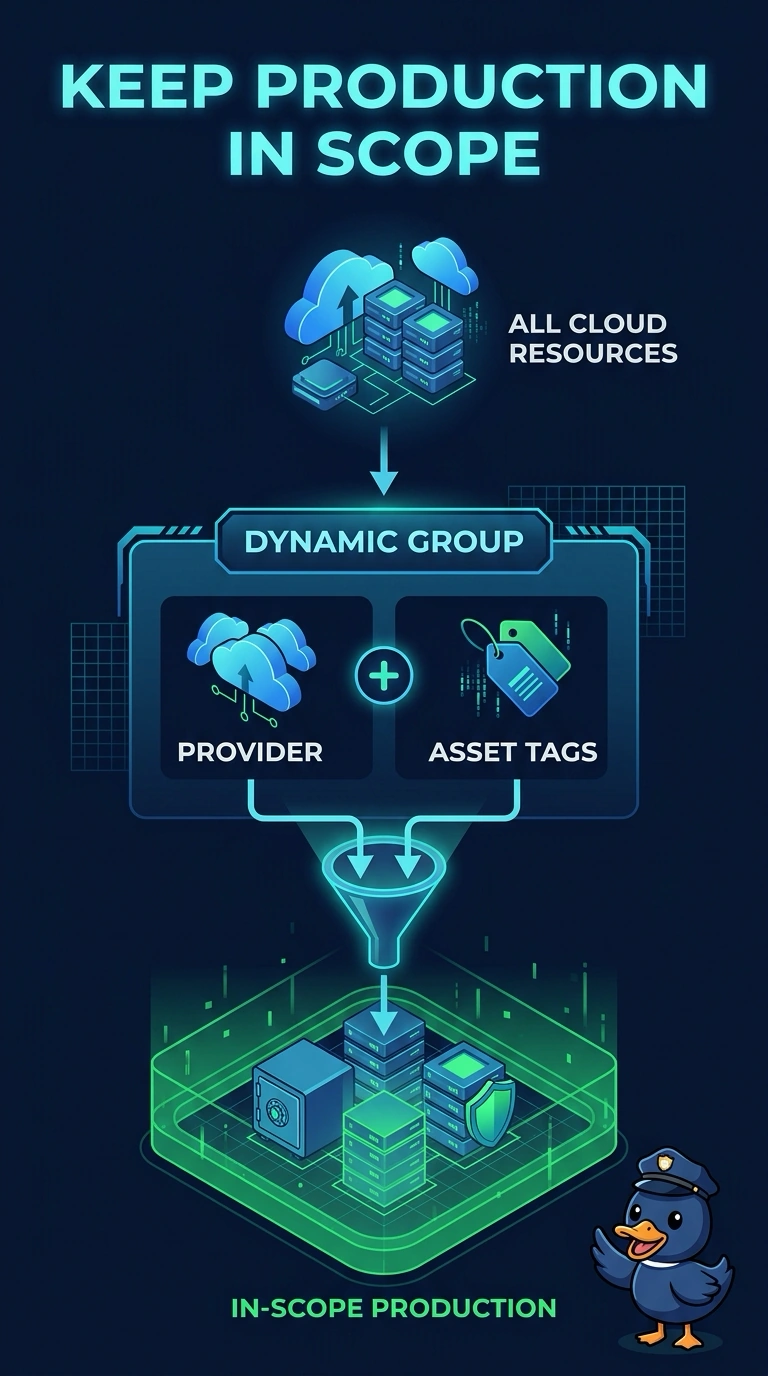
You can think of a dynamic group as a net that catches each new production account with the right provider and tags. Those reliable filters bring new accounts into scope without a monthly hand edit. A hand-built list or hostname export is the trap when the signals you need are already reliable.
Full Explanation
A dynamic group uses filters to pick up future matches. Provider and asset tags are reliable here, and both are usable filter fields, so filtering on them brings new production accounts into scope as they appear. A static group is a hand-picked list; editing it whenever an account appears is the monthly work the operator wants to avoid, and the list can miss an account until someone remembers to update it. Binding a static group as the access scope also fails because Scope-Based Access Control accepts dynamic groups only, so a static group cannot define who sees the accounts. Pasting a monthly hostname export into a new static group has both problems: hostname is not a supported scope field, and the list stays stale until the next paste. Exam caveat: membership updates immediately for new or newly changed assets, while untouched assets can take hours to reflect a filter edit. Practical check: add a test account with the production tag, confirm it joins the dynamic group without a hand edit, and use that group where scope or policy should follow.