
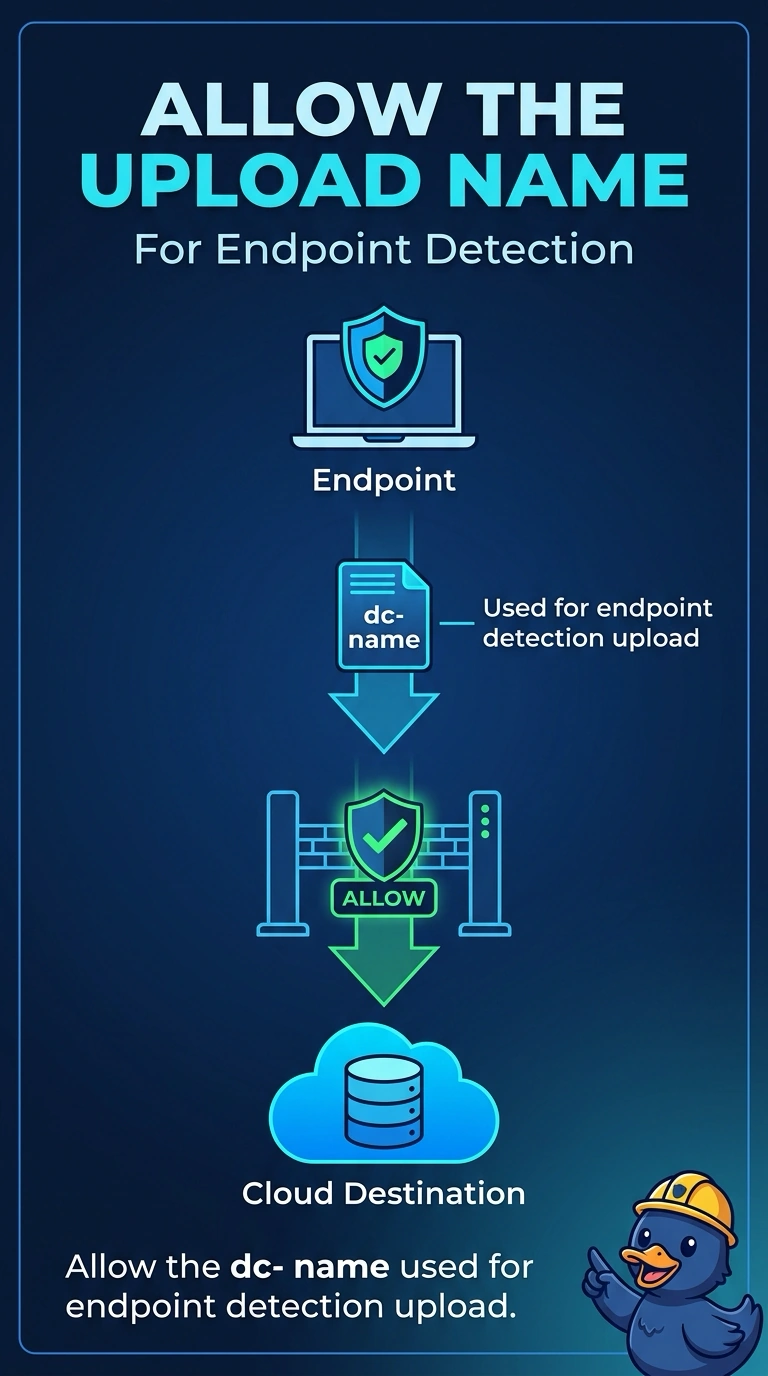
Analysts open the tenant console, and endpoint detection uploads fail. The firewall allows the regional console name and blocks the dc- names. What should be allowed?
Select an answer to reveal the explanation.
Short Explanation
Think of the console as the front office and the upload door as a side dock with its own sign. You can open the tenant page because the regional console name is allowed, and detection uploads use the dc- name that is still blocked. Heartbeat and Live Terminal are other signs, not this dock.
Full Explanation
Agents use outbound TCP 443, and the service names are separate. The tenant console uses the regional xdr name, which is why analysts can open it. Endpoint detection upload uses the dc- name, so that name is the missing allow when uploads fail and the console works. The heartbeat name is ch-. It is how agents check in. It does not also carry detection uploads or Live Terminal, so allowing only heartbeat leaves uploads blocked. Inbound UDP 123 from the time pools reverses time sync. Hosts send UDP 123 toward time.google.com and pool.ntp.org. They do not receive inbound time from those pools as a way to upload detection data. The lrc- name is Live Terminal. Treating it as the detection-upload path allows the wrong feature and still leaves dc- blocked. Exam caveat: verdict requests go to the region closest to the endpoint, which can differ from the tenant region, so a console allow in the tenant region does not imply every agent name is open. Operational check: allow outbound TCP 443 to the dc- name, confirm an endpoint upload succeeds, and confirm the console path was not the one that was failing.