
Plant laptops heartbeat, and Live Terminal sessions never connect. The firewall allows the heartbeat name and blocks the lrc- name. Which allow entry is missing?
Select an answer to reveal the explanation.
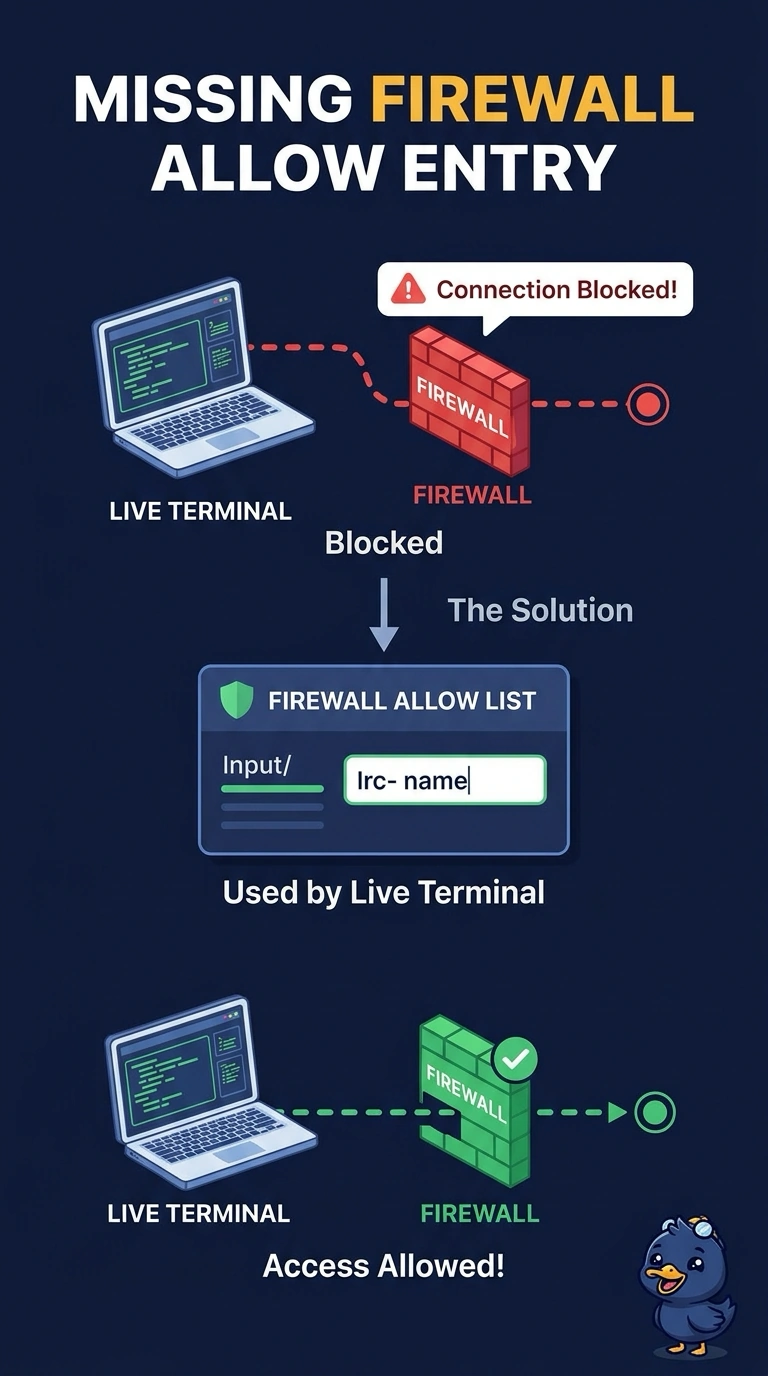
Short Explanation
Think of heartbeat as a ping you already hear and Live Terminal as a different phone number. Your laptops check in, so the heartbeat name is open, and Live Terminal uses the lrc- name that the firewall still blocks. Time sync will not open that session.
Full Explanation
Agents reach Cortex on outbound TCP 443, and the names are not interchangeable. Heartbeat uses the ch- name, which is already allowed because the laptops heartbeat. Live Terminal uses the lrc- name, so the missing allow entry is that lrc- name. The upload name, dc-, carries EDR upload. It is a separate allow-list entry from both heartbeat and Live Terminal, and opening it would not connect a Live Terminal session. An inbound TCP 443 path from Cortex to the laptop reverses the connection. Agents connect outbound. They do not wait for Cortex to dial in. UDP 123 toward time.google.com and pool.ntp.org, which are Broker defaults, is time sync. It is not the Live Terminal channel. Successful heartbeat alone does not rule out all clock-related session/authentication faults; the explicitly blocked lrc endpoint is the first demonstrated fault here. Exam caveat: a proxy that allows the heartbeat name and still challenges the lrc- name leaves the same split, so each name the feature uses has to be allowed for the agent identity. Operational check: allow outbound TCP 443 to the lrc- name, start a Live Terminal session, and confirm the heartbeat path still succeeds on its own name.