
Plant agents never send a heartbeat. The firewall team opened inbound TCP 443 from the internet toward the plant and left outbound traffic blocked. What path do those agents actually need?
Select an answer to reveal the explanation.
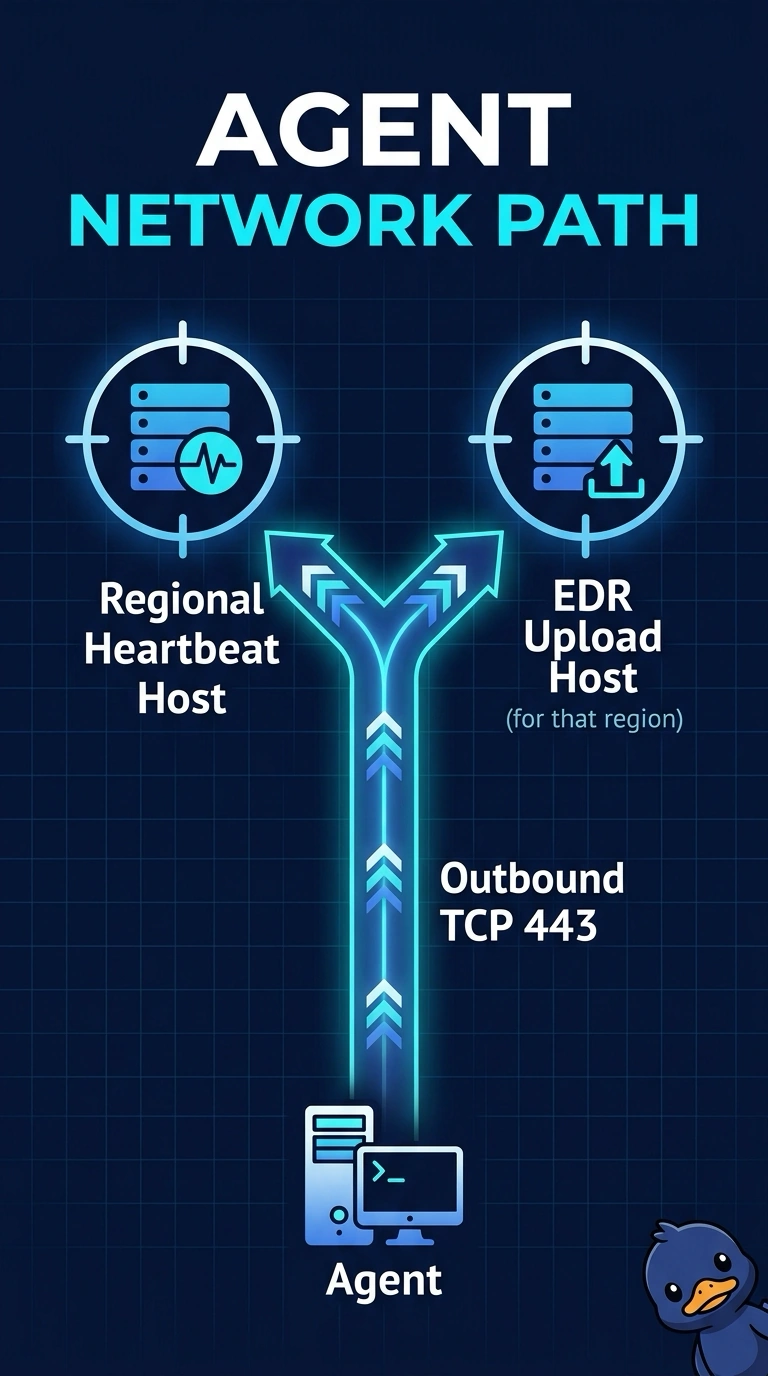
Short Explanation
Think of the agent as the one placing the call — you still need to let it dial out. You opened inbound TCP 443 but left outbound blocked, so it cannot reach Cortex. What you need is outbound TCP 443 to ch-<tenant>.traps.paloaltonetworks.com and dc-<tenant>.traps.paloaltonetworks.com.
Full Explanation
Plant agents initiate outbound HTTPS to Cortex, so heartbeat requires outbound TCP 443 to ch-<tenant>.traps.paloaltonetworks.com for check-in and dc-<tenant>.traps.paloaltonetworks.com for EDR upload. Opening inbound TCP 443 from the internet toward the plant does not create that outbound path, and leaving outbound blocked keeps the heartbeat from ever leaving the plant. UDP 123 toward time.google.com and pool.ntp.org is time sync only and is not a substitute for the HTTPS check-in and upload path the agent uses. A direct route from the private outpost scanners to the tenant browser address addresses different hosts and a different workflow, so it does not start a heartbeat from the plant agents that are actually failing. Verdict routing is a separate latency-based path from heartbeat and upload, so allow the tenant-specific heartbeat and upload names for the agent path and treat verdict connectivity separately. Operational check: allow outbound TCP 443 to the ch-<tenant> and dc-<tenant> names, then confirm a plant host heartbeat arrives without opening inbound 443 from the internet.