
An AWS team wants the onboarding CloudFormation stack deployed by a read-only auditor role so the installer cannot change the account. The stack must create the onboarding resources. Which identity should run that deploy?
Select an answer to reveal the explanation.
Short Explanation
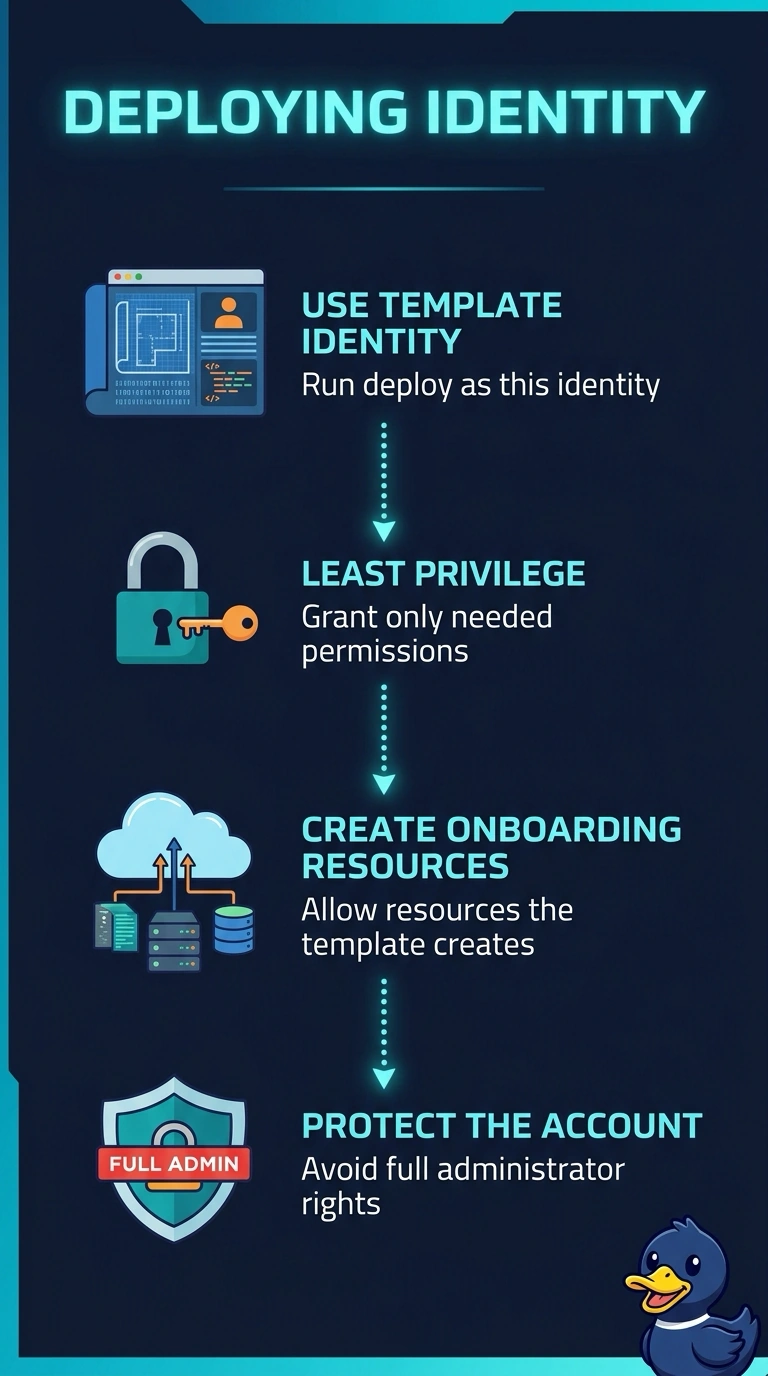
Think of the auditor role as a visitor badge that can look around and cannot swing a hammer. You need the template least-privilege identity that can create the onboarding resources without full administrator rights. A read-only auditor role, a shared access key, and another tenant's API key will not finish that stack.
Full Explanation
The onboarding identity should be the template least-privilege identity that can create the resources the CloudFormation stack defines without full administrator rights. A read-only auditor role can review the account and still cannot create the onboarding resources, so the stack rolls back or never completes. Trust for the cloud connection uses federated identity, not a long-lived secret, so a shared access key copied across the operations roster is the wrong kind of credential for this deploy. An API key from another Cortex tenant carries that other tenant's role. It does not become the AWS deployment identity, and pasting it into the stack parameters does not create the onboarding resources. Exam caveat: the read-only auditor role can still be the right identity for a quarterly access review. It is the wrong identity for this deploy. Operational check: run the stack with the template role, confirm the resources are created, and confirm the shared access key and the other tenant's API key are not the credentials in the stack.