
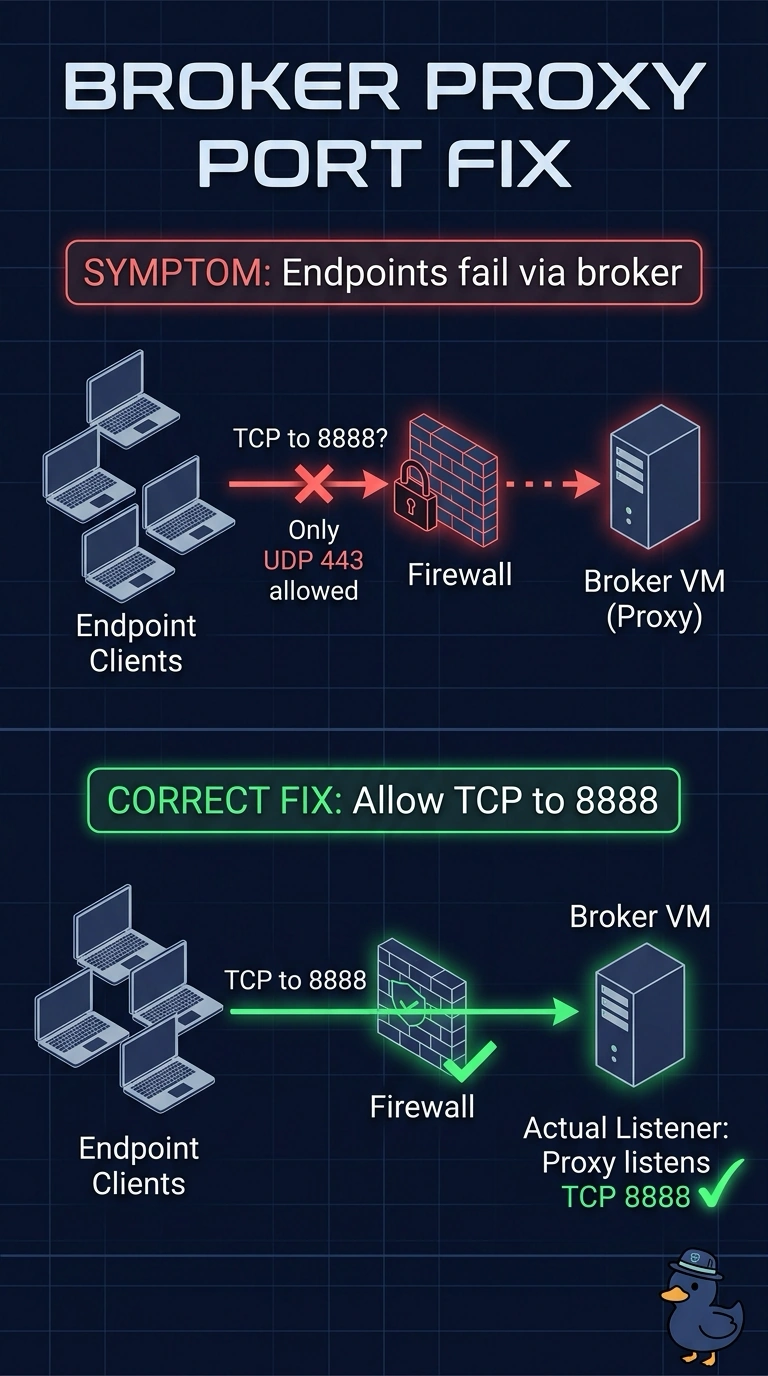
Endpoints that should reach Cortex through a Broker VM are failing. Agent Proxy is configured to listen on TCP 8888; the firewall permits only UDP 443. What should the client rule allow?
Select an answer to reveal the explanation.
Short Explanation
Think of the broker as a front desk that listens on your configured port, not a time server or UDP tunnel. Your clients are aimed at the Broker VM, but the firewall allows the wrong transport. Use the configured proxy port and separately allow required broker outbound services; 443 for caching/installer functions is not the universal Agent Proxy listening port.
Full Explanation
Broker VM Agent Proxy clients must reach the configured listening port, 8888 in this deployment, over TCP from the endpoints. Permitting only UDP 443 leaves that TCP channel blocked, so endpoints fail even when the broker itself is healthy and the proxy service is listening. Use the configured proxy port and separately allow required broker outbound services; 443 for caching/installer functions is not the universal Agent Proxy listening port. Keeping UDP 443 as the only permit confuses transport with service and never completes the proxy session. Sending UDP 123 toward the broker confuses time sync with proxy access; that NTP path is toward time.google.com and pool.ntp.org, not a client-to-broker channel. Opening inbound TCP 443 from the internet reverses direction; clients must initiate egress to the broker, and an internet-side inbound allow does not create that egress. Operational check: allow TCP 8888 from a test endpoint to the Broker VM, confirm the proxy session establishes, and leave UDP 443 closed if nothing else needs it.