
A team wants custom Python compliance checks on live hosts and proposes installing that Python on the Broker VM. Where should those checks run instead?
Select an answer to reveal the explanation.
Short Explanation
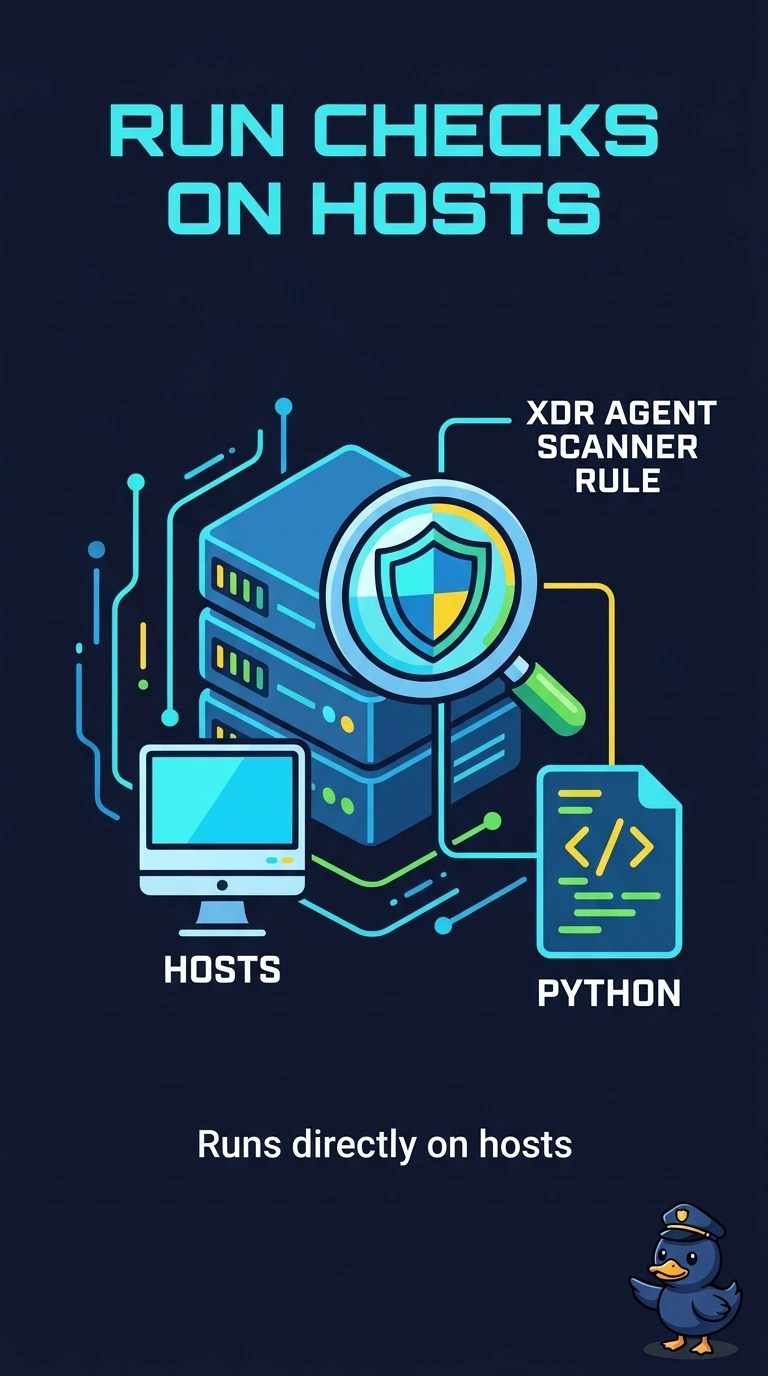
You can keep the sealed Broker VM untouched: custom Python checks on live hosts belong in an XDR agent scanner rule on the hosts. A Kubernetes Connector rule uses Rego rather than Python, and a SARIF upload ingests findings instead of running host checks.
Full Explanation
Custom Python compliance checks on live hosts should run as an XDR agent scanner rule on the hosts, where the agent can perform the inspection. The rule must also be attached to a Cloud Workload policy before it creates issues. Installing extra software directly on the Broker VM is not appropriate: the broker is a closed appliance, does not accept third-party software, and updates from Cortex rather than serving as a place to run customer Python. A Kubernetes Connector rule uses Rego in package panw.compliance and evaluates kind, metadata, and spec from the cluster feed; it does not run Python on a live host. A SARIF upload ingests third-party code findings for application security evaluation; it does not execute Python on the broker or store host-compliance results there. Exam caveat: a connector rule can assess cluster-provided resource data, but that is different from an agent scanner performing a live-host check. Practical check: deploy the Python rule through the XDR agent, add it to a workload policy, and verify that a live host produces the compliance result without adding software to the broker.