
A plant design calls for one virtual machine for endpoint routing, a second for log collection, and a third for file forwarding, each built as its own Broker VM. What should the design use instead?
Select an answer to reveal the explanation.
Short Explanation
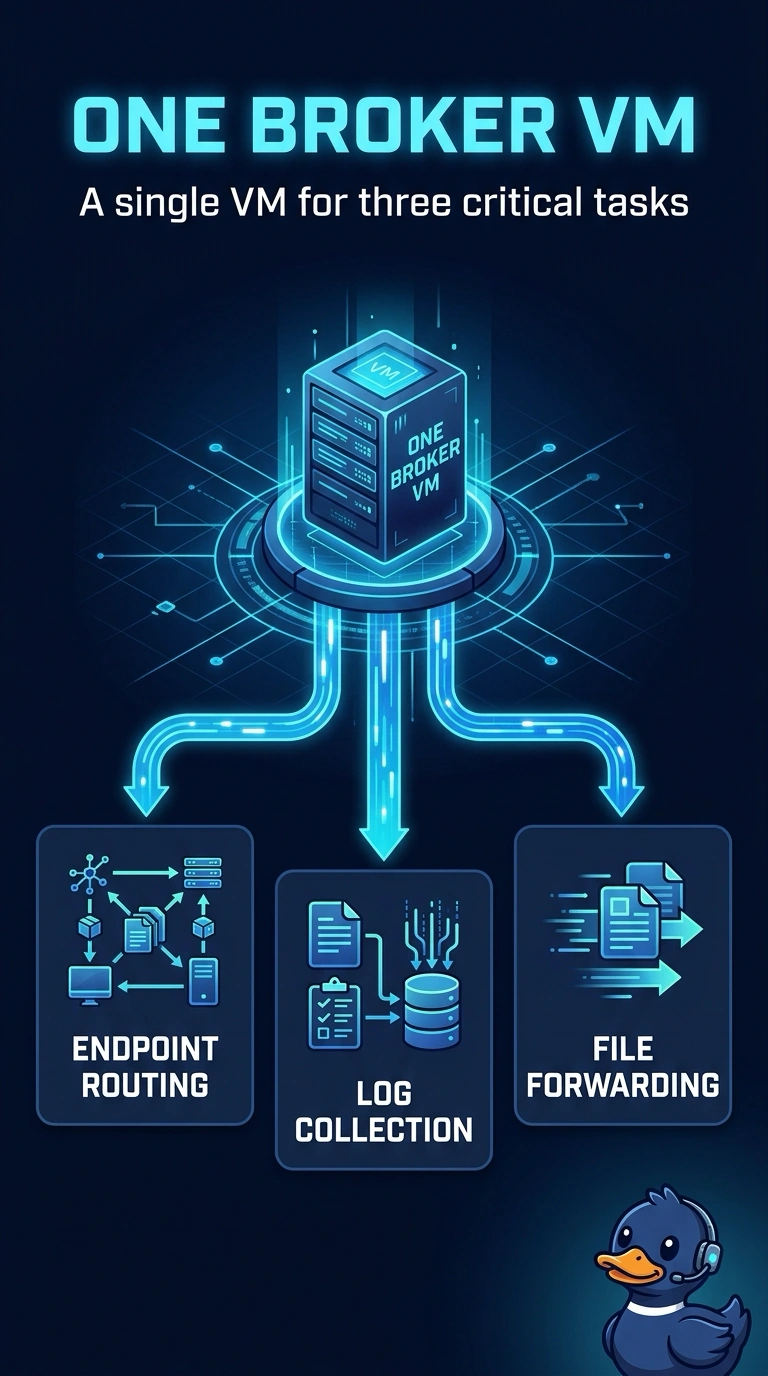
You do not hire three receptionists for one front door. Endpoint routing, log collection, and file forwarding are the Broker VM's bridge jobs, and you put them on one appliance. The trap is building a virtual machine per job, or replacing the bridge with an outpost account.
Full Explanation
A Broker VM bridges the customer network to Cortex for endpoint routing, log collection, and file forwarding. Those are functions of the same closed appliance, so the plant does not need a separate broker virtual machine for each one. Three outpost accounts would be three scan deployments. An outpost lives in a dedicated account, one per account, and it does not perform a single bridge task in place of the broker. Outposts scan. They are not a substitute for the plant path. Cloud scan does not place a connector on a plant VLAN to replace the broker, and there is no cloud-scan appliance that collects plant logs in the broker's role. An XDR agent on a file server provides runtime telemetry for that host. It does not bridge endpoint routing, log collection, and file forwarding for the plant. Ports depend on the enabled applet: the agent proxy uses its configured port, commonly 8888; agent installer/content caching uses HTTPS 443, and log collectors use their configured listening ports. Permit the actual applet paths rather than assume every Broker service uses 443. Operational check: deploy a single broker, confirm routing, log collection, and file forwarding are all active on it, and confirm you did not add two more appliances for the same bridge.