
A city team places a Broker VM on a plant VLAN and expects it to agentlessly scan AWS accounts the way an outpost does. What is that broker actually for?
Select an answer to reveal the explanation.
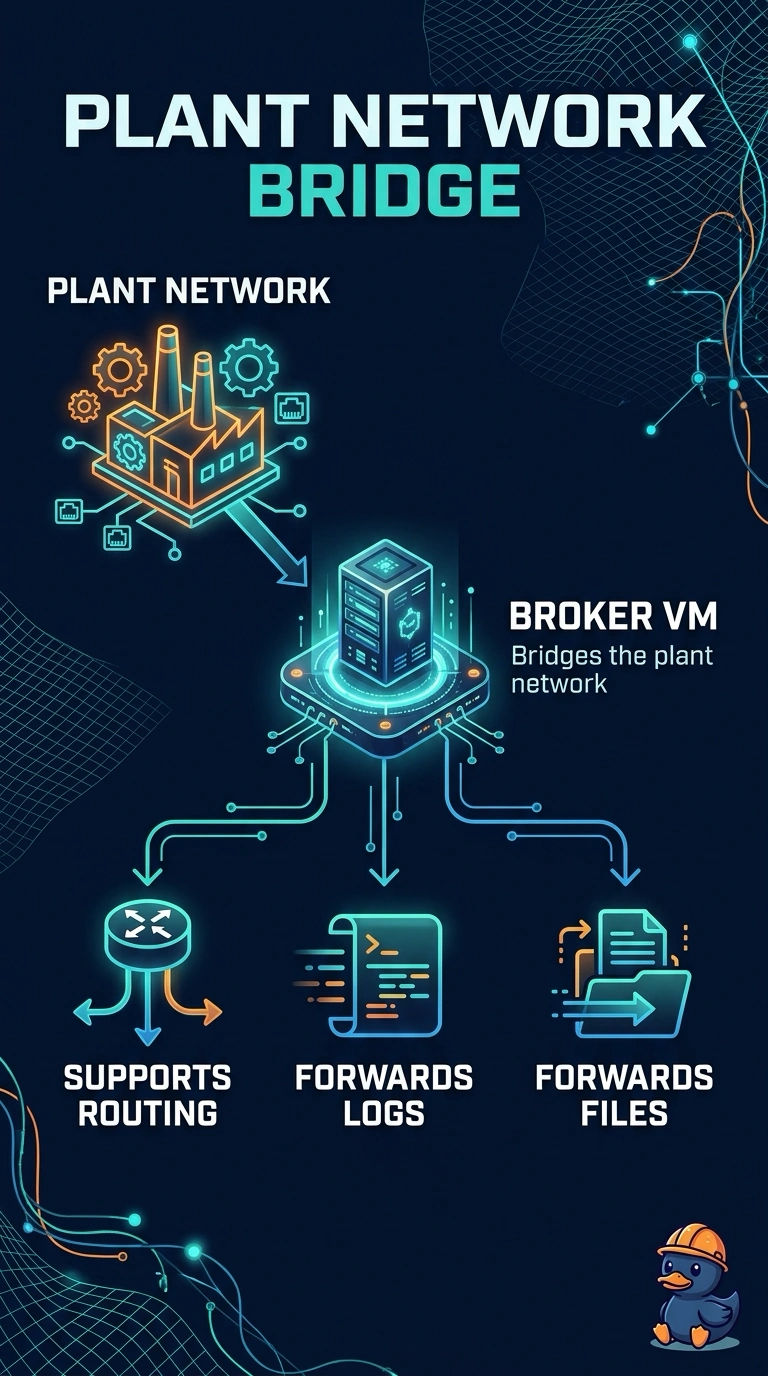
Short Explanation
A ferry moves people across a river, and it does not become the warehouse on the far bank. You placed a Broker VM on the plant VLAN, and its job is routing, log collection, and file forwarding, not agentless scanning of AWS accounts. The trap is treating the broker as an outpost.
Full Explanation
The Broker VM is a closed appliance that bridges the customer network to Cortex for endpoint routing, log collection, and file forwarding. It is not an outpost and it is not a cloud-scan replacement, so it does not agentlessly scan AWS accounts or run DSPM against them from the plant VLAN. Replacing cloud scan and the outpost with the broker assigns the broker a job it does not have. Account scanning is cloud scan or an outpost in a dedicated account. Hosting the admission controller is a cluster prevention control, and it needs the agent when a vulnerability policy blocks a new deployment. The broker is not that controller. Authoring unified application policies happens in the console, the API, or Terraform. The CLI and the IDE only consume those policies, and the broker does not author them either. Exam caveat: agents can use the broker as their path, and they still have to be installed on the endpoints. The broker does not replace the agent. Operational check: confirm the broker is forwarding logs and files from the plant, and confirm AWS account scanning is a cloud-scan or outpost integration rather than a setting on the broker.