
Veracode findings and native IaC findings describe one payment service, but urgency looks inconsistent because the Veracode items sit on a different business application. How should the engineer line them up?
Select an answer to reveal the explanation.
Short Explanation
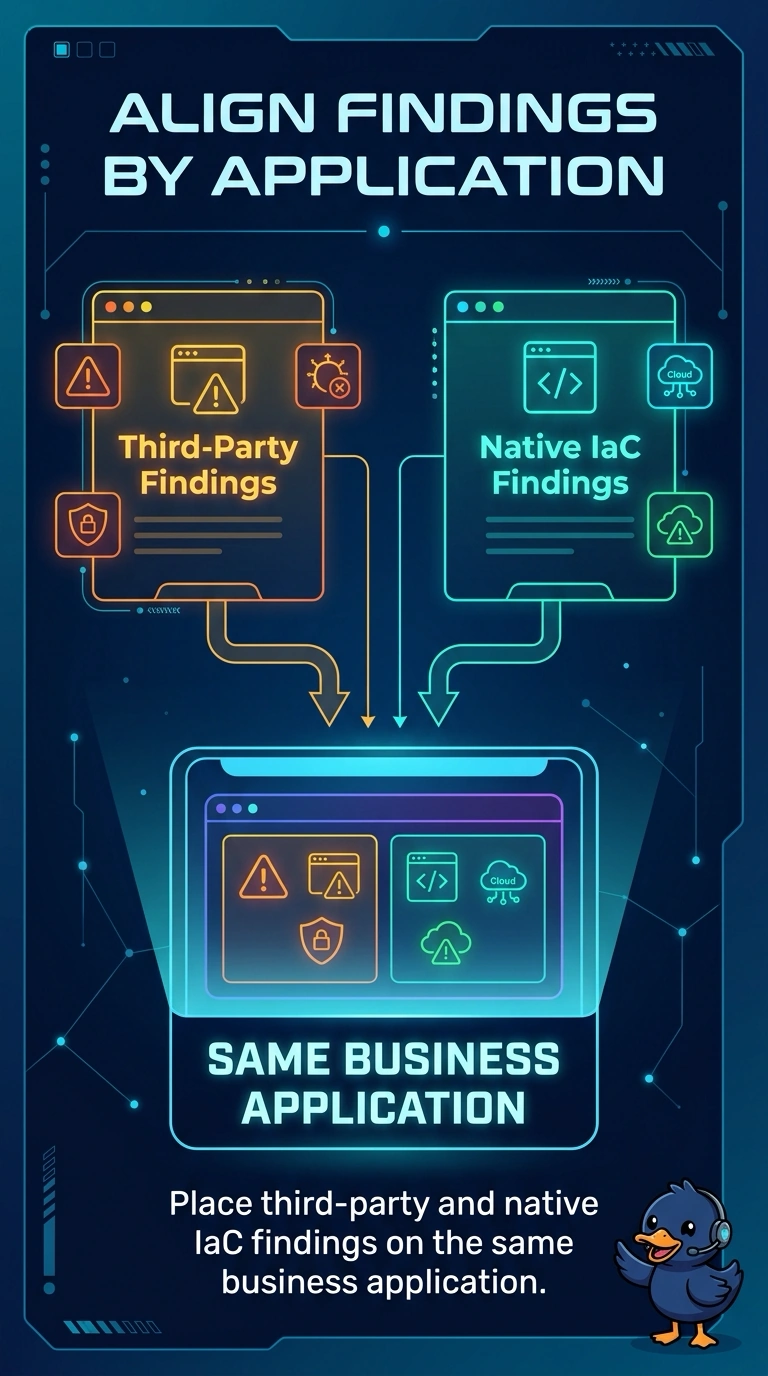
Two inspectors grading different buildings will never agree about the same shop. You want the Veracode findings and the native IaC findings on one business application so urgency is comparable. The trap is turning off native IaC, or mapping both feeds to a compliance control, and calling that alignment.
Full Explanation
ASPM groups findings on business applications, manual or dynamic, and applies urgency from EPSS, CISA KEV, code-to-cloud context, business criticality, and runtime protection. Findings for the same payment service need the same business application or those inputs are not compared on one object. Disabling native IaC drops a scanner. It does not make Veracode urgency meaningful next to IaC, because the IaC findings are gone. A custom compliance control is an assessment mapping. It is not the urgency model, and mapping both feeds to a control does not place them on one business application. Keeping them on separate applications is why urgency already looks inconsistent. Urgency does use business-application context for the findings ASPM groups, including ingested third-party results evaluated under the same policies. Exam caveat: code-to-cloud still has to link a repository finding to the deployed asset. Sharing a business-application name does not create that link by itself. Operational check: Correct the third-party findings repository mapping and associate the repository with the payment business application; verify deployment lineage and allow the next periodic Urgency evaluation.