
A registry integration reports a vulnerable image, and a new pod that uses the image still starts. The cluster has no admission control and no XDR agent. What does the registry scan not do by itself?
Select an answer to reveal the explanation.
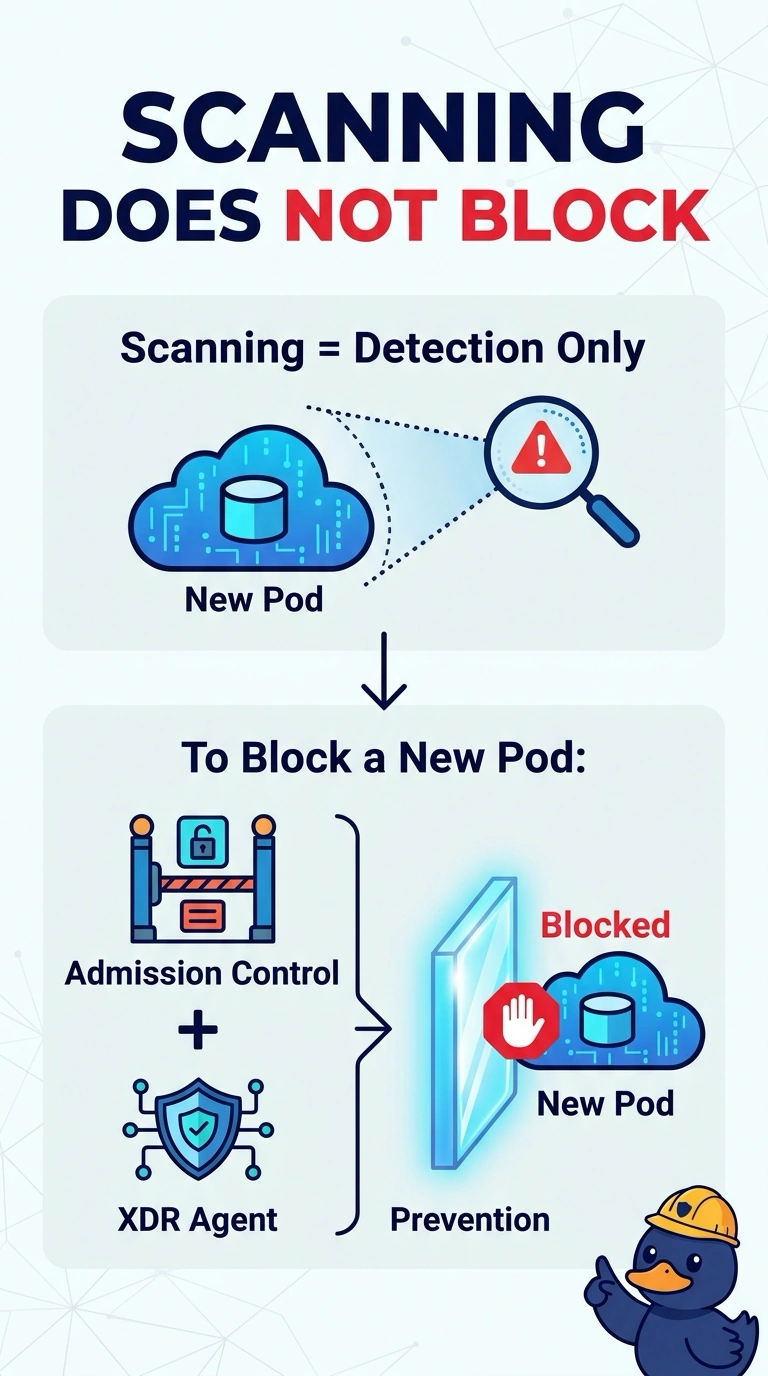
Short Explanation
Think of a warehouse inspection tag that does not lock the loading door. Your registry scan already reported the vulnerable image, and the pod still starts because nothing is set to block it. Blocking a new deployment needs prevention with the agent and the admission controller, which the scan does not do alone.
Full Explanation
A registry integration feeds image scanning, which reports vulnerabilities, malware, and secrets. That report is not a runtime block. Blocking a new Kubernetes deployment requires a prevention action plus the XDR agent and the admission controller. This cluster has neither the agent nor admission control, so the pod starts. The registry scan does not do that block by itself. The scan did record the vulnerability, which is why the report exists. Saying it failed to record vulnerabilities contradicts the stem. Registry credentials belong in the cloud-native secret store the integration expects. A tenant note is the wrong place, so the distractor that calls the secret store the wrong place has the relationship backwards. Image scanning of a registry does not require an XDR agent on the registry server. The agent is for runtime on workloads, and connecting a registry is not the same as deploying an agent on that host. Exam caveat: after the agent and admission control are added, the pod still starts if the vulnerability policy does not set prevention. Operational check: confirm the image finding exists, then confirm a block only after prevention, the agent, and the admission controller are all in place.