
A stadium keeps production container images in JFrog Artifactory and wants them scanned for vulnerabilities, malware, and secrets. Which connection does that job?
Select an answer to reveal the explanation.
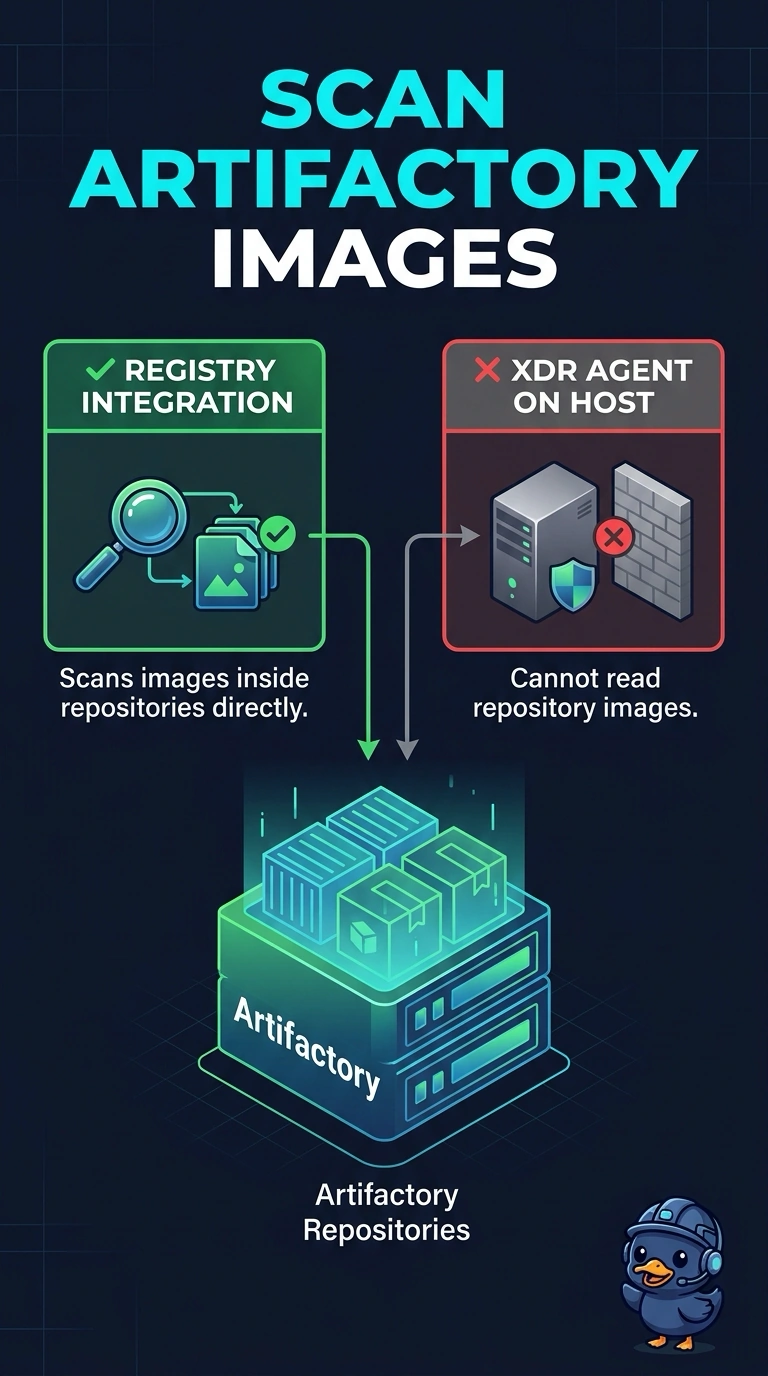
Short Explanation
Think of the registry as the warehouse and the agent as a guard on one loading dock. You want the images in Artifactory scanned, so connect the registry and let image scanning read them. Parking an XDR agent on the Artifactory host watches that server's processes and does not inventory the image repository.
Full Explanation
JFrog, Docker, and GitLab registries are image sources for workload scanning. A registry integration lets image scanning see the production repositories and report vulnerabilities, malware, and secrets. Connecting Artifactory is the integration that does that job. An XDR agent is runtime telemetry and prevention on a host where it is installed. Putting one on the Artifactory server does not substitute for the registry connection, and a registry credential is not an agent package. Source-control OAuth onboards GitHub, GitLab, or a similar git host for pipeline and repository scanning. It does not by itself scan a cloud account, and an OAuth consent that never points at the image repository does not pull Artifactory images. A compliance assessment is a report against a standard. Exporting last quarter's result does not scan current images, and renaming the file does not create a registry integration. Exam caveat: Supply registry credentials through the documented workflow for the selected Cloud Scan, Outpost or Broker mode; do not assume all modes require a customer cloud secret store. Operational check: confirm the Artifactory integration lists the production repositories and that the scan completes and reports any detected vulnerabilities, malware and secrets; use deliberate test artifacts for a positive detection check.