
A plant runs a second GitHub Enterprise server with no path in from the internet, and webhook delivery cannot leave that network. An engineer suggests onboarding another cloud account. What problem has to be solved first?
Select an answer to reveal the explanation.
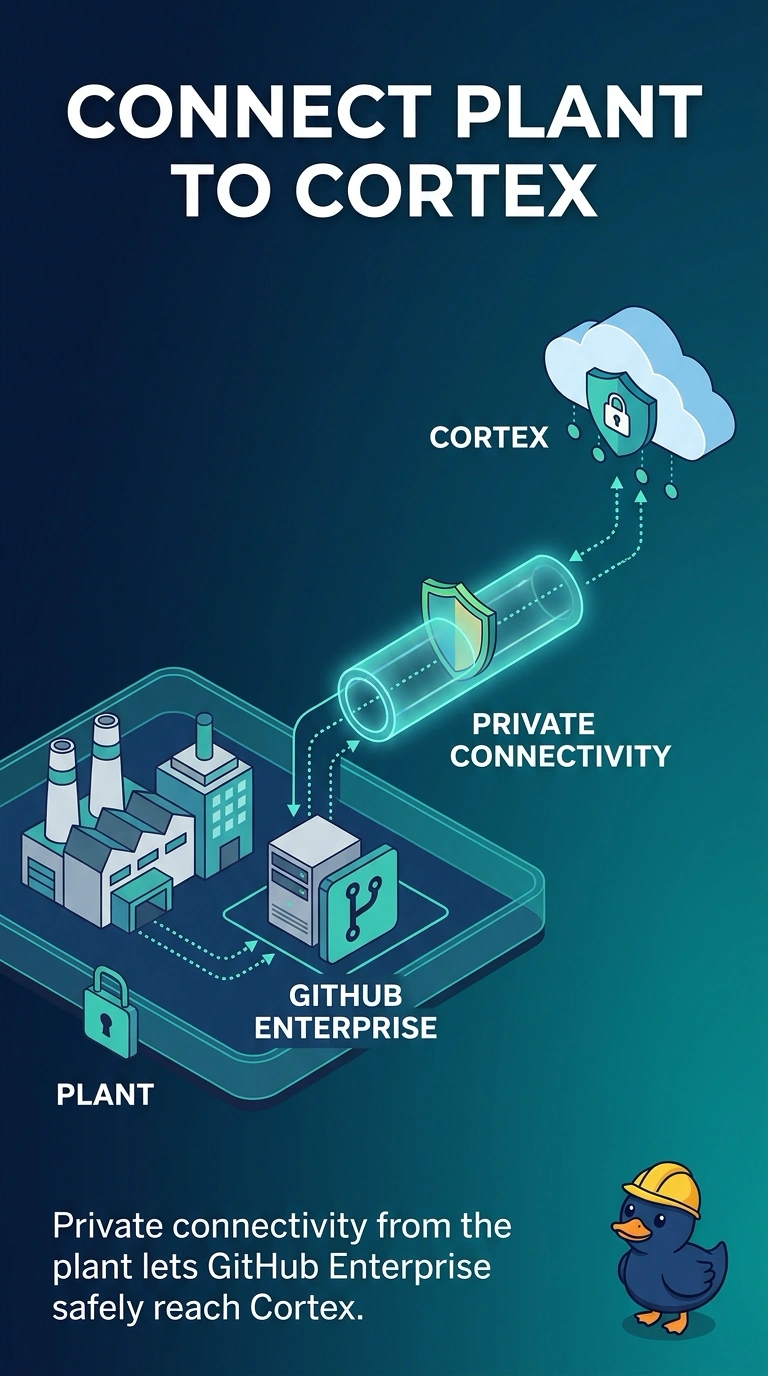
Short Explanation
Think of the plant GitHub server as a phone in a room with no outside line. You do not fix a missing line by opening a second warehouse across town. Private connectivity gives the integration a path to Cortex; another cloud account does not create one.
Full Explanation
GitHub Enterprise in the plant is a development-system integration, authenticated with the documented GitHub Enterprise OAuth onboarding and webhooks. Those events have to reach Cortex, so a server whose webhook delivery cannot leave the plant cannot complete the integration until private connectivity exists. That reachability problem has to be solved first. A read-only audit role on another cloud account starts cloud ingestion, but does not give the plant GitHub server a path for webhooks. A public inbound listener on the plant firewall reverses the plant’s network posture and is not the required design for an outbound integration path. Transporter over Broker VM establishes an outbound WebSocket connection for a private domain without an inbound firewall opening; you must also authorize the GitHub connection and configure the required events. An outpost scanner subnet on the GitHub Enterprise host treats a source-control server as though it were a cloud account. An outpost belongs in a dedicated cloud account with no other workloads; it does not turn a GitHub Enterprise server into a scanner fleet. Exam caveat: private connectivity only lets the webhook leave the plant; GitHub onboarding still requires the OAuth setup and accepted webhook. Practical check: confirm reachability over the private path, then verify successful webhook delivery.