
A shipyard chooses a custom Cortex Cloud outpost so scanner egress uses the shipyard proxy. What does that choice require for the life of the outpost?
Select an answer to reveal the explanation.
Short Explanation
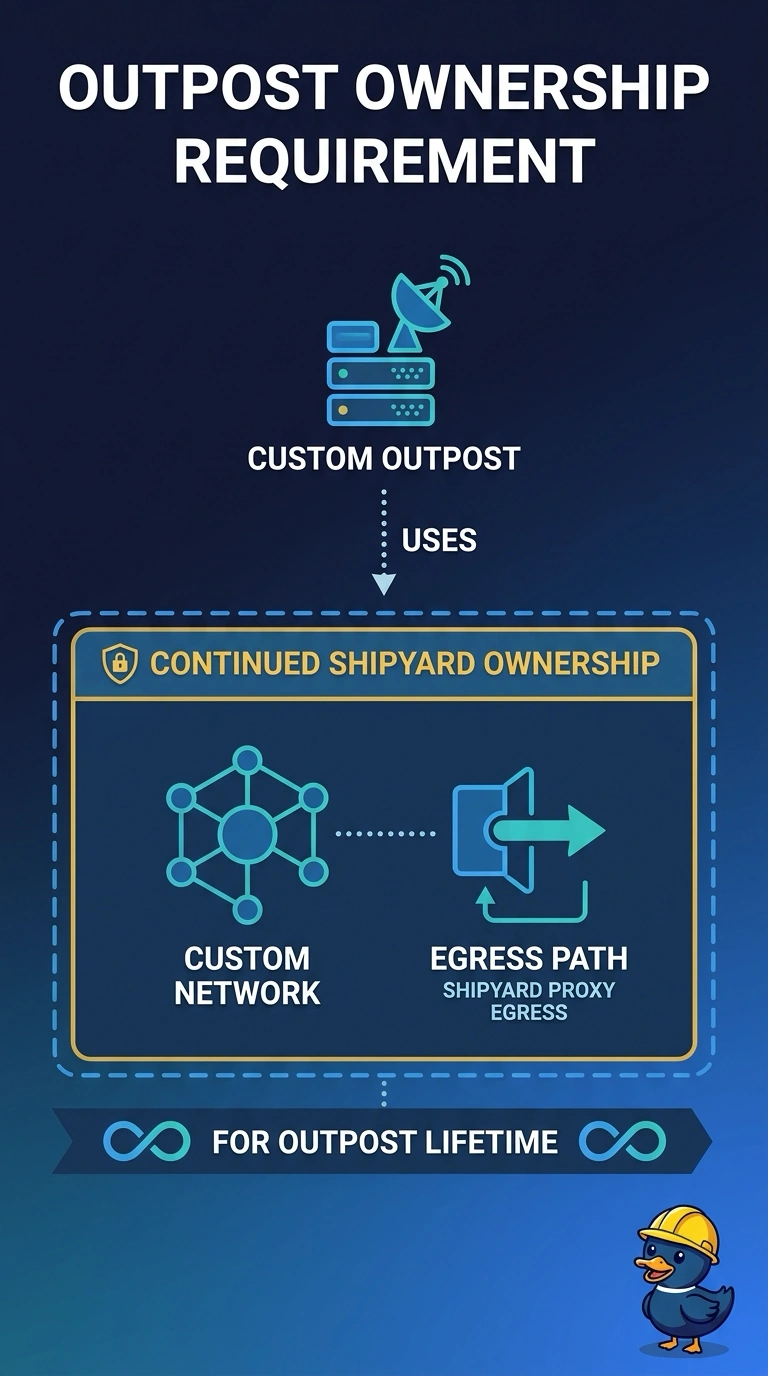
Think of a custom outpost as a road you built, not a road you borrowed for move-in day. You keep owning the network and the proxy path for as long as that outpost exists. Assuming the network returns to someone else after the template runs is the trap.
Full Explanation
A custom outpost exists so the customer can own the network, the app registration, or the egress path. The shipyard chose it so scanners leave through the shipyard proxy, and that ownership continues for the life of the outpost. It is not a one-time apply that hands the network back. Switching later to cloud scan drops the outpost model. Cloud scan does not keep the customer proxy as the scanner path, and it is a different mode rather than a way to retire ownership while keeping the same egress. A Broker VM in front of the proxy is a closed bridge appliance. Calling it the outpost confuses the broker with scanner infrastructure, and the broker does not replace a custom outpost. Exam caveat: if the shipyard later disables outbound internet on that custom outpost, capabilities that need the path drop with it. Operational check: name an owner for the proxy and the scanner subnets, confirm egress still matches the custom design after changes, and review that ownership at each outpost change.