
A bank turns on XSIAM analytics for cloud audit logs while onboarding its AWS organization. A teammate says the posture rules can now be retired. What does that analytics capability actually cover?
Select an answer to reveal the explanation.
Short Explanation
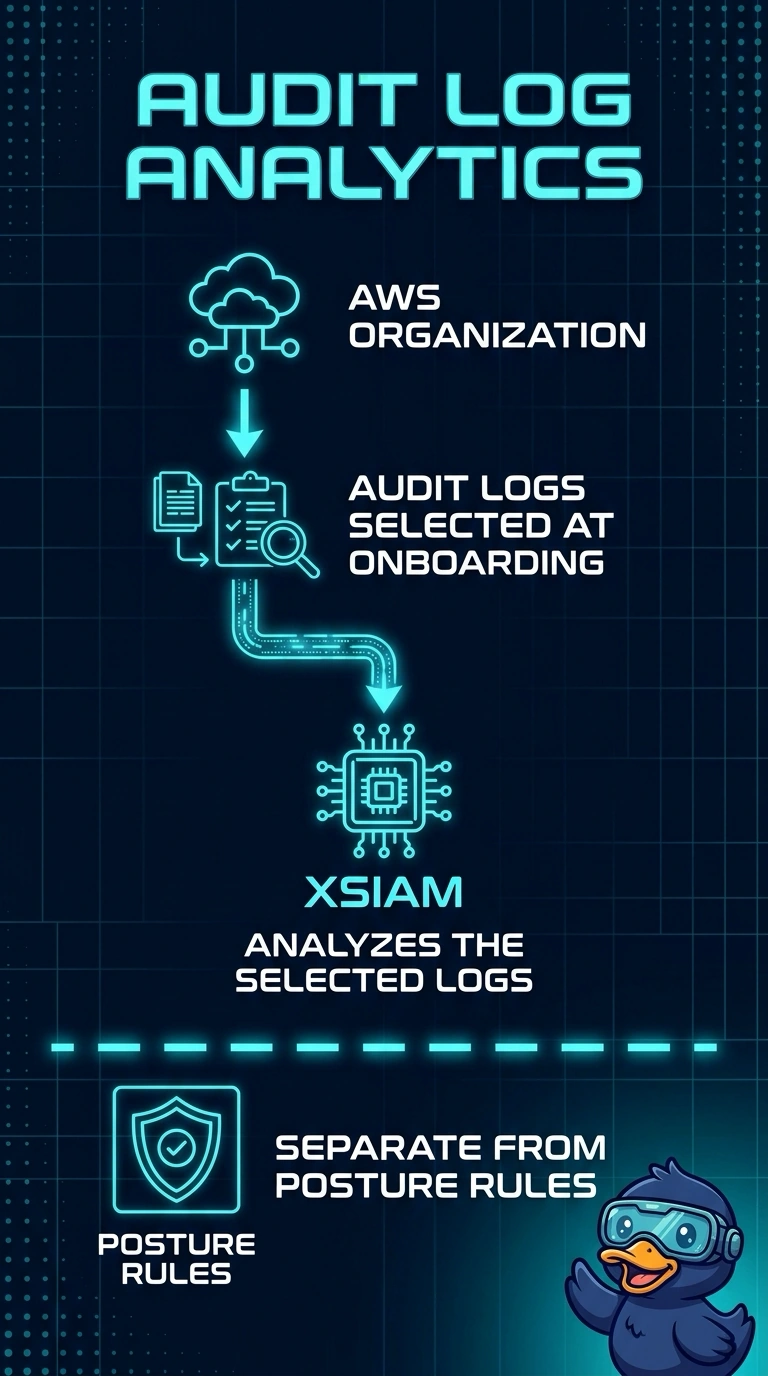
Think of analytics as a watch on the audit trail, not a substitute for the building code. When you enable XSIAM analytics for selected AWS audit logs during onboarding, your posture rules still matter; analytics does not cover every control family.
Full Explanation
XSIAM analytics for cloud audit logs analyzes the audit logs selected during AWS organization onboarding. It is separate from posture rules, so it does not replace attack-path, configuration, identity, or data posture rules; retiring those rules would remove findings that audit-log analytics is not intended to produce. DSPM classification of messages and files inside Office 365 mailboxes concerns SaaS data, not analytics on selected AWS audit logs. Pull-request blocking for secrets committed in the bank’s GitHub organization belongs to application security scanning and policy enforcement; enabling cloud audit analytics does not block a GitHub pull request. Exam caveat: analytics may use asset roles as context in later detection work, but that does not make it a posture rule or a hand-written indicator. As a practical check, confirm that AWS onboarding has analytics enabled for the intended audit logs and that posture rules remain active rather than being retired after the analytics setting is turned on.