
A supply-chain job needs a machine-readable software bill of materials from a cortexcli Code Security run. A teammate wants to print a PDF and attach it for the pipeline to parse. Which output should the job request instead?
Select an answer to reveal the explanation.
Short Explanation
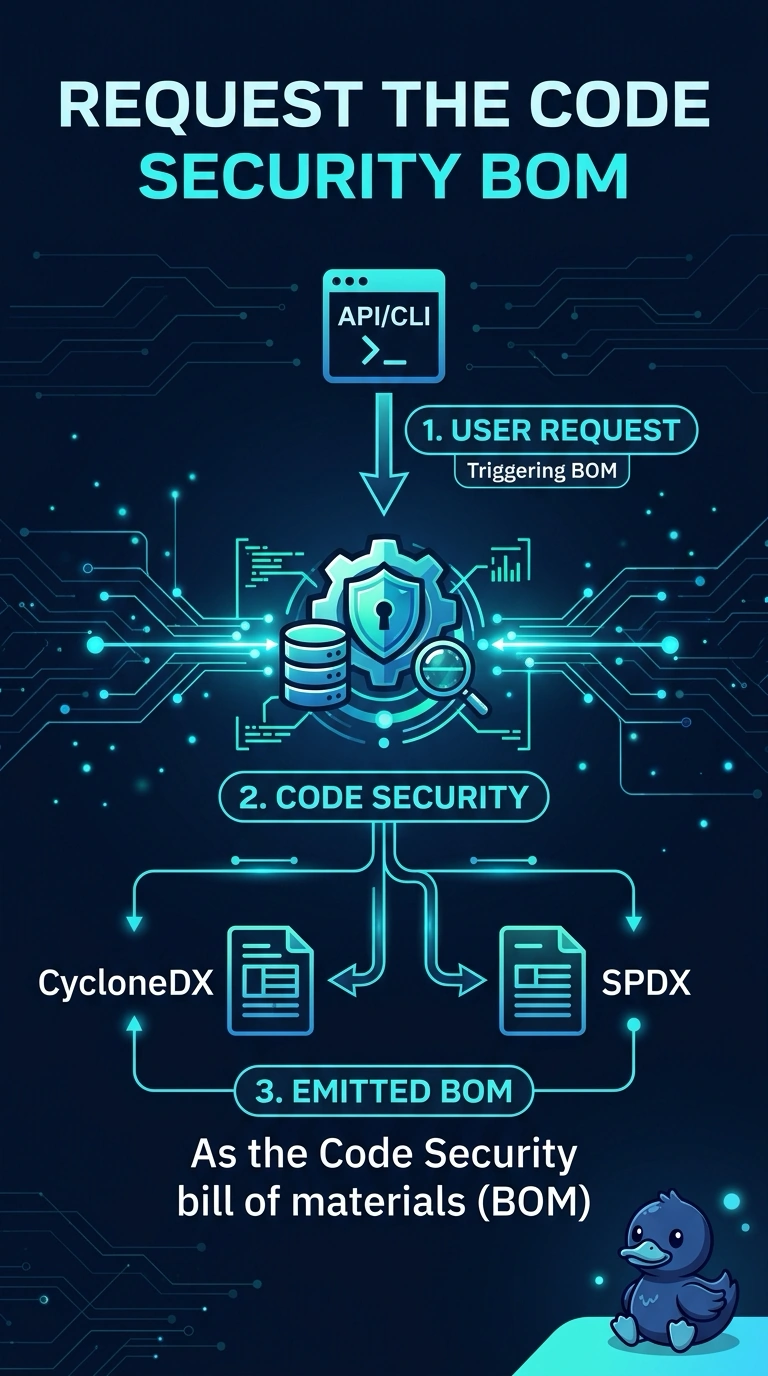
Think of a bill of materials as a packing list your pipeline can scan, not a poster for people to read. You need a machine-readable inventory, so request CycloneDX or SPDX from Code Security. A PDF or JUnit XML report is not a substitute for that inventory.
Full Explanation
Code Security should emit CycloneDX or SPDX when a downstream supply-chain job needs to parse a bill of materials. These formats represent the components in the software, giving the pipeline a machine-readable package inventory. A PDF of the CLI run may be useful for people to read, but attaching it does not make it the bill-of-materials artifact the job needs. JUnit XML is a real Code Security output for test-report publishers; it describes test results, not the package inventory, so treating it as that inventory confuses the report’s purpose. A Cloud Workload Rego file expresses a policy for evaluating images or cluster objects when a workload policy runs. Saving that rule in the tenant does not cause a Code Security CLI run to emit a bill of materials. Exam caveat: an output can be valid and useful without being the right artifact for a supply-chain inventory; match the format to what the consumer needs to parse. Practical check: run Code Security, confirm the resulting artifact is CycloneDX or SPDX, and verify that the downstream job reads component names from it rather than from a PDF attachment.