
A developer points the IDE plugin at a local folder of extra checks and expects that folder to become the tenant's unified application policy. What do those local checks change?
Select an answer to reveal the explanation.
Short Explanation
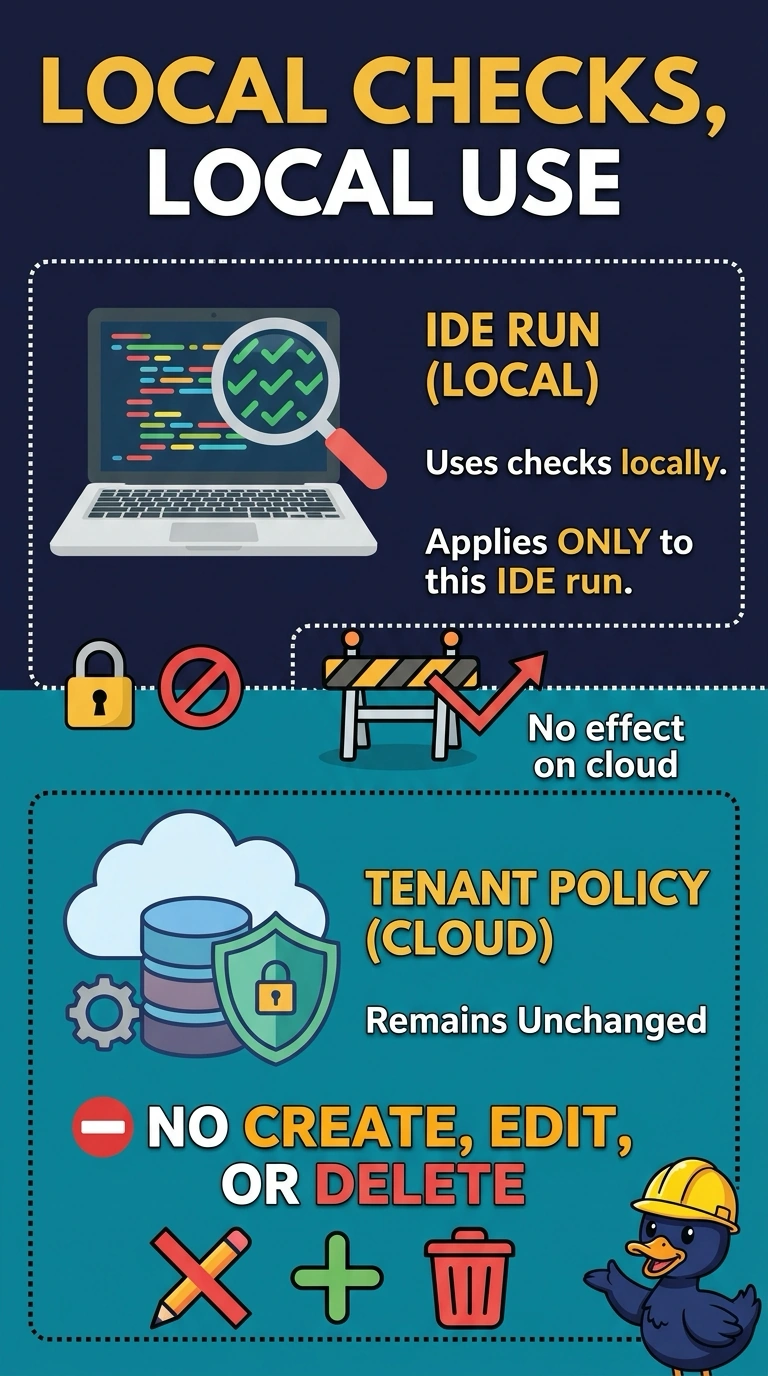
A personal checklist in your drawer is not the company policy manual. You can point the plugin at extra local checks, and those checks stay local. The trap is expecting that folder to rewrite urgency, CI gates, or the unified policy for every business application.
Full Explanation
The CLI and the IDE consume unified application policy. They do not create, edit, or delete it. Policy authoring is the console, the API, or Terraform. Extra checks in a local folder the plugin runs are local checks. They do not become the tenant policy. They do not turn on the CI trigger for every repository. Installing or configuring the IDE does not enable a trigger that was left off. They do not block a pull request. Pull-request blocking is the platform pull-request scan, and an IDE result does not fail the merge while that trigger is off. They also do not edit urgency or CI gates for business applications. ASPM urgency and the unified policy remain tenant-side. Authoring stays on the console, the API, or Terraform, so a folder the plugin can read never becomes the policy document the pipeline consumes. Exam caveat: a local check can still report in the editor, and that report is easy to mistake for a gate the pipeline will enforce. Operational check: change one local check, confirm the editor report changes, then open the unified policy in the console and confirm the tenant rule text did not change.