
A water utility's live network template allows a management port that the Terraform module in git does not. No new library advisory was published. Which finding explains the gap?
Select an answer to reveal the explanation.
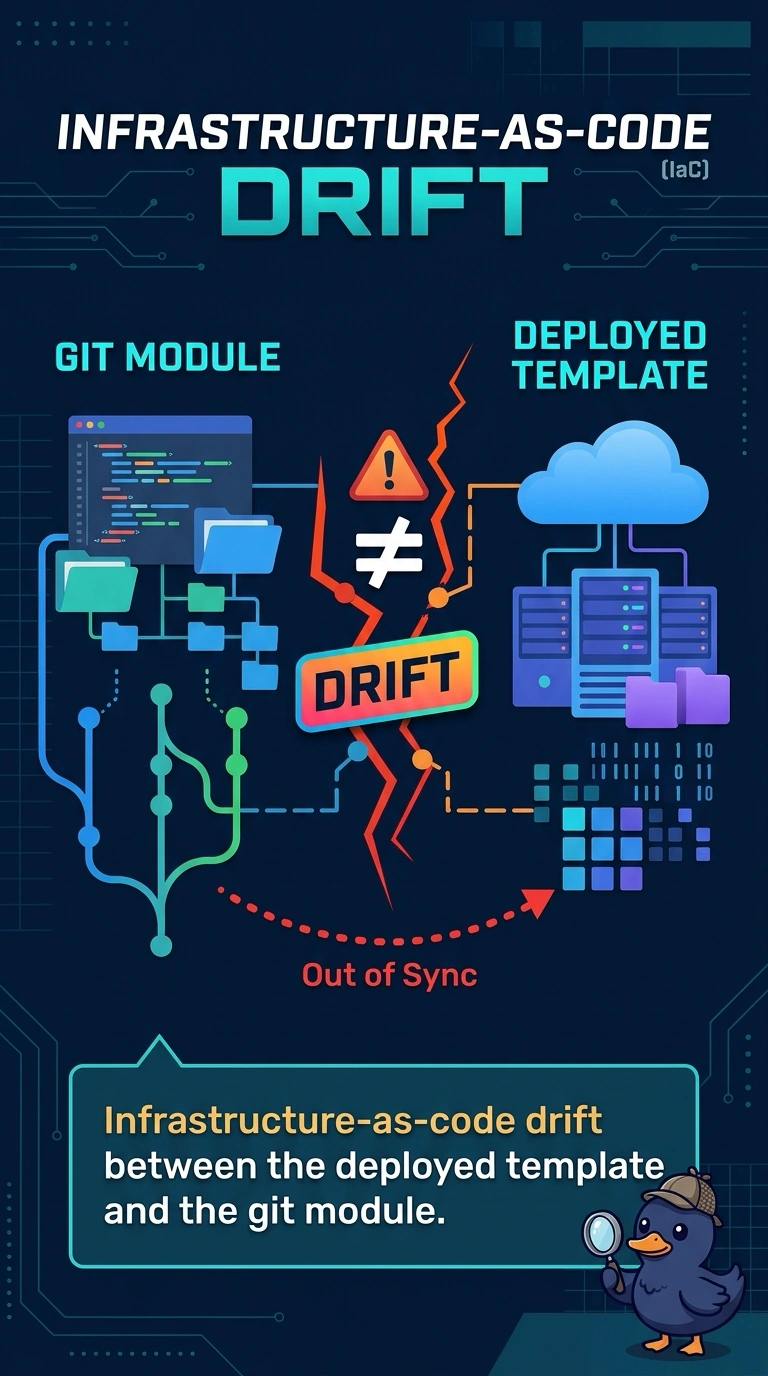
Short Explanation
Think of drift as a building that no longer matches its blueprint. You are looking at a live template and a git module that disagree about a management port, and no new advisory showed up, so this is infrastructure-as-code drift. A library vulnerability would be a composition finding, and nothing in the story says a package changed.
Full Explanation
Infrastructure-as-code drift is the scanner result when a deployed template no longer matches the repository. The live network template allows a management port the Terraform module does not, and no new library advisory was published, so the gap is drift rather than a vulnerability in a dependency. A software composition finding reports a vulnerable direct or transitive library. The stem gives no new advisory and points at a template difference, so composition analysis is the wrong family. A secret finding is a credential or key committed in the repository. An open management port in the deployed template is not a secret in a variable file. A license finding is a disallowed license on a package. A license does not open a management port, and license policy is a different scanner from drift. Exam caveat: drift reports the difference so someone can reconcile it. It does not by itself revert the cloud object or fail a build unless a separate gate is configured to do that. Operational check: open the drift result, compare the live management-port setting with the module in git, and confirm the repository commit under review is the one the deployed template was supposed to match.