
A library consortium sees no vulnerabilities in a dependency. Supply-chain analysis still flags that package as an impersonation of a trusted library name. What should they conclude?
Select an answer to reveal the explanation.
Short Explanation
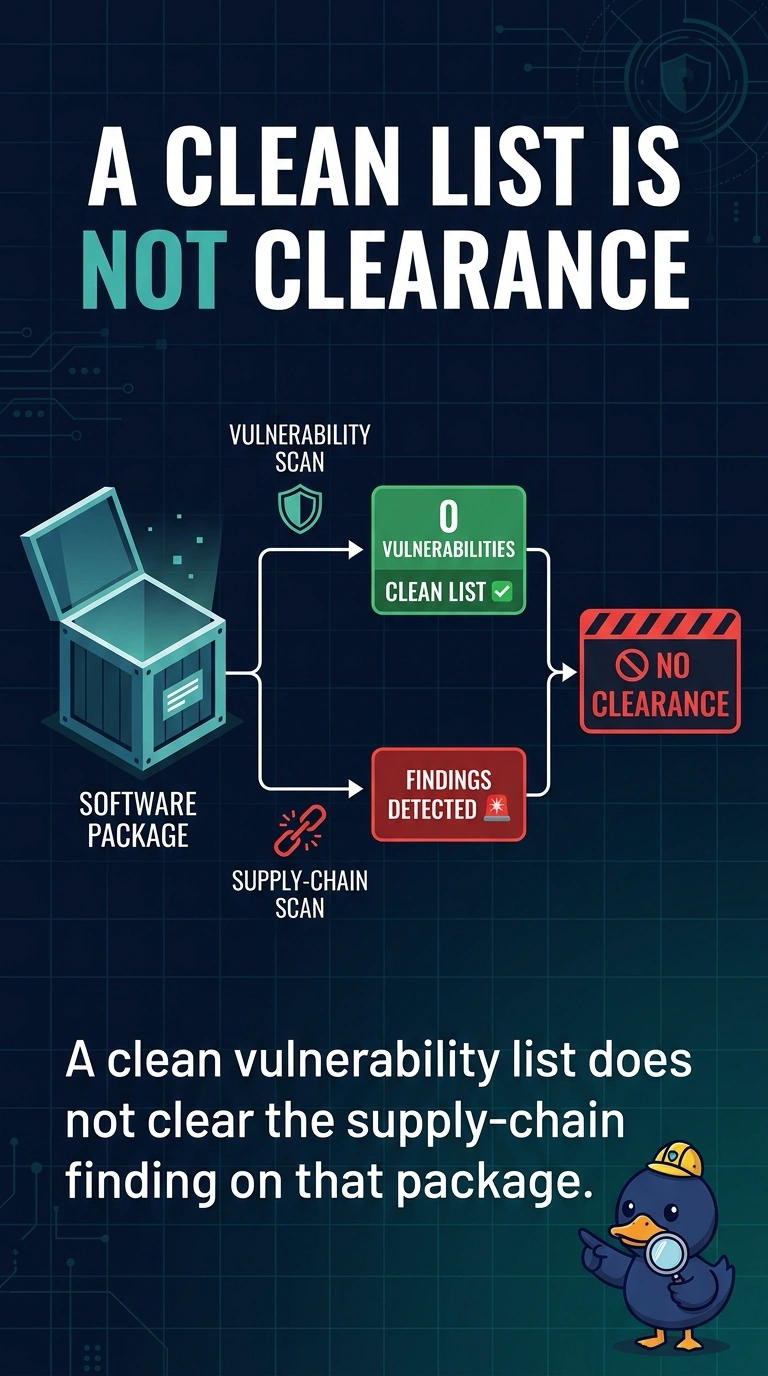
Think of a look-alike parcel that scans clean for broken glass and still is not the parcel you ordered. You have no vulnerability advisory, and supply-chain analysis is still pointing at an impersonated library name, so the empty vulnerability list does not retire that finding. A firewall in front of the running app does not fix the package you pulled.
Full Explanation
Code Security and supply-chain analysis produce findings that ASPM can group and rank. Software composition analysis looks for vulnerable direct and transitive libraries. An empty vulnerability list says those advisory checks did not hit. It does not erase a separate supply-chain finding that the package name impersonates a trusted library. Treating the package as clear because the vulnerability list is empty collapses two results into one. Infrastructure-as-code drift compares a deployed template with the repository. It does not judge package identity, and drift detection reports the difference rather than reverting the cloud. A license finding is a disallowed license. An impersonated package name is not a license, and a web application firewall does not remove a dependency from the build. Exam caveat: urgency in ASPM can rank this beside native findings using EPSS and code-to-cloud context, but the ranking does not delete the supply-chain result. Operational check: open the supply-chain finding, confirm the package name and the trusted name it resembles, and keep it open until the dependency is replaced even though the vulnerability list is empty.