
A pull request changes Terraform so a security group accepts traffic from any address. The Terraform change opens SSH TCP/22 to 0.0.0.0/0, violating the organization approved ingress policy. The pipeline should flag that change before it merges. Which scanner is responsible?
Select an answer to reveal the explanation.
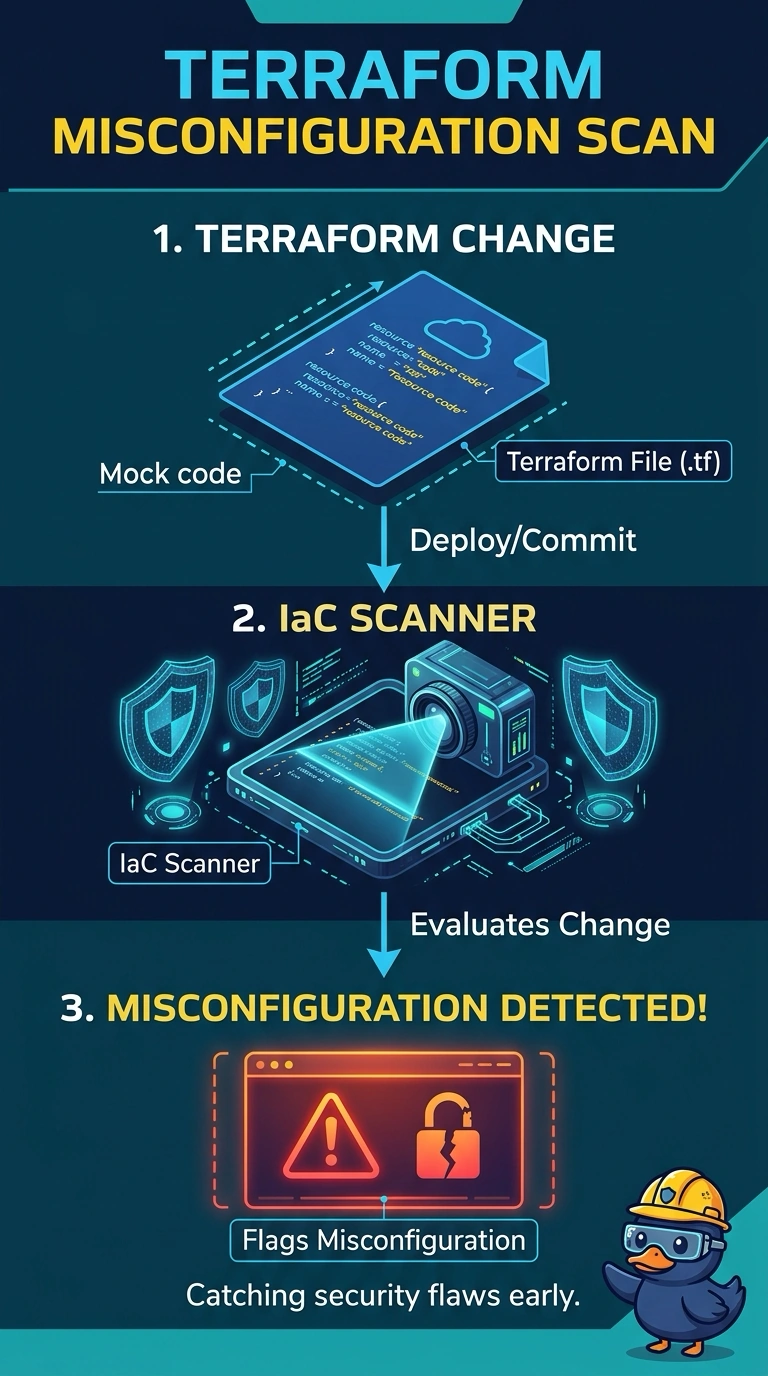
Short Explanation
You can catch this before merge with your IaC scanner, which evaluates the Terraform change against your approved infrastructure policy. Since the rule opens SSH TCP/22 to 0.0.0.0/0, you should fix the ingress rule itself. Public ingress is not universally a misconfiguration; its acceptability depends on the service, exposure, and policy.
Full Explanation
Infrastructure-as-code (IaC) scanning evaluates the Terraform change itself, so the IaC scanner that checks for misconfiguration should flag this pull request before merge. The change opens SSH TCP/22 to 0.0.0.0/0, violating the organization’s approved ingress policy; the relevant issue is the security group rule. Software composition analysis checks direct and transitive libraries for known vulnerabilities, but a security group is not a vulnerable library, so treating it as a package vulnerability points to the wrong fix and leaves port 22 open. A license scanner identifies disallowed package licenses, not ingress rules, so a license finding would not close the group. IaC drift compares deployed infrastructure with the repository; this is not a provider CVE, and the pull request has not merged, so it has not created deployed state that can drift. Drift can matter later if production no longer matches Git, but it is not the scanner responsible for evaluating this proposed change. As an exam caveat, public ingress is not universally a misconfiguration; its acceptability depends on the service, exposure, and policy. Practically, check that the Terraform rule’s allowed source ranges comply with the approved ingress policy before approving the merge.