
Two unified application policies can both see the same secret in one pull request. One is set to report and the other is set to block. A teammate assumes the stricter action takes over on its own. What decides the gate?
Select an answer to reveal the explanation.
Short Explanation
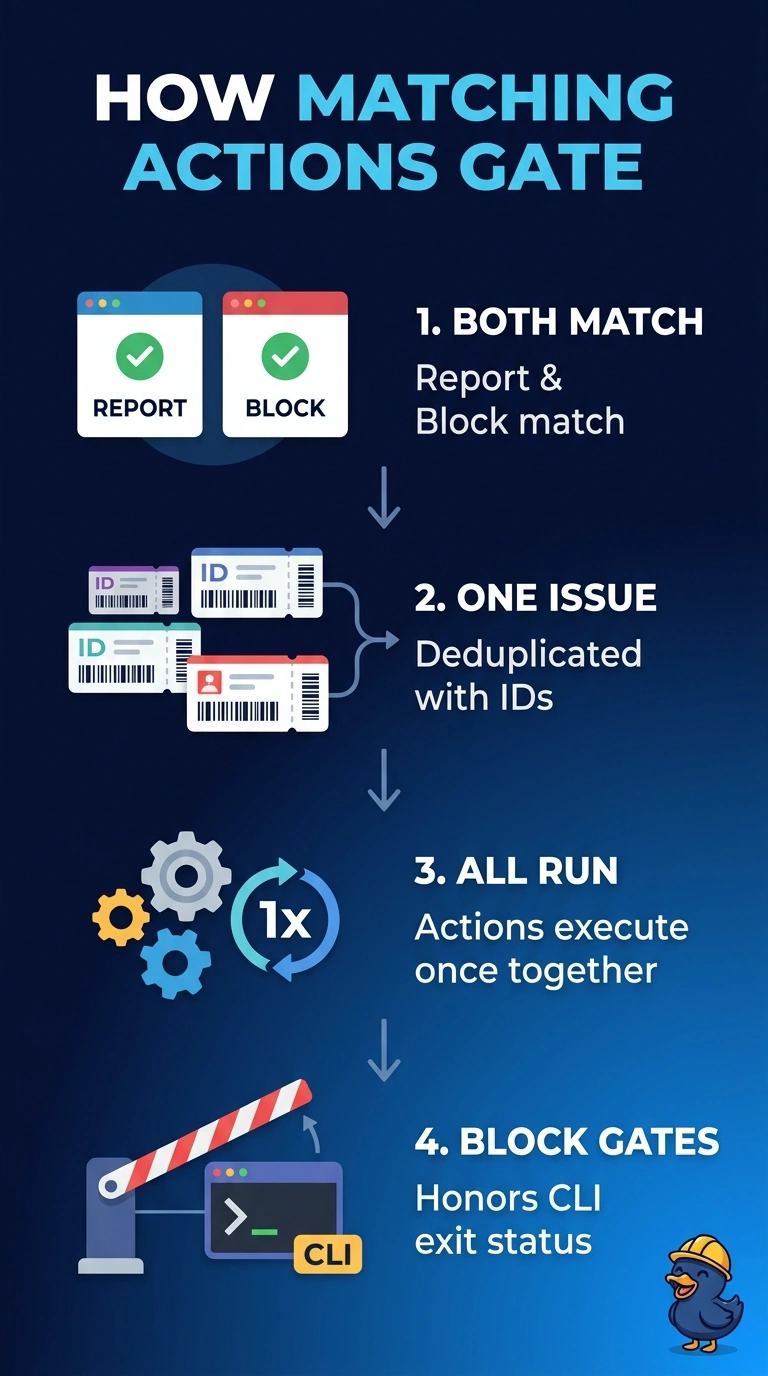
You don't have to pick a winner between report and block. You get one deduplicated issue with all matching policy IDs where every action runs once, so your matching Block CI action still gates the job when you let the pipeline honor its exit status.
Full Explanation
Unified application security policies provide one policy set for code, guardrails, and CI, and the engine evaluates all active code policies that match a finding. Code findings are deduplicated into one issue with all matching policy IDs, and all configured actions run once. One matching report policy does not cancel another matching block policy; applicable exceptions and pipeline exit handling still matter. That is why the gate is decided by all matching active actions executing once, with the matching Block CI action gating the job when the pipeline honors its exit status. The CLI consumes the tenant policy and does not invent a winner or suppress a block because a report also matched. The stricter-block-selected-on-its-own idea fails because there is no winner-takes-all step; both actions run and deduplication preserves every matching policy ID. The IDE-scan-trigger idea fails because the IDE reports in the editor while pull-request blocking happens in the platform pull-request scan. The local-CLI-file idea fails because agent configuration cannot create, edit, or delete tenant policy and cannot override the configured block. Check the policy set attached to this repository CI trigger and verify the job honors the CLI exit status on one pull request.