
A game studio's pipeline publishes a container even when the code scan reports a hardcoded secret. The job is written to keep going after the scanner prints findings. What policy behavior stops that artifact?
Select an answer to reveal the explanation.
Short Explanation
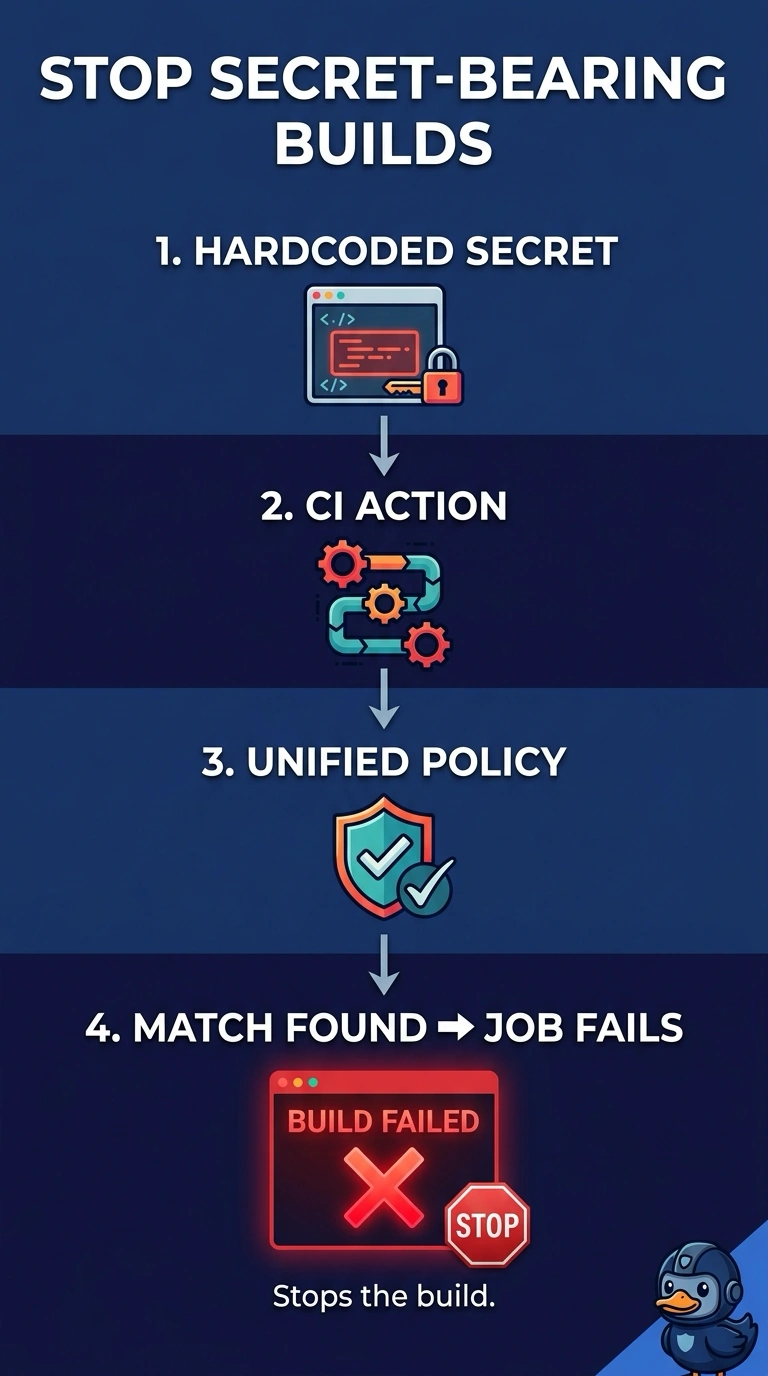
Think of a report-only scan as a smoke alarm with the batteries left in the drawer: you can see the secret finding and still publish the container if the job keeps going. Set the CI action on the unified policy to fail the job when the finding matches; a louder comment cannot stop an already-published image.
Full Explanation
The unified application security policy must enforce a CI action that fails the job when the hardcoded-secret finding matches; that failure prevents the pipeline from publishing the container. If the job continues after the scanner prints findings, the scan is report-only in effect, whether the pipeline ignores the exit status or the policy does not require failure. The CLI enforces a gate only when the pipeline treats a non-zero exit as a failed job. An IDE Scan trigger reports the secret inside the editor, but it does not run in this pipeline or block publication. A longer pull-request comment may draw attention to the finding, but it arrives too late once the image is published and does not fail the job. A compliance report mailed after the artifact reaches the registry documents the issue after the fact; it cannot stop the registry push. Exam caveat: installing cortexcli in the pipeline does not enable an IDE Scan trigger that was left off, and a policy without a failing CI action will not gate the job. Practical check: configure the unified policy to fail the CI job for that secret, confirm the pipeline fails on a non-zero exit, and rerun a commit containing the secret.