
A telecom platform lead wants a secret in a pull request to fail the merge. The IDE plugin is already installed on developer workstations. Which control can fail that merge?
Select an answer to reveal the explanation.
Short Explanation
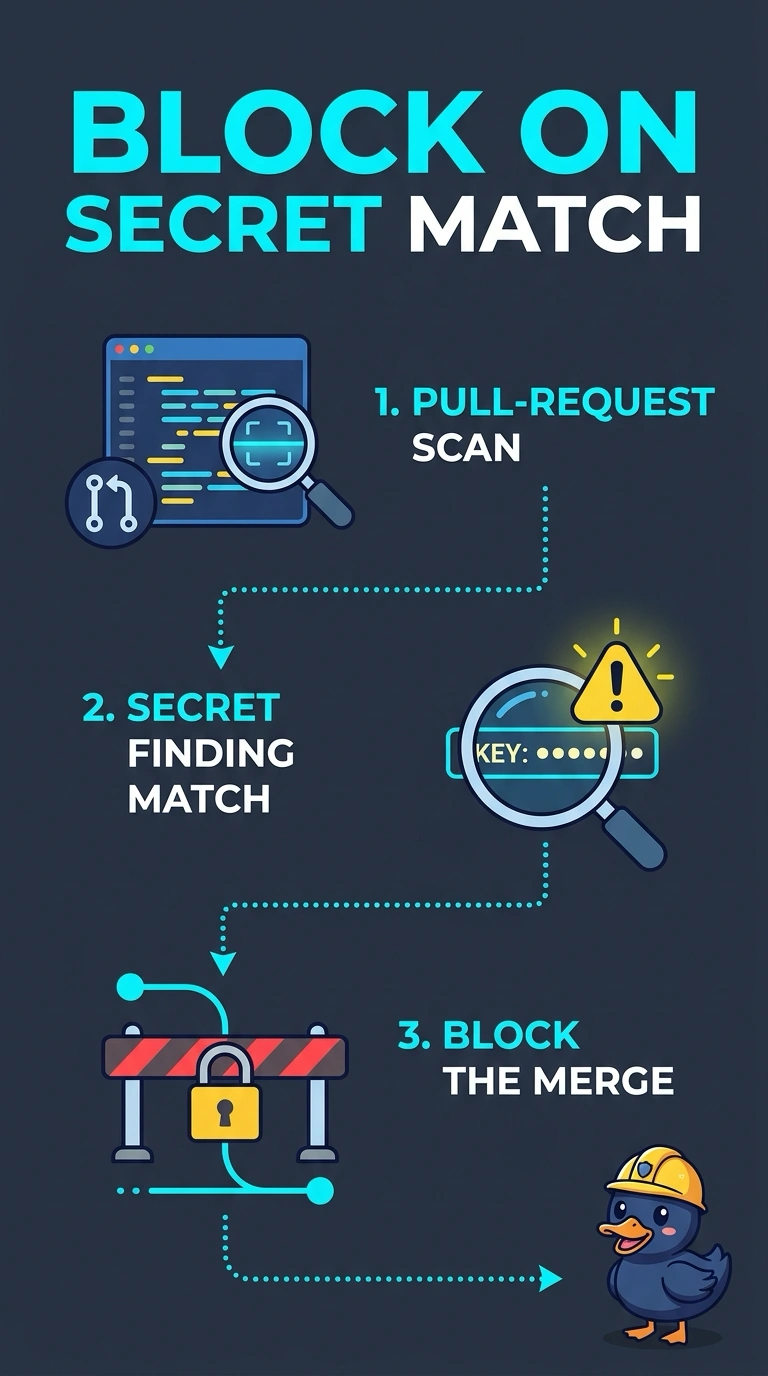
Think of the IDE plugin as a spell-checker on your desk, not the gate at the end of the driveway. You can highlight a secret locally all day, and the merge fails only when the platform pull-request scan blocks it. The trap is expecting the editor plugin to reject the request.
Full Explanation
Pull-request blocking happens in the platform pull-request scan, not in the editor. The IDE plugin reports findings locally and cannot fail the merge, even when it is installed on every workstation. The control that can fail the merge is that pull-request scan, with the unified policy set to block when the secret matches. A prevention profile on the laptop endpoint group is runtime control for the host. It does not parse the pull request and it does not set a merge status. An asset group that lists a repository name can scope posture or access when the attribute is one SBAC supports, such as code repository. It does not block a merge, and a group is not an application-security trigger. Exam caveat: IDE Scan and the pull-request trigger are different. Leaving only the IDE trigger on will keep showing underlines while merges stay green. Operational check: confirm the repository uses the platform pull-request scan with a blocking action, then open a test request that contains a secret and confirm the merge is rejected.