
A software firm's CI job fails the build when a secret is found, yet open application issues for that secret keep climbing. Developers merge through a different pipeline that never calls the scanner. What does the rising open count tell you?
Select an answer to reveal the explanation.
Short Explanation
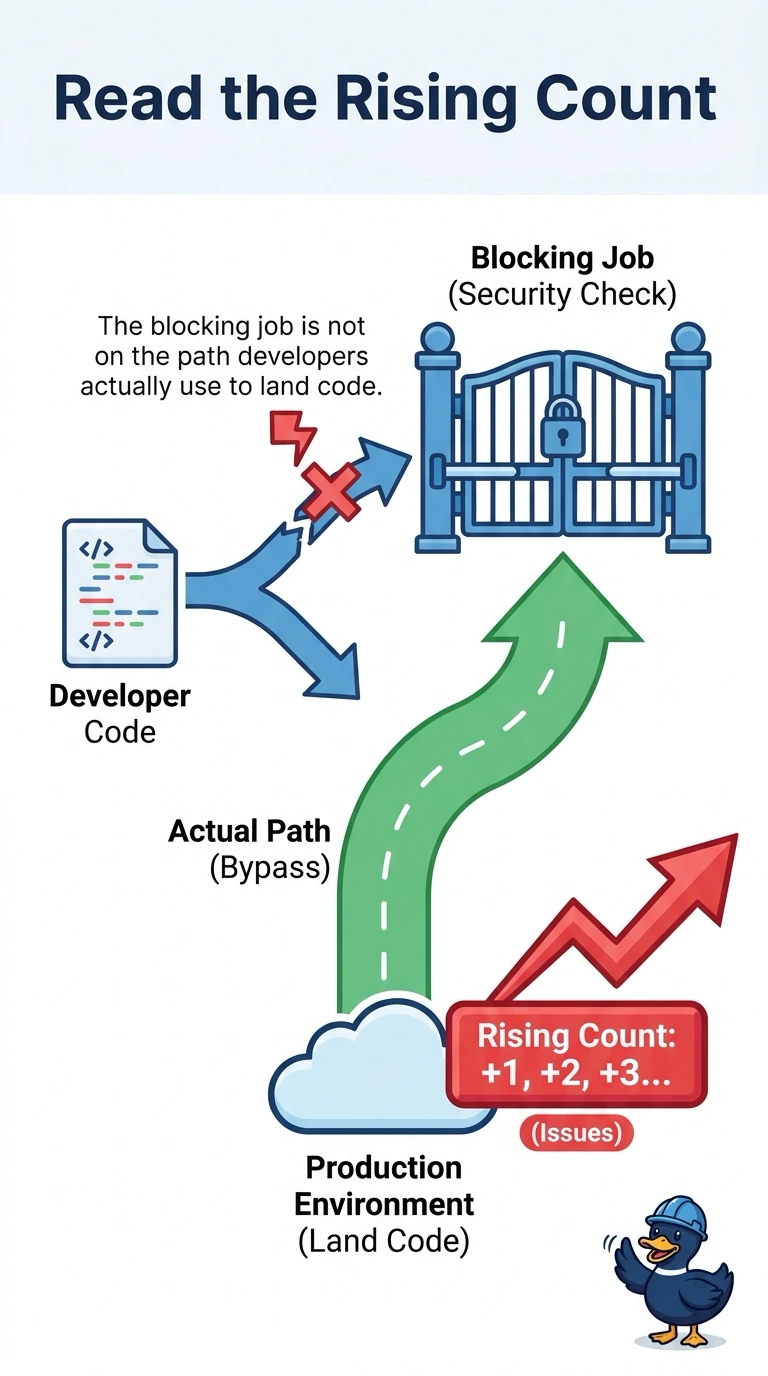
Think of a locked side door while the loading dock stays open. You have a CI job that fails on a secret, yet open issues grow because developers merge through a path that never runs that job. The block is not on the path they use—not a scanner inventing hits or ASPM scanning on its own.
Full Explanation
ASPM tracks application issues; it does not scan code. A CI job that fails the build when it finds a secret blocks commits only on the pipeline where that job runs. If developers land code through a different pipeline that never calls the scanner, the block does not see their commits, so the same secret can keep arriving and the open count can rise. This means the blocking job is not on the path developers use to land code. A scanner inventing a hit on every commit in the production repository does not explain the pattern: the scenario already describes a job that fails when it finds a secret, while the growing count is explained by a merge path that bypasses it. ASPM does not start scanning repositories on its own behind CI; it groups findings already produced by Code Security, supply-chain analysis, or an ingested result. Code-to-cloud linking connects a repository finding to a deployed asset, but it is not required for an application issue to open and would not route merges through the blocking job. Exam caveat: an IDE Scan trigger can report the same secret in the editor without failing a merge. Only an enforced pull-request or CI path can do that. Practical check: compare the pipeline developers use to merge with the job that fails, and confirm the enforced path runs the scanner and treats a failed exit status as a failed job.