
An architect likes an AI-recommended guardrail for Terraform and reads the text aloud in a design review. The next pull request with that same misconfiguration still merges. What was never completed?
Select an answer to reveal the explanation.
Short Explanation
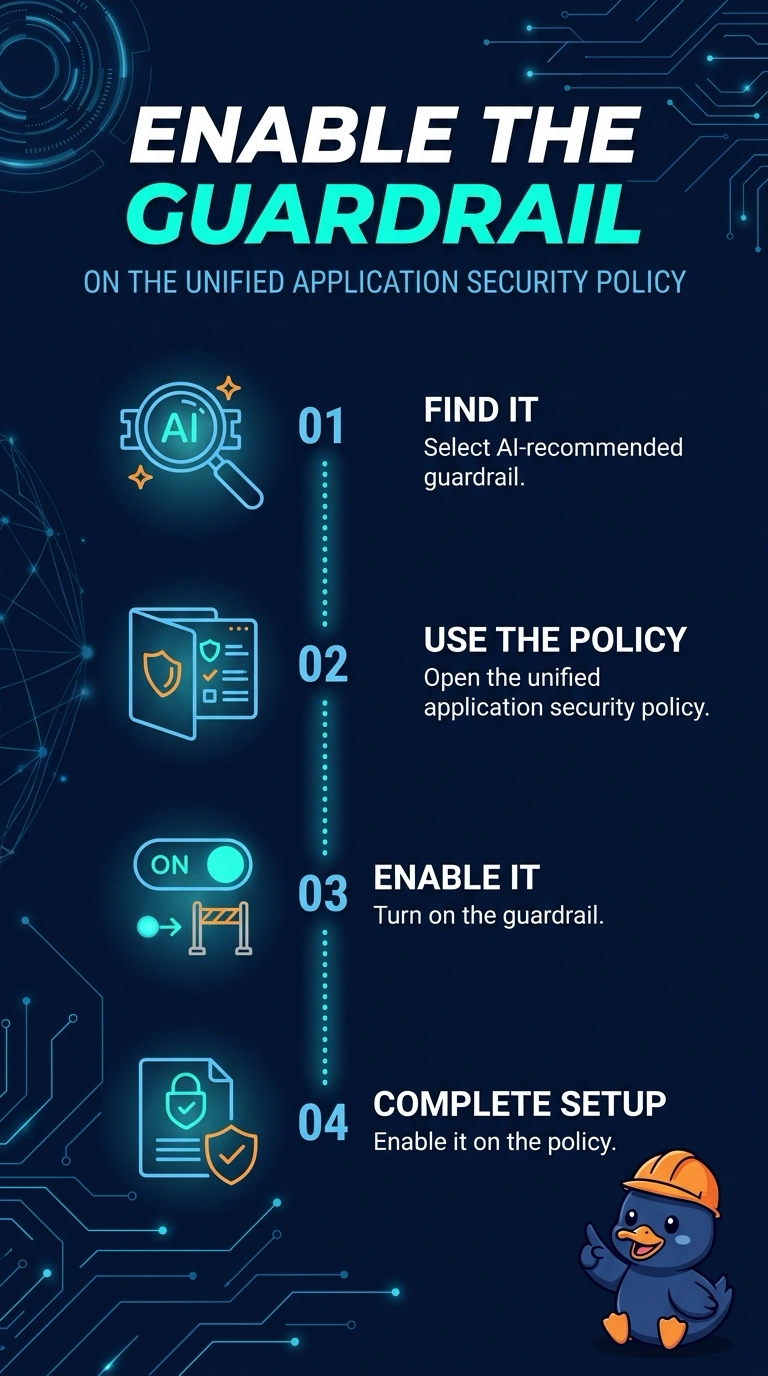
Think of the design review as agreeing the sign should exist, not hanging it on the door. You still have to enable that AI-recommended guardrail on the unified policy before a pull request is judged by it. The trap is treating a spoken acceptance as a control that already runs.
Full Explanation
Unified application security policies are the policy set for code, AI-recommended guardrails, and CI. A guardrail is only a suggestion until it is enabled on a policy. Reading it in a meeting does not attach it to the pull-request scan, so the same Terraform misconfiguration still merges. Installing the text on a Broker VM misunderstands both objects. The broker is a closed appliance and is not where application policy is authored, and policy authoring is the console, the API, or Terraform. A CISA KEV vulnerability policy raises issues for known-exploited vulnerabilities on an asset group. It does not enforce a Terraform guardrail, and it does not need the guardrail pasted into it. A Cloud Workload rule is for a named scanner such as the Kubernetes connector or agentless disk scan. Connector rules use package panw.compliance and match, not deny, and none of that scans the pull request. Exam caveat: the IDE can report a violation once the policy exists, and that report still does not block the merge by itself. Operational check: confirm the guardrail is enabled on the unified policy and that the pull-request trigger is on for the repository that just merged.