
A pharmacy chain built a dynamic business application that was supposed to hold only production repositories. Lab repositories that share a topic now sit on that application, and the urgency score looks worse than the live service. What should be corrected before anyone trusts the score?
Select an answer to reveal the explanation.
Short Explanation
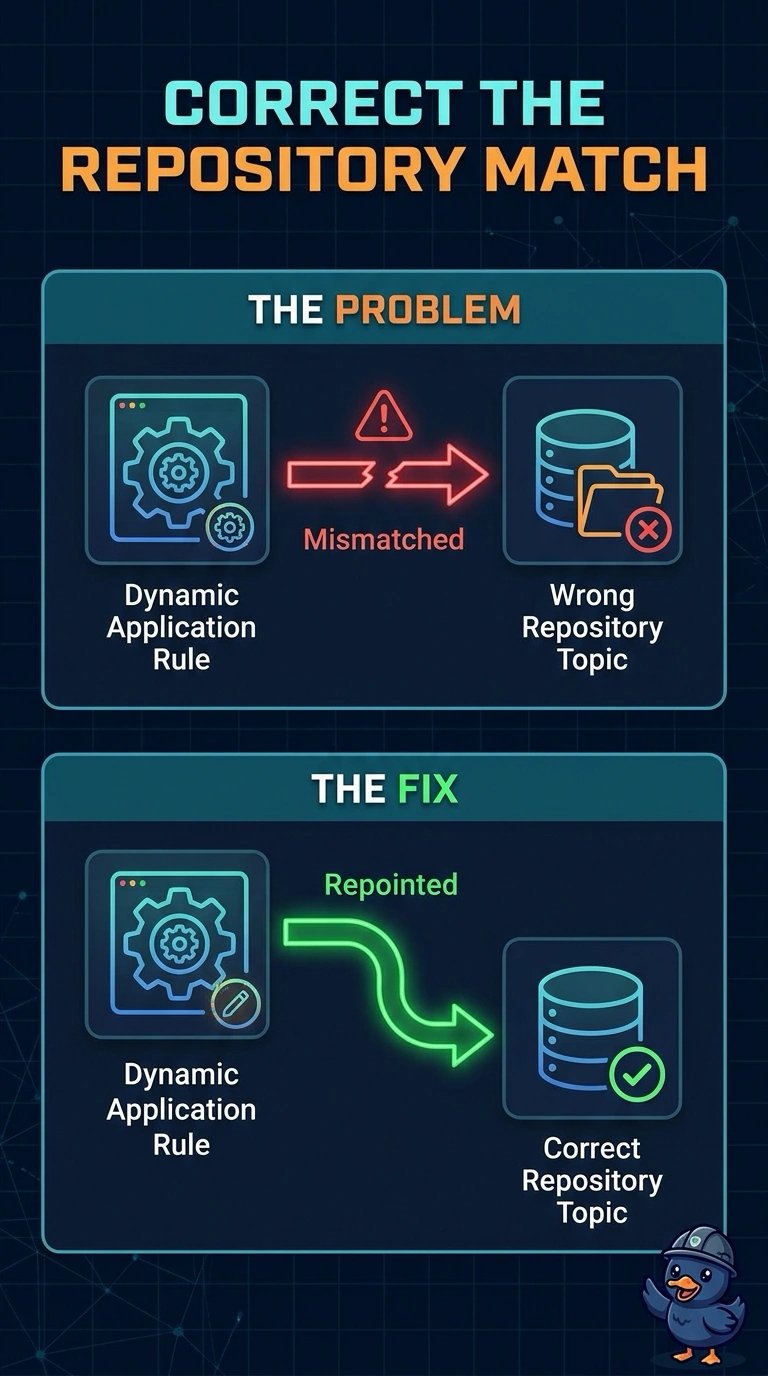
Think of a dynamic application as a magnet on the loading dock. You set it to pull production repositories, and a topic the lab also uses will drag lab code onto the same scorecard. The trap is debugging agents or scan mode while the grouping rule is what mixed the piles.
Full Explanation
ASPM groups findings onto business applications that are built manually or dynamically. It does not scan the repositories itself. A dynamic rule that matches the wrong repository topic will attach lab repositories to the production application, and urgency then mixes lab findings into the score the chain is reading. Urgency uses EPSS, CISA KEV, code-to-cloud context, business criticality, and runtime protection, so the score is only as clean as the application membership. Fix the rule so production and lab stop sharing one application before anyone treats that score as the live service. How Jenkins treats a scanner exit status decides whether a build fails. It does not decide which repositories belong to the business application. The XDR agent on storefront servers is runtime protection on those hosts. It does not rewrite application membership in ASPM. The scan mode chosen for the cloud account decides who runs cloud scanners. It does not attach git repositories to a business application. Exam caveat: code-to-cloud can link a repository finding to a deployed asset, and that link still follows the application the repository was grouped into. Operational check: list the repositories on the pharmacy application, confirm the lab topic no longer matches the dynamic rule, and only then reread urgency.