
A pension fund wants an infrastructure-as-code finding in a repository tied to the running cloud asset. A registry scan of the image never maps to a business application. What provides that link?
Select an answer to reveal the explanation.
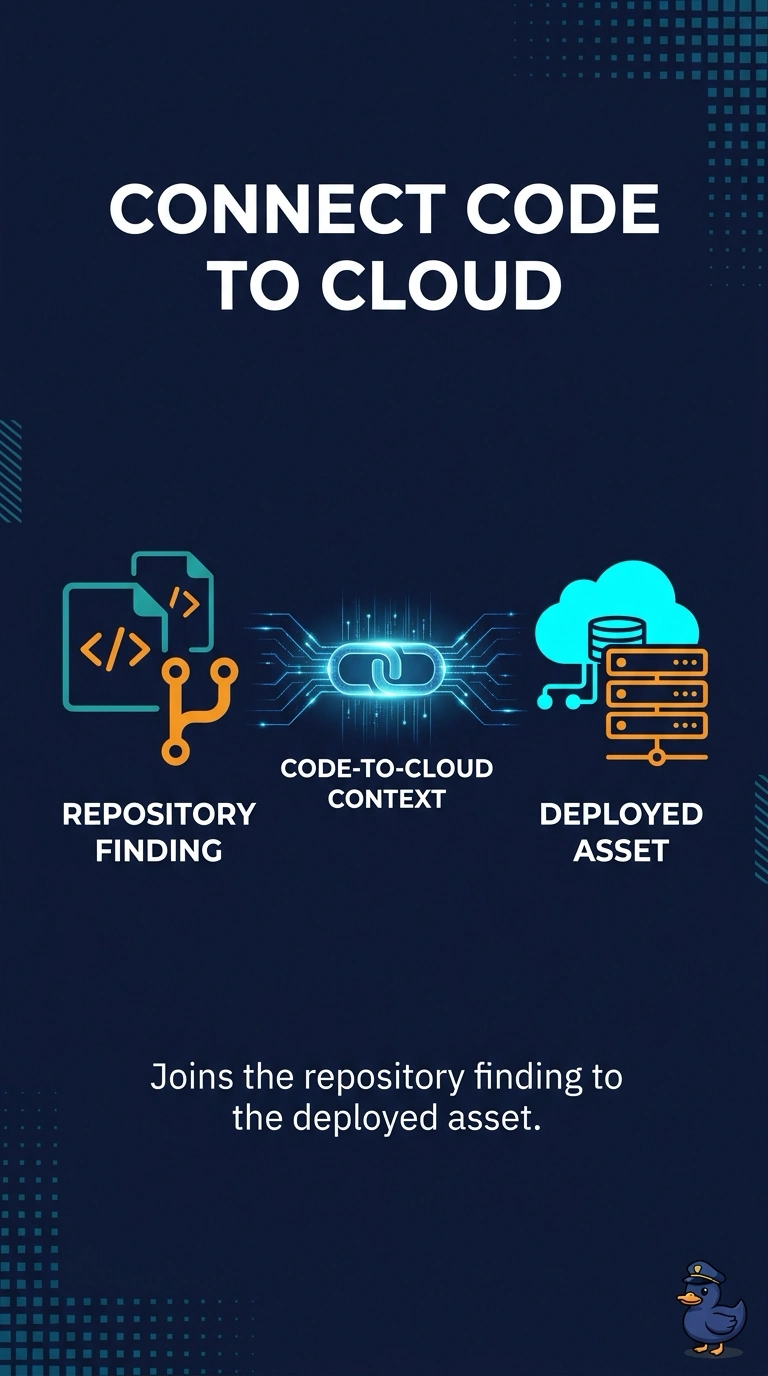
Short Explanation
Think of code-to-cloud as the string between the blueprint in git and the machine that blueprint built. You want the repository finding and the running asset on the same line, and that link is code-to-cloud context. A registry scan that never joins an application leaves the string on the floor.
Full Explanation
Code-to-cloud context links a repository finding to the deployed asset, so the pension fund can see the infrastructure-as-code issue on the repo and on the running cloud asset together. That is an ASPM relationship, not a side effect of image intake. A registry scan that never maps to a business application never builds that link. It can still report image vulnerabilities, malware, or secrets, and those results stay disconnected from the application. A vulnerability-policy severity label sets how a vulnerability finding is handled on an asset group. It does not join a repository file to a deployed resource. An endpoint prevention profile decides which runtime controls hit a host through an endpoint group. It does not map infrastructure-as-code findings to cloud assets. Exam caveat: coverage still has to show that a scanner reached the repository, or there is no finding for code-to-cloud to attach. Operational check: open the repository finding, confirm the deployed asset is listed on it, and confirm the registry-only image result is not the item being used as that link.