
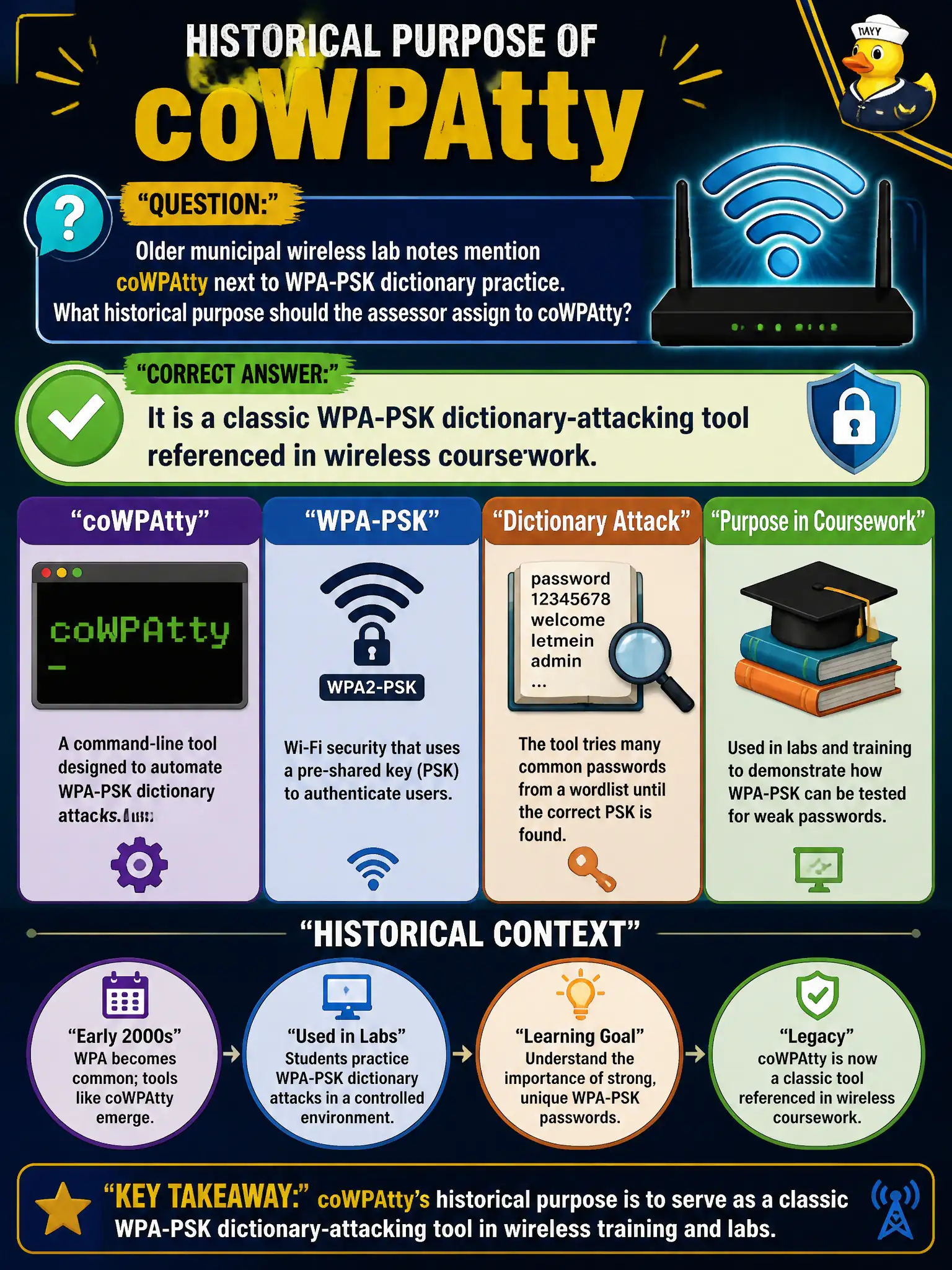
Older municipal wireless lab notes mention coWPAtty next to WPA-PSK dictionary practice. What historical purpose should the assessor assign to coWPAtty?
Select an answer to reveal the explanation.
Short Explanation
coWPAtty is old-school wireless lab lore—basically a classic dictionary hammer for WPA-PSK captures. Course notes name it for that offline passphrase attack class, not for portals, WIPS, or RADIUS. Treat it as historical toolchain vocabulary.
Full Explanation
coWPAtty is a classic WPA-PSK dictionary-attacking utility long referenced in wireless offensive coursework and older municipal lab outlines. At concept level, an assessor should assign it to the historical offline Personal-passphrase testing class: feed supported capture or precomputed material and test candidates against WPA-PSK networks. Modern city engagements may prefer actively maintained GPU crackers, but recognizing coWPAtty's purpose class prevents tool-identity confusion during PEN-210-style study and legacy note review. It is not a captive-portal cloning framework for open guest SSIDs; portal and phishing-page classes belong to rogue-AP and social-technical tooling. It is not a WIPS console that blocks rogue APs on civic campuses; wireless intrusion prevention is a defensive monitoring and response function. It is not the modern replacement for hostapd on enterprise RADIUS joins; hostapd instantiates AP/authenticator roles, while coWPAtty's fame is offline PSK dictionary work. Exam caveat: historical mention does not mean coWPAtty is the required or best-maintained tool on today's exam or engagement toolchain. Operational check: when civic lab notes cite coWPAtty, map the step to the same purpose as contemporary offline crackers—authorized capture, format readiness, dictionary coverage—and verify whether the current course image still ships or documents that binary before relying on it. Record tool-class lineage in study notes so staff do not mistake a legacy PSK cracker for portal, WIPS, or Enterprise AAA components.