
A hospital WLAN disables user password prompts by deploying machine certificates for Enterprise access. What passwordless theme does that change emphasize?
Select an answer to reveal the explanation.
Short Explanation
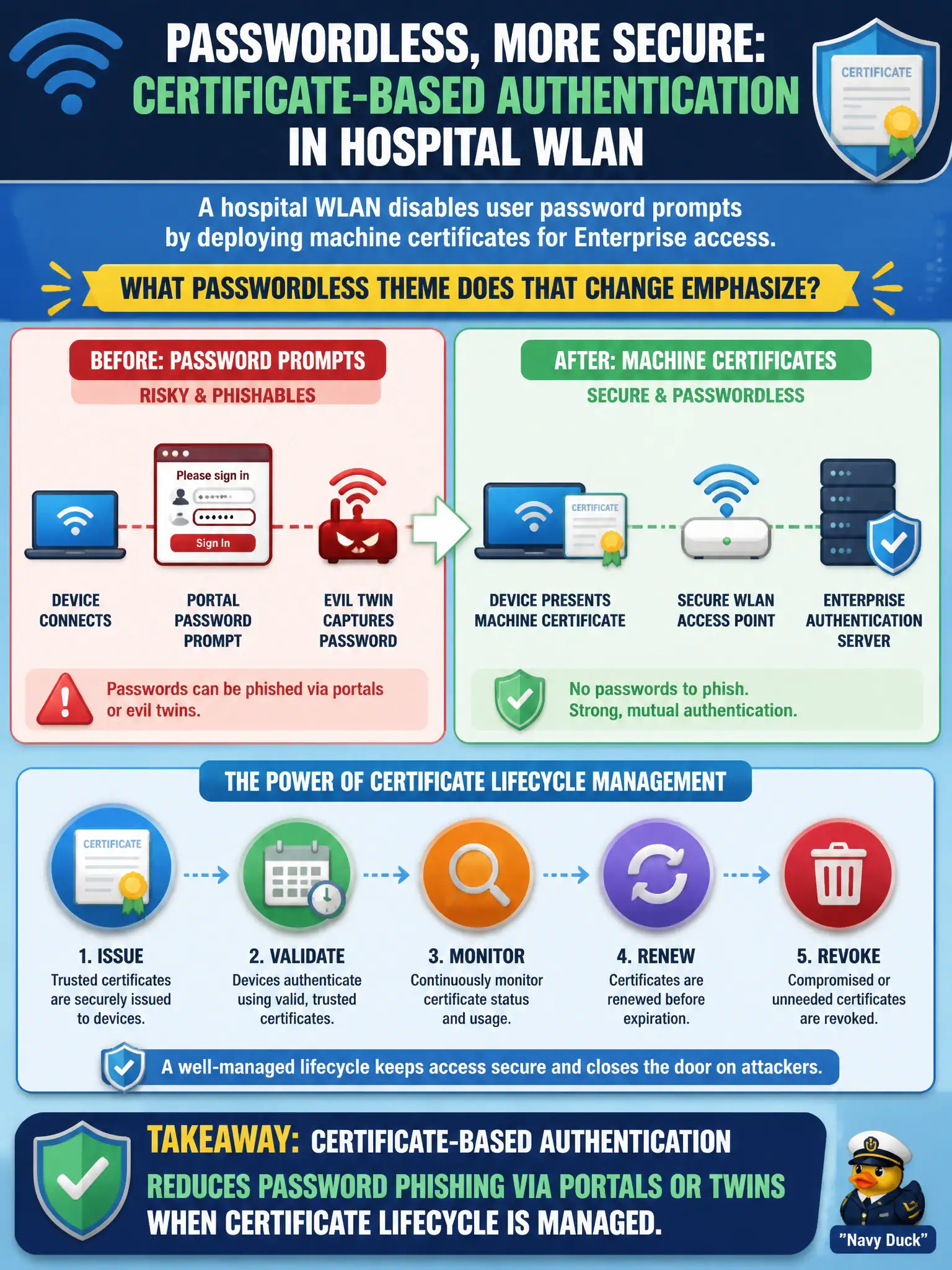
Machine certs are like building badges that open doors without typing a password at the Wi-Fi desk. Managed certificate auth shrinks portal and evil-twin password phishing—as long as issuance and revocation stay healthy.
Full Explanation
Deploying machine certificates for Enterprise access so hospital or municipal WLAN logins avoid user password prompts emphasizes a passwordless theme: certificate-based authentication reduces password phishing via portals or twins when certificate lifecycle is managed. The change does not convert the SSID to open authentication with certificates shown only after DHCP. It does not replace 802.1X with WPS PIN enrollment for every clinical workstation overnight. It does not force all traffic onto a single shared PSK derived from the machine certificate CN. Exam caveat: passwordless wireless still requires private-key protection, renewal, revocation, and server certificate validation—removing prompts is not removing operational discipline. Operational check: verify machine-cert enrollment on civic endpoints, test unauthorized cert rejection, and document break-glass procedures that do not reintroduce weak PEAP passwords casually. For municipal and campus engagements, keep the finding language tied to authorized scope, name the building or SSID class affected, and state the residual risk to residents or staff if the rejected option had been chosen. Re-validate after the next change window that the selected control still matches inventory, monitoring, and RoE abort criteria used by the city wireless program.