
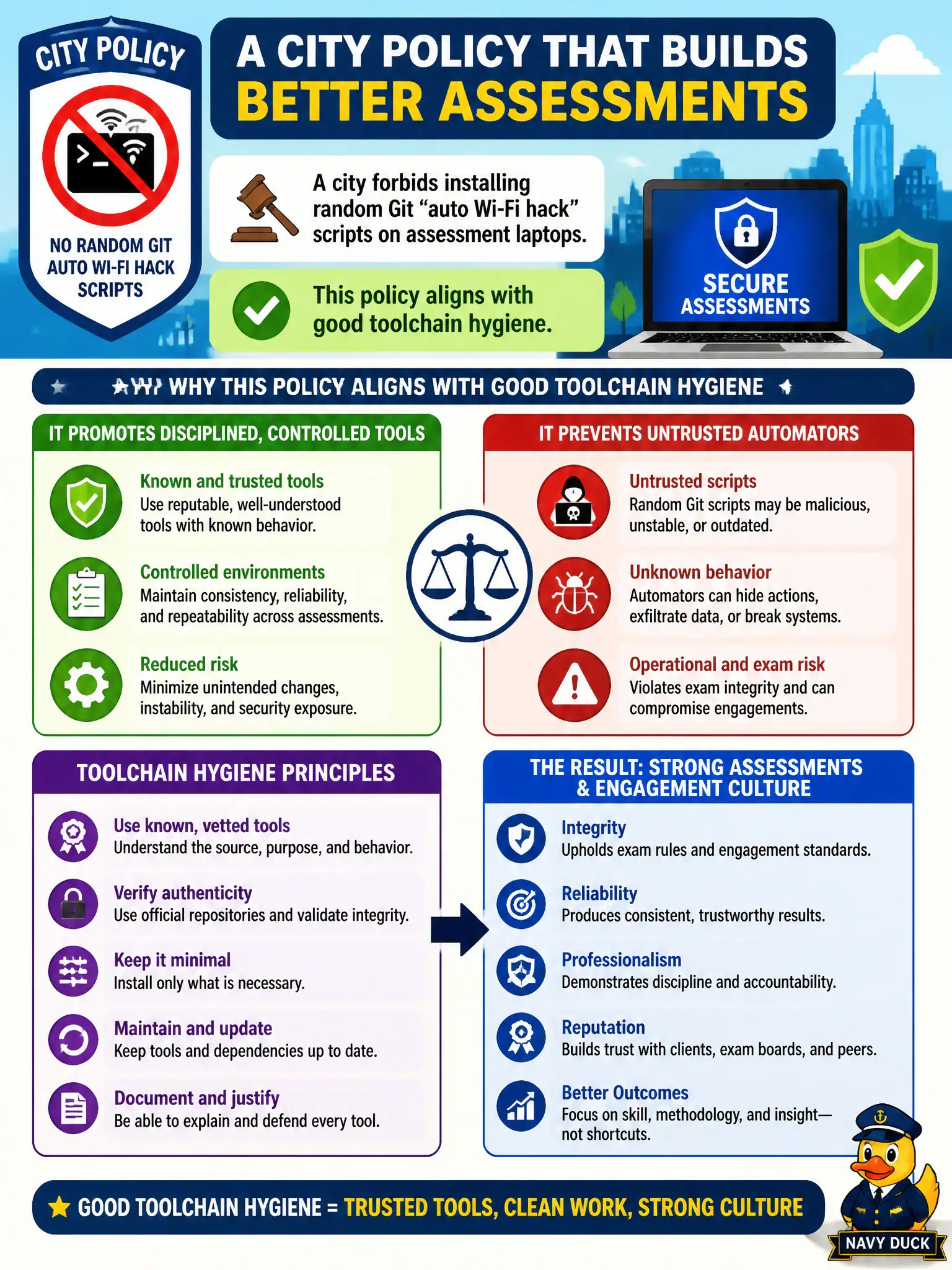
A city forbids installing random Git “auto Wi-Fi hack” scripts on assessment laptops. How does that policy align with good toolchain hygiene?
Select an answer to reveal the explanation.
Short Explanation
Mystery scripts from the internet are like unlabeled cleaning chemicals in the city garage—maybe useful, maybe a mess. Stick to known tools you can explain and defend. That mindset also matches why wizard wrappers get side-eyed on serious exams and engagements.
Full Explanation
City policies that forbid random Git “auto Wi-Fi hack” scripts align with disciplined toolchain hygiene: assessors should run known, controlled, understood tools that match engagement and exam expectations rather than untrusted automators that may be malicious, noisy, or behaviorally opaque. Public-sector wireless work already carries legal and RoE constraints; adding unknown wrappers increases operational and integrity risk without improving methodology rigor. Preferring untrusted automators because they always match OffSec exam tooling fails by concept: random Git scripts are not the controlled exam toolchain and often diverge dangerously. Saying any public Git script is safe if the README claims educational use fails by concept: README claims are not a security control or supply-chain assurance. Asserting toolchain hygiene applies only to switches while laptops may run arbitrary wireless wrappers fails by concept: the assessment laptop is part of the trusted toolkit and needs the same discipline. Exam caveat: even popular helpers can violate RoE by automating deauths or targeting out-of-scope BSSIDs—know every frame your tool will send before you run it on a municipal network. Operational check: maintain an approved tool list for the county engagement image, install only signed or pinned known packages, refuse unaudited Git automators, and document versions of aircrack-ng suite components used for the report.